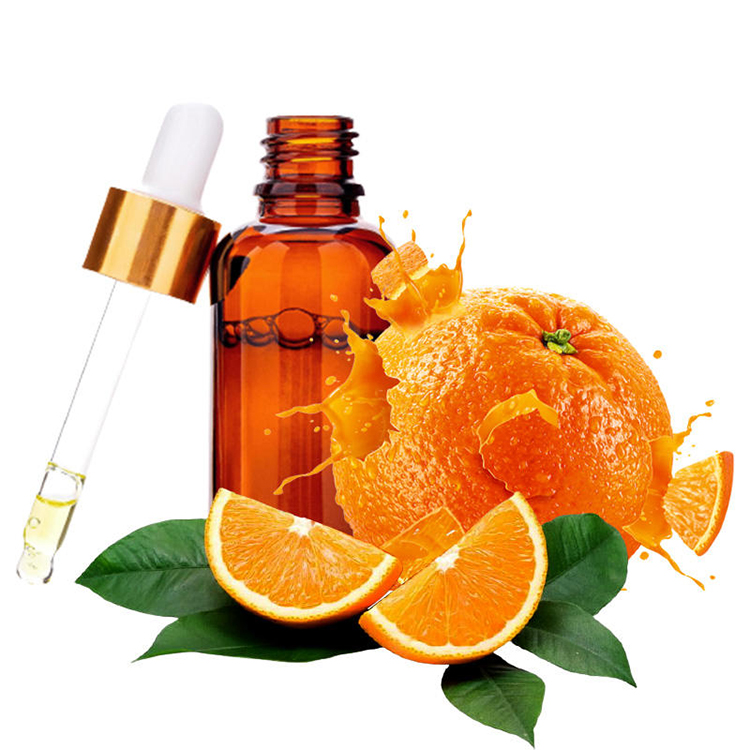
Fragrance Oils for Fabric Scent Boosters: Beads, Crystals, and Liquid Formats
Fabric scent boosters are not ordinary perfume poured into a new package. This guide compares bead, crystal, and liquid delivery systems, explains free oil versus encapsulated fragrance, examines cold-water dissolution and fabric retention, and identifies the compliance documents serious laundry-care brands should demand before production.
A laundry fragrance oil that performs beautifully in a solubilized liquid can smear, clump, oxidize, or vanish inside a dry carrier, while a blend designed for solid beads may dissolve too slowly in a 15°C wash and leave consumers blaming the scent rather than the delivery system.
Why pretend otherwise?
The fabric-care industry often talks about beads, crystals, and liquids as though manufacturers are merely choosing between three containers. They are not. Each format creates a different chemical environment, manufacturing process, consumer exposure pattern, cost structure, and failure mode.
And here is my blunt view: choosing the fragrance before defining the carrier system is backwards.
Fabric Scent Boosters Are Delivery Systems, Not Stronger Perfume
A fabric scent booster is a laundry additive designed primarily to deposit or release fragrance during washing, drying, storage, or fabric use. Unlike detergent, it is not expected to remove stains. Unlike a conventional softener, it does not necessarily contain fabric-conditioning quaternary surfactants.
Its commercial job is simple: make clean laundry smell noticeable for longer.
Its technical job is not simple at all.
The fragrance must survive storage, water dilution, surfactant contact, temperature shifts, rinsing, drying, and repeated exposure to oxygen. It must also behave across cotton, polyester, elastane blends, towels, sportswear, and bedding—materials that absorb and release odorants differently.
Scientific work on perfume microcapsules shows why delivery technology matters. An American Chemical Society study on microcapsule deposition in cotton describes perfume microcapsules as an established method for depositing fragrance oil onto fabric rather than allowing most of it to disappear with the rinse water. Separate research has found that capsule charge, fabric surface area, particle construction, and deposition aids can materially change how much fragrance reaches cotton or polyester.
That does not mean every successful scent booster requires microcapsules. It means manufacturers must decide what kind of scent experience they are selling:
Immediate fragrance when the package opens
Bloom during the wash
Impact on wet laundry
Dry-fabric freshness
Fragrance released through rubbing or wearing
Scent retained after seven, fourteen, or thirty days of storage
One fragrance rarely dominates every stage.
Brands developing fabric-care products can begin by reviewing application-specific home care fragrance oils rather than selecting a fine-fragrance concentrate and hoping it survives the washer. The site’s detergent and fabric-softener categories are organized around different product bases and performance demands.
Beads, Crystals, and Liquid Laundry Scent Boosters Compared
The terminology is messy.
“Bead” and “crystal” are commercial descriptions, not universally standardized chemical definitions. One supplier may call a rounded water-soluble granule a bead. Another may sell a similarly composed particle as a crystal because it looks more premium on a retail shelf.
So I would never approve a format from its product name alone.
Laundry Scent Booster Beads
Laundry scent booster beads are generally formed solid particles carrying fragrance within or on a water-soluble matrix. Depending on the design, the matrix may soften, dissolve, disperse, or release fragrance as the wash cycle progresses.
Beads offer strong shelf presence. Consumers can see the dose, hear it pour, and associate the product with concentrated fragrance. That sensory ritual has commercial value.
But beads can fail spectacularly when:
The carrier absorbs too much moisture during storage
The particles fuse together in humid warehouses
Fragrance migrates into the bottle or cap liner
The bead dissolves poorly in cold or short wash cycles
Colorants transfer onto pale textiles
Consumers overdose because the measuring cap encourages it
Fragrance evaporates through inadequate packaging
The best fragrance oil for laundry beads is not simply the strongest blend. It needs controlled volatility, carrier compatibility, low discoloration risk, acceptable oxidation stability, and enough middle-to-base structure to remain recognizable after rinsing.
Laundry Scent Booster Crystals
Laundry scent booster crystals are dry, free-flowing particles built around a crystalline or mineral-style carrier. Commercial formulas vary widely; some are close to salt-based granules, while others are engineered agglomerates marketed for their crystalline appearance.
Crystals can be easier to manufacture than uniform rounded beads, especially for a brand entering the market with modest equipment. They can also carry a clean, minimalist positioning.
The problem? Dry carriers expose weak fragrance decisions quickly.
A high load of oily fragrance can destroy flow, create wet spots, accelerate clumping, or produce uneven scent from scoop to scoop. Citrus-heavy blends containing oxidation-sensitive materials such as limonene, C₁₀H₁₆, also need protection from heat, air, and prolonged storage.
And “just add more oil” is not formulation advice. It is a shortcut to residue complaints.
Brands working with dry formats should compare their approach with the stability principles used when selecting fragrance oil for powder laundry detergent, particularly powder compatibility, fabric retention, oxidation, and storage behavior.
Liquid Laundry Scent Boosters
A liquid laundry scent booster is an aqueous or non-aqueous fragrance-delivery product in which the perfume is solubilized, emulsified, suspended, or otherwise stabilized for dosing into the wash.
Liquids allow precise dosing. They also make it easier to build a fragrance that blooms quickly because the perfume does not need to escape a solid carrier first.
Easy, right?
Not quite. Water and fragrance oil do not naturally form a stable system. A liquid product may require solubilizers, surfactants, rheology modifiers, preservatives, hydrotropes, chelating agents, or an emulsion system. Every added material can alter odor, clarity, viscosity, foaming, microbial stability, and fabric deposition.
Liquids also create packaging questions that solid products avoid:
Does the fragrance swell polyethylene seals?
Does the formula haze below 10°C?
Does viscosity change at 40°C?
Does the emulsion separate after freeze-thaw cycling?
Does fragrance migrate through an HDPE bottle?
Will consumers pour it into the detergent drawer or directly into the drum?
These are not cosmetic details. They determine whether the product survives transport and whether consumers use it correctly.
Format Decision Matrix
Factor
Beads
Crystals
Liquid
Typical physical system
Formed water-soluble granules
Crystalline or agglomerated dry carrier
Solubilized, emulsified, or suspended fluid
Consumer appeal
Premium, visible dosing ritual
Clean, concentrated, often value-friendly
Familiar pouring and adjustable dosing
Fragrance release
Depends on bead dissolution and fragrance migration
Often rapid carrier dissolution with variable fabric retention
Usually fast wash bloom; retention depends on deposition system
Main production risk
Particle uniformity, sticking, moisture pickup
Clumping, uneven oil distribution, dust
Separation, haze, preservation, viscosity drift
Cold-water concern
Incomplete or delayed dissolution
Slow dissolution or carrier residue
Haze, thickening, or fragrance separation
Packaging concern
Moisture barrier and fragrance migration
Moisture barrier and cap sealing
Leakage, paneling, seal compatibility, permeation
Best commercial use
Premium retail and highly visual products
Cost-controlled dry boosters and simple dosing
Flexible scent strength and rapid product extensions
Development complexity
Medium to high
Low to medium, depending on carrier
Medium to high
My hard verdict
Strong shelf impact, unforgiving process
Accessible, but easily cheapened by poor fragrance distribution
Flexible, but only when the emulsion system is professionally built
Free Fragrance Oil Versus Encapsulated Fragrance
This distinction matters more than the shape of the product.
Free fragrance oil is perfume incorporated directly into the carrier or liquid base. It can create excellent package impact and strong wash bloom, but volatile notes may evaporate early or leave with the rinse water.
Encapsulated fragrance places perfume inside a shell or delivery structure intended to protect it and release it later. Some capsules deposit on fabric and break through friction, drying, heat, moisture, or gradual shell diffusion.
The advantage is controlled release.
The disadvantage is everything else: cost, processing sensitivity, capsule breakage during mixing, environmental scrutiny, suspension stability, patent restrictions, and regulatory change.
Research has demonstrated that cationic surfactants and guar biopolymers can promote the deposition of anionic fragrance capsules on cotton through electrostatic interactions. Other work has reported that rough, irregular particles may be retained by fabrics at rates up to three times those of smooth spherical particles under the tested conditions. Those findings are useful, but they are not permission to copy a laboratory formula into commercial production.
A hybrid system is often more commercially convincing: free oil supplies the opening impact, while a secondary delivery system supports dry-fabric longevity.
But hybrid systems cost more. They also make compliance review more complicated.
What I Would Test Before Approving a Laundry Fragrance Oil
Smell strips lie.
They do not contain surfactants. They do not simulate hard water. They do not tumble with damp polyester at 60°C. And they certainly do not reveal whether a citrus top note will turn harsh after twelve weeks in a warm warehouse.
A serious development program should evaluate the finished scent booster, not only the fragrance concentrate. The guide to selecting fragrance oil for laundry detergent makes the same commercial point: fragrance needs to be tested through washing, rinsing, drying, and storage rather than approved from a vial.
Here is a practical screening matrix. The load levels are examples for comparative laboratory work, not universal formulation recommendations.
Test
Suggested Screening Conditions
What Failure Looks Like
Fragrance load ladder
0.25%, 0.50%, 0.75%, and 1.00% w/w, subject to supplier limits
Uneven fragrance distribution or variable particle size
I would also record fragrance intensity numerically. A trained panel can score each checkpoint from 0 to 10, while noting scent character separately: clean, floral, musky, sour, metallic, oily, detergent-like, or stale.
A score of 8 at package opening and 1 after drying is not a long-lasting fragrance. It is theatrical packaging.
Compliance: The Part Marketing Teams Prefer to Ignore
Documentation is not decoration.
At minimum, a commercial buyer should request an SDS, COA, allergen statement, applicable IFRA Certificate of Conformity, recommended use range, flash-point information where relevant, and confirmation of restricted or prohibited materials for the target markets.
But an IFRA document is not a government approval.
The IFRA Standards are an industry risk-management system that may prohibit, restrict, or set specifications for fragrance materials. IFRA itself states that its standards are voluntary outside membership obligations, do not replace local law, and do not replace a finished-product safety assessment.
Classification also depends on the precise product and expected contact. In IFRA’s 51st Amendment guidance, machine laundry detergents with skin contact and fabric softeners other than sheets are listed under Category 10A. Laundry pods with minimal skin contact appear under Category 12, and the guidance separately lists “scent beads” under Category 12. A manufacturer should therefore confirm the intended classification instead of choosing the most convenient limit from a spreadsheet.
California Has Already Changed Fragrance Disclosure
California’s Cleaning Product Right to Know Act of 2017, SB 258, requires specified ingredient information for covered cleaning products, including provisions addressing intentionally added and fragrance ingredients.
Online disclosure requirements began applying to designated products sold in California from January 1, 2020, followed by on-package requirements from January 1, 2021. The law made “fragrance” a much weaker hiding place for poorly documented formulas.
My opinion is unapologetic: brands should build a disclosure-ready formula even when they are not legally forced to do so yet.
A supplier unwilling to provide meaningful composition and allergen support is transferring its commercial risk to you.
“Fragrance-Free” Has a Real Meaning
The U.S. EPA Safer Choice Standard allows qualifying products to seek a Fragrance-Free label only after review confirms that the product contains no fragrance materials; dual-function ingredients used as fragrance materials are not allowed merely because the label calls them something else. (US EPA)
That distinction matters. “Unscented,” “low odor,” “sensitive,” and “fragrance-free” should not be treated as interchangeable marketing language.
The EU Microplastics Deadline Cannot Be Ignored
The European Union’s Regulation (EU) 2023/2055 began restricting intentionally added synthetic polymer microparticles on October 17, 2023. According to the European Commission’s implementation guidance, detergents containing synthetic-polymer-microparticle-encapsulated fragrances receive a transition period until October 17, 2029.
Read that carefully.
A bead-shaped scent booster is not automatically a microplastic product. A transparent bead can dissolve completely. A liquid can contain polymeric fragrance capsules. The regulatory question concerns material composition and the legal definition of synthetic polymer microparticles—not whether the finished product looks like a bead.
Any supplier offering encapsulated fragrance for the European market should be able to explain:
The capsule-shell chemistry
Whether it falls within the restriction
Whether an exemption or derogation applies
The planned post-2029 technical route
Available biodegradability or degradation evidence
Required labeling and disposal information
“We have always sold it this way” is not evidence.
Market Demand Is Real, but the Forecasts Deserve Skepticism
That figure should be treated as a strategic industry estimate, not independent audited market data.
Still, the direction is credible. Consumers increasingly treat fabric fragrance as a separate benefit they can personalize, intensify, and layer with detergent or softener.
The brands that will struggle are those selling interchangeable “ocean fresh” copies with no format logic and no distinctive dry-down.
What Fragrance Profiles Usually Survive Laundry Better?
There is no single best fragrance oil for laundry. Anyone promising one is oversimplifying the brief.
Fresh profiles often need a structured base beneath the opening. Citrus, aldehydic, ozonic, and green notes can create immediate cleanliness, but they may feel thin after rinsing unless supported by musks, woods, amber materials, soft florals, or other substantive components.
Typical commercial directions include:
Fresh linen with aldehydic lift and clean musk
Floral comfort built around rose, jasmine, muguet, or violet effects
Citrus-aromatic profiles with lemon, bergamot, lavender, or herbal notes
Fruity-floral blends for younger mass-market positioning
Warm cotton, vanilla, sandalwood, and soft amber for premium comfort
Marine and ozonic profiles for sportswear or odor-control positioning
Hotel-inspired white floral, tea, citrus, or woody-musky scents
The scent must match the format. A bright, volatile composition may be ideal for a liquid designed around immediate bloom but disappointing in a bead sold on fourteen-day fabric longevity.
Questions to Put in Every Supplier Brief
A competent supplier cannot produce a meaningful sample from the words “long-lasting fresh scent.”
Give them the product format, carrier composition, target market, wash conditions, intended fragrance load, packaging material, cost ceiling, regulatory countries, and performance target.
The commercial brief should answer these questions:
Is the product a bead, crystal, free-flowing granule, emulsion, clear liquid, or suspension?
Is the fragrance free oil, encapsulated, adsorbed onto a carrier, or a hybrid?
What is the target IFRA category and maximum finished-product use level?
Which allergens or disclosure-listed ingredients are present?
Has the oil been tested in the actual carrier and packaging?
What happens at 5°C, 25°C, and 40°C?
Does it dissolve in a 15°C short wash?
What is the fragrance score on dry cotton and polyester after seven days?
Is the capsule technology compatible with EU requirements through and after October 2029?
Can the supplier reproduce the approved sample across multiple bulk batches?
For broader sourcing, documentation, sample-development, and batch-control requirements, the site’s fragrance oil manufacturing and wholesale overview explains the information buyers should prepare before requesting custom development.
FAQs
What is laundry fragrance oil?
Laundry fragrance oil is a concentrated aromatic mixture engineered for detergents, softeners, fabric scent boosters, or related wash products, where it must remain stable in the carrier, tolerate dilution and temperature changes, satisfy the intended safety limits, and leave a controlled scent on wet or dry textiles after rinsing.
It differs from candle fragrance and fine perfume because its performance is judged inside a wash-and-dry process. Package odor is only one checkpoint.
What fragrance oils are best for scent booster beads?
The best fragrance oils for scent booster beads are stable, low-residue compositions matched to the bead carrier, dissolution profile, packaging, intended use level, and dry-fabric target, with enough substantive middle and base notes to survive rinsing without creating excessive oiliness, discoloration, oxidation, or overpowering package odor.
Fresh musk, floral-clean, citrus-aromatic, woody, and soft amber profiles can all work. The finished bead—not the fragrance bottle—must decide the winner.
How do you make laundry scent boosters with fragrance oil?
A commercial laundry scent booster is made by selecting a compatible solid or liquid carrier, incorporating a documented fragrance at a validated concentration, controlling moisture or emulsion stability, and testing dissolution, storage, packaging, fabric deposition, allergen limits, consumer dosing, and dry-down performance before approving the formula for production.
Fragrance oil should not be poured directly onto clothes. Home recipes also should not be treated as substitutes for stability testing, exposure review, and washer compatibility.
Are laundry scent booster beads the same as fragrance microcapsules?
Laundry scent booster beads are visible finished-product particles dosed into the washing machine, while fragrance microcapsules are much smaller delivery structures that enclose perfume and may be dispersed inside beads, liquids, detergents, or softeners; therefore, a bead can contain microcapsules, free fragrance oil, both systems, or no capsules at all.
Confusing the two leads to bad regulatory decisions. Product shape does not identify capsule-shell chemistry.
Are liquid laundry scent boosters better than crystals?
Liquid laundry scent boosters are not inherently better than crystals; liquids generally offer faster fragrance dispersion and flexible dosing, whereas crystals can provide simpler dry processing, strong visual positioning, and lower leakage risk, with the better choice determined by stability, cold-water performance, packaging, manufacturing equipment, cost, and desired fabric scent.
A technically weak liquid will separate. A technically weak crystal will clump or leave residue. Neither format rescues a poor formula.
How much fragrance oil should be used in a fabric scent booster?
The correct fragrance-oil concentration is the lowest validated level that achieves the target package, wash, and dry-fabric scent while remaining within supplier documentation, IFRA limits, regulatory requirements, carrier capacity, stability boundaries, packaging compatibility, and cost targets; there is no responsible universal percentage for every bead, crystal, or liquid formula.
Start with a controlled laboratory ladder, then approve the concentration from finished-product tests. More fragrance can produce more complaints rather than more loyalty.
Build the Format Before You Buy the Fragrance
Do not place a bulk order because a sample smells impressive from the bottle.
Define the bead, crystal, or liquid system first. Then send the supplier your carrier composition, desired scent family, benchmark product, target country, packaging material, expected dosage, cost range, IFRA category, storage conditions, and dry-fabric longevity target.
Request at least three fragrance directions. Test them on cotton and polyester. Run cold-water and warm-water cycles. Compare line drying with tumble drying. Recheck the fabric after seven and fourteen days.
Then challenge the paperwork.
Brands ready to develop or refine a laundry scent booster can request application-specific fragrance samples and documentation before committing to full production. Ask for a formula that performs in the finished product—not another attractive vial that dies in the rinse.
Our team of 20+ senior perfumers leverages a vast library of 40,000+ formulas to deliver expert customization and scent replication with up to 98% accuracy. As premier perfume oil manufacturers, we bring your most complex fragrance concepts to life with precision.
Industry-Leading Speed
We empower your business with industry-leading speed. Samples are ready in just 1-3 days, mass production takes only 3-7 days, and our low 5kg MOQ allows you to test the market quickly and without risk, solidifying our role as agile fragrance oil suppliers.
Certified Quality & System Assurance
Our quality is built on trust and technology. We are fully certified with IFRA, ISO, GMP, and Halal, and our advanced ERP system guarantees complete traceability and batch-to-batch consistency, making us your reliable perfume raw materials supplier.