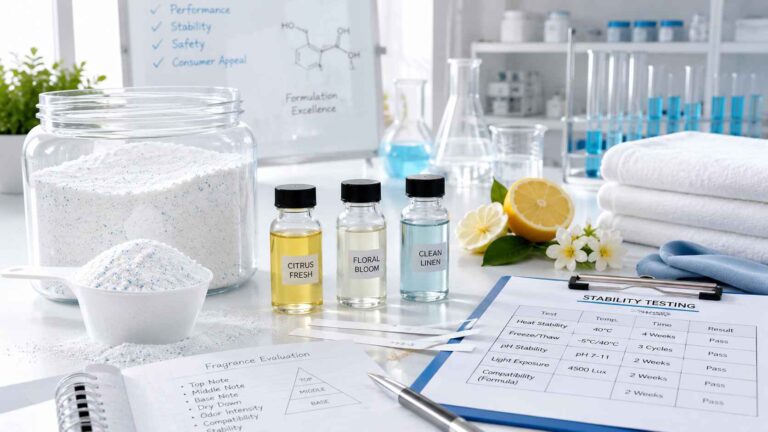
Common Aroma Chemicals and Their Fragrance Characteristics
Aroma chemicals are not mysterious perfume magic. They are the working molecules behind citrus lift, floral diffusion, creamy vanilla, amber warmth, clean musk, and also the compliance headaches that careless brands pretend not to see.
I have sat through enough fragrance evaluations to know the routine: someone says “natural freshness,” another person says “luxury floral signature,” and then the formula quietly leans on linalool, limonene, Hedione, vanillin, musks, aldehydes, and solvents doing the actual commercial work. Funny, isn’t it?
Aroma chemicals are odor-active molecules used to build, modify, stabilize, and project fragrance formulas. Some come from natural isolates. Some are synthetic aroma chemicals. Many exist in both natural and manufactured supply chains. The buyer usually cares about scent. The formulator cares about volatility, cost, safety data, color stability, regulatory status, and whether the material survives the final base.
That is where amateurs get punished.
If you are sourcing fragrance compounds for candles, personal care, home care, or fine fragrance, stop asking only, “What does it smell like?” Ask what it does after heat, pH, light, oxygen, surfactants, wax, ethanol, and six months in a warehouse have finished bullying it. This is why I prefer suppliers that treat aroma chemicals as technical inputs, not mood-board decoration. For B2B sourcing, the difference between vague perfume poetry and documented IFRA-compliant perfume raw materials is the difference between scalable fragrance and expensive drama.
Table of Contents
The Aroma Chemicals Buyers Actually Meet Again and Again
Here is the table I wish more brand owners had before they started approving scents from blotters alone.
Aroma Chemical
Formula / Identifier
Fragrance Characteristics
Common Use in Perfumery
Hard Truth
Linalool
C10H18O, CAS 78-70-6
Fresh, floral, lavender-like, citrus-woody
Floral accords, citrus lift, shampoo, soap, fine fragrance
Beautiful but oxidation can change the safety conversation
Limonene
C10H16
Orange, citrus peel, terpene freshness
Citrus accords, cleaners, air care, top notes
Cheap brightness can turn into compliance and oxidation risk
Vanillin
C8H8O3
Sweet vanilla, creamy, gourmand, balsamic
Gourmand perfumes, candles, body care, amber bases
It can discolor products; white candles hate lazy vanilla use
Ethyl Vanillin
C9H10O3
Stronger vanilla, sweet, creamy, candy-like
High-impact gourmand notes, bakery profiles
Powerful enough to flatten a formula if overused
Hedione / Methyl Dihydrojasmonate
C13H22O3
Airy jasmine, transparent floral, radiant
Fine fragrance diffusion, floral volume
Often invisible to consumers but obvious when missing
Coumarin
C9H6O2
Hay, tonka, almond, tobacco warmth
Fougère, amber, tobacco, powdery accords
Classic, useful, regulated, and not something to dose blindly
Benzyl Acetate
C9H10O2
Jasmine, fruity floral, banana nuance
White florals, fruity florals, cosmetics
Can smell cheap when the floral structure is thin
Aldehyde C-12 MNA
C12 aldehyde family
Metallic, waxy, citrus-peel sparkle
Classic aldehydic perfumes, soap, clean accords
Tiny dose. Big consequence. Overdose screams “detergent”
Iso E Super
C16H26O
Woody, amber, velvety, dry
Modern woody bases, skin scent, projection
Overused because it makes weak formulas feel expensive
Galaxolide / Polycyclic musk family
varies
Clean musk, laundry, soft diffusion
Detergents, body care, fine fragrance bases
Performance is seductive; environmental scrutiny is real
Linalool is a good example of why “common” does not mean simple. PubChem’s linalool entry identifies it as C10H18O and describes it as an important fragrance chemical with a fresh, flowery odor. That sounds clean on paper. In a real formula, linalool can brighten citrus, soften lavender, lift muguet, and make a shampoo smell less like a chemical soup.
But it is not magic.
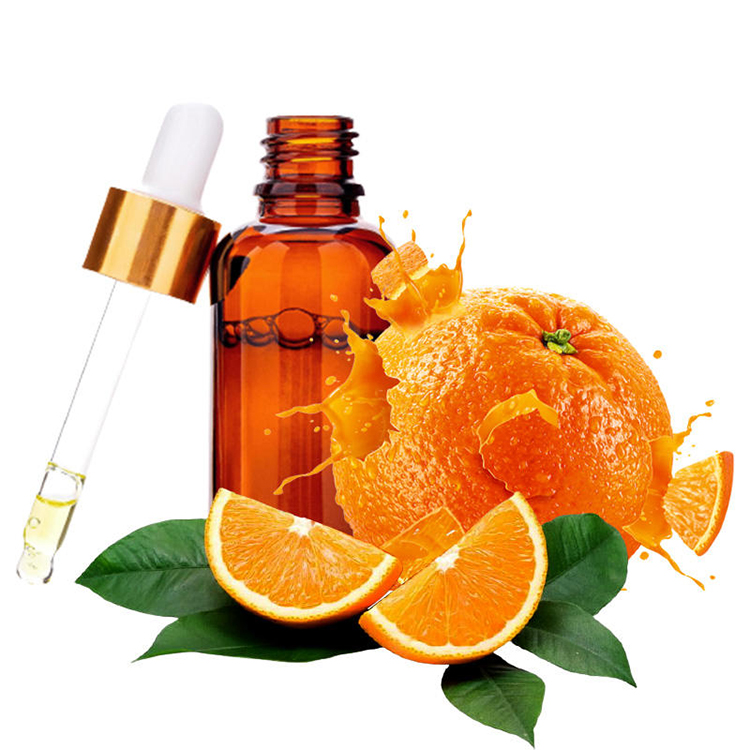
Limonene is another repeat offender. It gives citrus peel energy fast, and that speed is exactly the trap. In air care and cleaning products, limonene can smell like instant “freshness,” but the EPA’s HERO database summarizes research on ozone and d-limonene in indoor air, including chamber experiments looking at secondary aerosol formation when ozone reacts with d-limonene. So when someone sells “orange freshness” as if it has no indoor-air chemistry attached, I get suspicious.
Vanillin is softer, warmer, and more commercially forgiving, until it is not. PubChem’s vanillin entry identifies vanillin as C8H8O3. In practice, vanillin is the backbone of countless gourmand, amber, candle, and body-care profiles. But if your brand wants a white wax candle, a pale lotion, or a crystal-clear base, vanillin-heavy fragrance can become a discoloration problem wearing a dessert costume.
Why Linalool, Limonene, and Vanillin Keep Winning
Three words. They are useful.
Linalool, limonene, and vanillin keep appearing in perfume ingredient scent profiles because they solve commercial problems: linalool creates floral freshness, limonene gives immediate citrus recognition, and vanillin delivers comfort that consumers understand without needing a fragrance education.
That matters.
Most consumers do not say, “I detect a terpene alcohol modifier in the top-to-heart transition.” They say, “This smells clean,” “This smells expensive,” or “This smells like dessert.” Aroma chemicals translate technical structure into emotional shorthand. That is the job.
Here is the blunt version:
Linalool makes formulas breathe. Limonene makes them open. Vanillin makes them sell.
But smart perfumery is not dumping these into every brief. If your target is a premium body wash, you need to think about surfactant compatibility and allergen disclosure. If your target is a soy candle, you need to think about hot throw and discoloration. If your target is a diffuser, volatility and room diffusion matter more than what the oil smells like from the cap.
This is why the old “natural versus synthetic” fight is mostly bad theater. The better question is whether the material fits the application, documentation, cost structure, and sensory promise. For brands still stuck in that debate, this guide on fragrance oils vs essential oils is the kind of practical reading procurement teams should use before they let marketing write the spec.
The Compliance Trap: Fragrance Characteristics Are Now Label Issues
The regulatory mood has changed.
The FDA says fragrance is one of the common allergen classes found in cosmetics, alongside preservatives, dyes, metals, and natural rubber, according to its page on Allergens in Cosmetics. The agency also states on its Fragrances in Cosmetics page that it does not have the same legal authority to require cosmetic allergen labeling as it does for food allergens.
That gap is closing.
The Modernization of Cosmetics Regulation Act of 2022, known as MoCRA, put fragrance allergen labeling into the U.S. regulatory pipeline. The FDA’s official MoCRA overview lists fragrance allergen labeling requirements among the law’s areas of implementation, and the federal RegInfo rule entry for RIN 0910-AI90 states that section 609(b) requires each fragrance allergen included in a cosmetic product to be identified on the label once the rule defines the relevant substances.
Europe moved faster. Commission Regulation (EU) 2023/1545, dated 26 July 2023, amended EU cosmetics rules on fragrance allergen labeling. Industry compliance summaries commonly describe the change as expanding labeling obligations by adding 56 additional fragrance allergens, with thresholds of 0.001% for leave-on products and 0.01% for rinse-off products.
So what?
So your “fresh floral fragrance characteristics” may create a label update. Your “natural citrus profile” may bring limonene, citral, linalool, geraniol, citronellol, and oxidation baggage. Your “warm vanilla accord” may bring discoloration, allergen review, and formula stability questions. And if the supplier cannot provide current IFRA, SDS, allergen declarations, and batch-level documentation, you are not buying fragrance. You are buying liability with a pleasant odor.
For cosmetic brands, a strong cosmetic fragrance supplier should help translate odor direction into compliant formula architecture, not just send a sweet-smelling sample and a PDF from 2019.
How Aroma Chemicals Behave Differently by Application
Aroma chemicals do not perform in isolation. They perform inside systems.
A fragrance compound that blooms beautifully in ethanol may die in wax. A citrus molecule that feels sparkling in a shampoo may become sharp in an air freshener. A vanilla material that smells creamy in a blotter test may stain a lotion, yellow a candle, or dominate a floral accord after aging.
This is why application testing is not optional.
Fine Fragrance
In fine fragrance, aroma chemicals are judged by diffusion, elegance, evaporation curve, and skin behavior. Hedione, Iso E Super, musks, linalool, ionones, and aldehydes can create space and movement. A formula with no radiance feels dead. A formula with too much radiance feels hollow.
I like Hedione because it can make a floral accord feel lit from behind. I dislike how often it is used as a crutch. If every formula needs the same transparent jasmine glow to feel modern, the creative direction is probably weak.
Candles
Candles are brutal.
Heat exposes lazy formulation. Vanillin can discolor wax. Citrus top notes can flash away. Some woody amber materials survive better than delicate florals. A bottle test tells you almost nothing about burn quality. For anyone working in wax, read this technical guide on fragrance oils in candle formulations before approving a scent from a cold sniff.
The candle question is not “Does it smell strong?” The question is: does it throw cleanly at heat, stay stable through cure, respect load limits, avoid soot issues, and still smell like the concept after repeated burns?
Home Care
Home care fragrance is chemical warfare with a smile.
Detergents, cleaners, and fabric products put aroma chemicals through surfactants, alkalinity, enzymes, preservatives, and storage stress. Limonene may sell citrus cleanliness, but the formula must survive the base. Musks help substantivity. Aldehydes can signal clean brightness. Certain floral materials soften harsh functional notes.
For this category, home care fragrance oils need more than a pleasant scent profile. They need base stability, malodor control, and repeatable performance.
Air Care
Air care is about diffusion and perception speed.
A room spray, reed diffuser, electric diffuser, or hotel scenting system needs controlled volatility. Too fast, and the scent feels cheap and aggressive. Too slow, and no one notices it. Citrus terpenes, aldehydes, light florals, musks, and woody ambers all have jobs here, but the air itself becomes part of the formula.
For brands building ambient scent systems, air care fragrance oils should be evaluated for diffusion curve, room size, device type, and safety documentation. Not just “nice smell.”
The Insider Method: How I Judge a Fragrance Compound Before Trusting It
I use a boring framework because boring frameworks prevent expensive disasters.
First, I ask what role the aroma chemical plays: top-note impact, floral body, base warmth, diffusion, masking, sweetness, fixation, or signature character. Then I ask where it fails. Every material fails somewhere. Limonene oxidizes. Vanillin discolors. Aldehydes overpower. Musks raise environmental questions. Some naturals fluctuate by crop and region. Some synthetics smell stable but soulless if the perfumer lacks restraint.
Next, I ask for documents.
No documents, no trust.
A proper fragrance development process should include the product base, target market, regulatory region, IFRA category, dosage range, color requirements, packaging, stability plan, and sensory benchmark. That is why a fragrance development brief is not paperwork theater. It is the map that keeps the scent from turning into a reformulation bill.
Stability data in wax, surfactant, ethanol, oil, or lotion
Is oxidation controlled?
Terpenes can change over time
Antioxidant strategy, storage guidance, shelf-life data
Will it discolor?
Especially important for candles and cosmetics
Aging test under heat, light, and time
Is supply stable?
Reformulation kills launch timing
Alternate source strategy or approved equivalent
Is the odor contribution worth the risk?
Some materials are replaceable
Sensory value versus compliance cost
The Notes Behind the Molecules
Aroma chemicals in perfumery are often grouped by smell, but professionals think in behavior.
Citrus and Fresh Materials
Limonene, citral, linalyl acetate, aldehydes, and related terpenes give lift. They make formulas open quickly. They are useful in shampoo, hand wash, air care, cleaning products, and cologne-style fine fragrances.
But citrus is often over-romanticized.
The more citrus-forward the formula, the more I want to see oxidation controls, allergen review, packaging compatibility, and stability testing. “Natural orange” sounds harmless until the formula ages badly or the label review gets uncomfortable.
Floral Builders
Linalool, benzyl acetate, phenethyl alcohol, Hedione, ionones, hydroxycitronellal-type materials, and jasmine lactones help create floral bodies. Some smell obviously floral. Others create volume without shouting.
Hedione is a quiet monster. It can make a formula feel airy, expensive, and wearable, even when the consumer never identifies jasmine. That is the trick of many fragrance compounds: the best ones are not always noticed directly. They change how other notes behave.
Sweet, Gourmand, and Balsamic Materials
Vanillin, ethyl vanillin, coumarin, maltol, benzoin-type materials, and amber ingredients drive comfort. These are the materials behind vanilla, tonka, caramel, powder, tobacco, amber, and dessert-like profiles.
Hard truth: gourmand sells because it is emotionally simple. People understand vanilla faster than they understand orris, galbanum, or aldehydic structure. But sweetness can cheapen a formula fast. Dose matters.
Woody, Amber, and Musk Materials
Iso E Super, ambroxide-type materials, synthetic sandalwood molecules, cashmeran-style notes, and musks provide body, diffusion, and long wear. This is where modern perfumery gets much of its polished persistence.
And yes, some brands overuse them.
A woody amber base can make a fragrance feel premium, but it can also flatten originality. If every launch smells like dry amber wood, mineral musk, and transparent floral air, the formula may be technically competent and creatively forgettable.
FAQs
What are aroma chemicals?
Aroma chemicals are odor-active molecules used to create, modify, strengthen, stabilize, or extend fragrance formulas across perfumes, cosmetics, candles, air care, and home care products. They may be synthetic, naturally derived, or isolated from botanical sources, and their value depends on odor profile, performance, safety documentation, and application behavior.
In plain language, they are the working parts of fragrance. Linalool gives floral freshness. Limonene gives citrus lift. Vanillin gives sweet warmth. Musks add softness and longevity. Aldehydes create sparkle. Without aroma chemicals, modern perfumery would be smaller, less stable, more expensive, and far less scalable.
What are the most common aroma chemicals in perfumery?
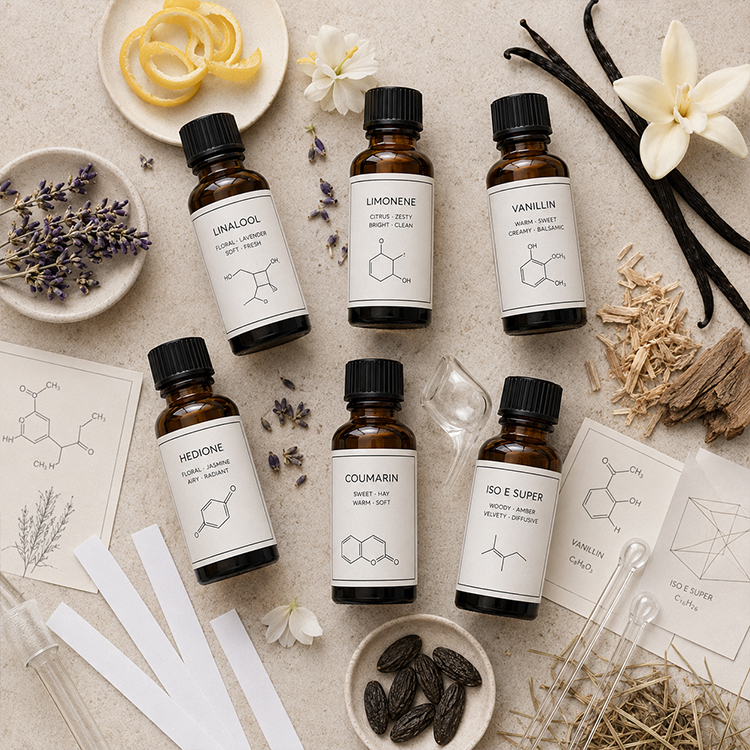
The most common aroma chemicals in perfumery include linalool, limonene, vanillin, ethyl vanillin, Hedione, coumarin, benzyl acetate, aldehydes, ionones, musks, Iso E Super, and woody amber materials. These compounds appear frequently because they deliver recognizable fragrance characteristics, predictable performance, and strong blending value across many product categories.
Common does not mean low quality. It means useful. The problem starts when brands mistake common materials for finished creativity. A formula can use familiar aroma chemicals and still smell distinctive if the structure, dosage, base compatibility, and evaluation process are handled properly.
Are synthetic aroma chemicals bad?
Synthetic aroma chemicals are not automatically bad; they are manufactured fragrance compounds that can offer consistency, purity, supply stability, and performance advantages compared with some natural materials. Their safety depends on the specific molecule, dose, application, exposure route, regulatory status, and documentation, not on whether the ingredient sounds natural or laboratory-made.
I distrust blanket claims on both sides. “Natural” can still contain allergens. “Synthetic” can be cleaner, more consistent, and more sustainable in some use cases. The serious buyer asks for IFRA data, SDS, allergen declarations, stability results, and application guidance instead of worshipping a marketing label.
What do linalool, limonene, and vanillin smell like?
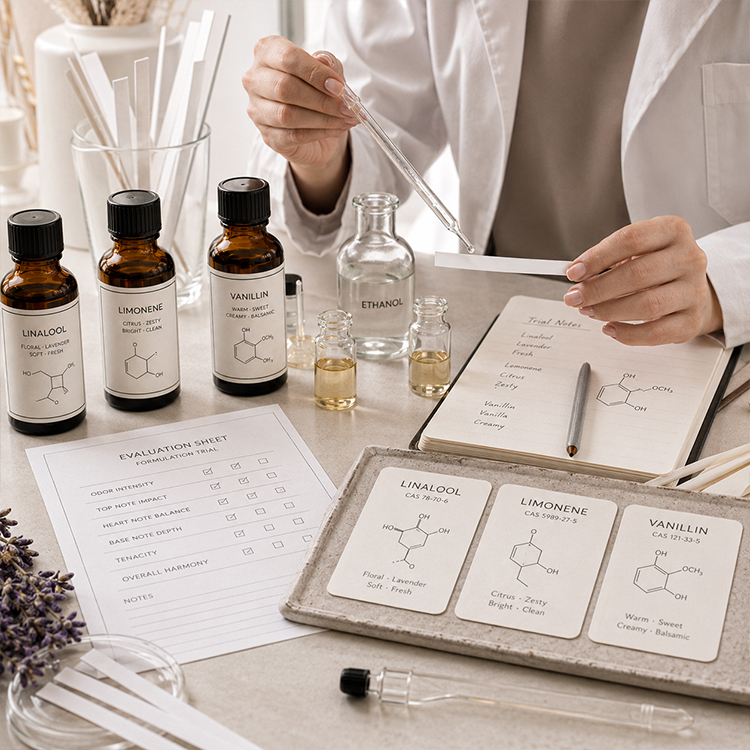
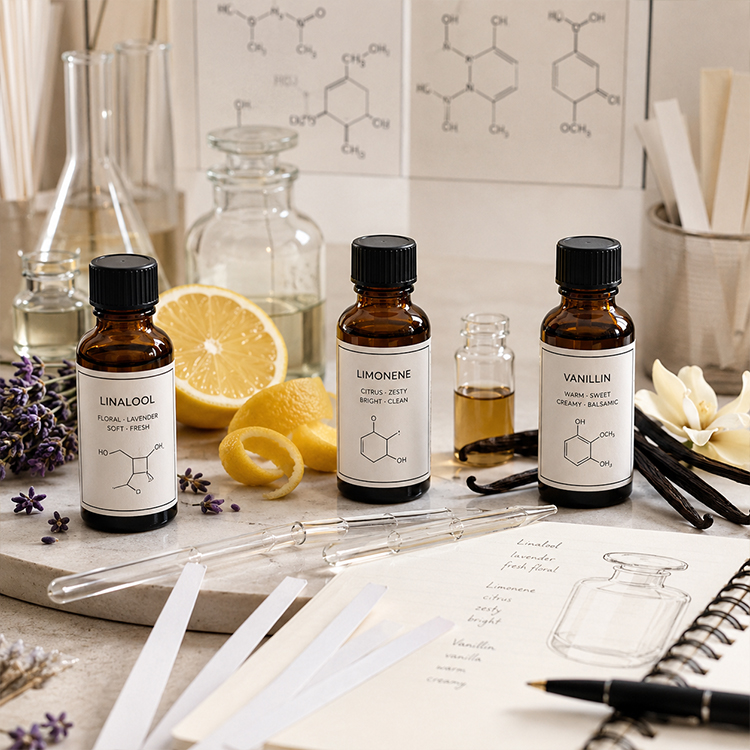
Linalool smells fresh, floral, lightly citrus, and lavender-like; limonene smells like bright citrus peel, especially orange; and vanillin smells sweet, creamy, warm, and vanilla-like. Together, these three aroma chemicals explain a huge share of familiar fragrance characteristics in shampoos, candles, perfumes, room sprays, soaps, and body care.
They are popular because consumers understand them instantly. Linalool says clean floral. Limonene says fresh citrus. Vanillin says comfort. But each has technical baggage: linalool and limonene need oxidation awareness, while vanillin often requires discoloration testing in pale bases.
Why do aroma chemicals matter for fragrance oil sourcing?
Aroma chemicals matter for fragrance oil sourcing because they determine odor quality, cost, stability, safety documentation, allergen labeling, product compatibility, and long-term performance. A fragrance oil is not just a smell; it is a controlled blend of volatile and semi-volatile materials that must survive the intended product base and market rules.
This is where weak suppliers expose themselves. A good sample is easy. A reliable formula with current paperwork, stable sourcing, batch consistency, and application-specific testing is much harder. That is the difference between a scent that wins approval and a scent that survives production.
Your Next Steps
Stop approving fragrance by romance alone.
If you are developing a candle, lotion, diffuser, perfume oil, shampoo, cleaner, or air-care product, build the scent brief around aroma chemicals, application behavior, compliance, and testing—not just “fresh,” “luxury,” “natural,” or “long-lasting.” Ask for the IFRA certificate. Ask for SDS. Ask for allergen data. Ask about vanillin discoloration, terpene oxidation, base compatibility, and realistic dosage.
Then test.
For brand owners, procurement teams, and product developers who need custom scent work instead of generic catalog guessing, start with a technical brief and work with a supplier that understands both perfume ingredient scent profiles and manufacturing reality. A smart next move is to review available custom fragrance oil and perfume raw material solutions and turn your scent idea into a documented, testable formula before the market teaches you the lesson the expensive way.
Our team of 20+ senior perfumers leverages a vast library of 40,000+ formulas to deliver expert customization and scent replication with up to 98% accuracy. As premier perfume oil manufacturers, we bring your most complex fragrance concepts to life with precision.
Industry-Leading Speed
We empower your business with industry-leading speed. Samples are ready in just 1-3 days, mass production takes only 3-7 days, and our low 5kg MOQ allows you to test the market quickly and without risk, solidifying our role as agile fragrance oil suppliers.
Certified Quality & System Assurance
Our quality is built on trust and technology. We are fully certified with IFRA, ISO, GMP, and Halal, and our advanced ERP system guarantees complete traceability and batch-to-batch consistency, making us your reliable perfume raw materials supplier.