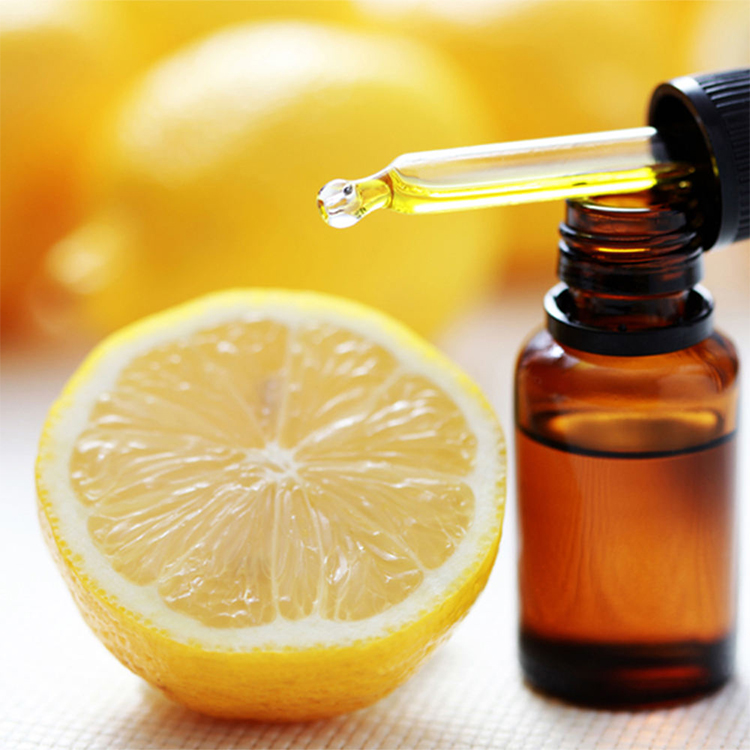
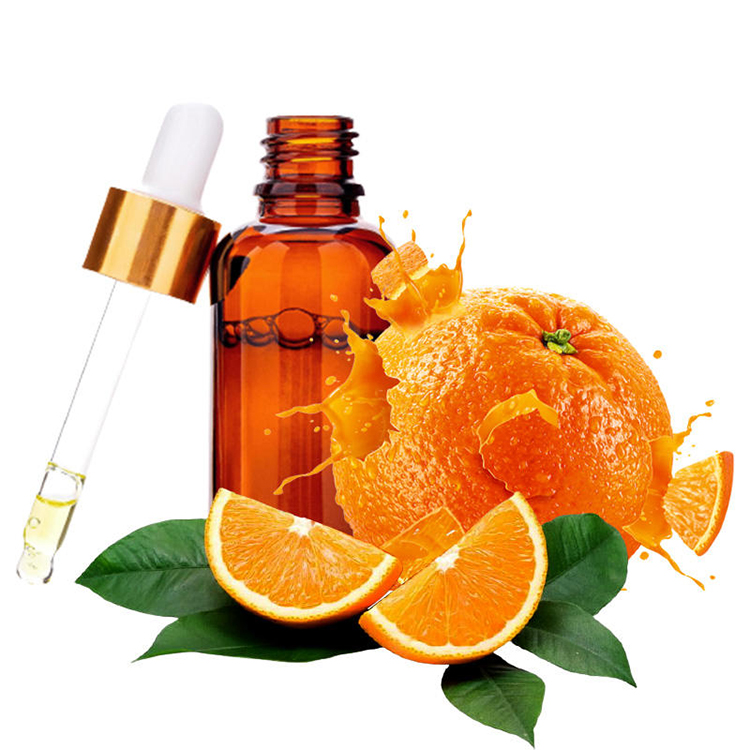
Citrus fragrance oil can make dish soap smell sharper, cleaner, and more marketable, but the wrong formula may cloud the base, lose its top notes, or create labeling problems. Here is what buyers should test before approving a lemon, orange, or lime fragrance.
Citrus fragrance oil for dish soap is a formulated scent concentrate designed to remain recognizable, stable, and legally marketable in a surfactant-heavy hand-dishwashing base. A production-ready oil must do more than smell like lemon: it must manage oxidation, clarity, color, viscosity, allergen disclosure, packaging contact, and repeat-batch consistency.
Citrus Fragrance Oil Is Selling a Cleaning Signal
Smell sells clean.
When a lemon-forward sample flashes from the bottle, consumers often interpret that sensory hit as grease removal, even though the actual cleaning work comes from surfactants, builders, chelating agents, solvents, water quality, dosage, and the finished detergent formulation rather than the perfume compound itself.
Why pretend otherwise?
A citrus scent is a marketing signal. It tells the user “fresh,” “rinsed,” “oil-free,” and “kitchen clean” before the product has removed a single gram of grease. That psychological association is commercially valuable, but it also causes buyers to make bad fragrance decisions.
They approve the loudest lemon.
Then the fragrance becomes thin after two weeks, turns medicinal in an alkaline base, creates haze in a transparent liquid, or disappears once the product is diluted in the sink.
The better approach is to evaluate a fragrance designed for the application. A product such as Dishwashing Liquid Citrus Burst Home Care Fragrance Oil is positioned around manual dishwashing bases, with lemon, lime, orange, petitgrain, neroli, clean musk, and woody support rather than a single volatile lemon note. The supplier also identifies compatibility targets including SLES, APG, betaine, and salt-thickened systems.
That supporting structure matters. Pure top-note impact is easy. Controlled diffusion over storage and use is harder.
What Actually Sits Inside a Citrus Scent for Dish Soap
“Citrus fragrance oil” is not one ingredient.
It may contain natural citrus fractions, isolated aroma materials, synthetic citrus molecules, stabilizing components, solvents, fixatives, green modifiers, floral bridges, musk materials, or woody notes. The exact composition depends on odor direction, cost, regulatory market, base chemistry, and stability requirements.
Three entities frequently encountered in citrus-style formulas are:
d-Limonene: C₁₀H₁₆, CAS 5989-27-5
Citral: C₁₀H₁₆O, CAS 5392-40-5
Linalool: C₁₀H₁₈O, CAS 78-70-6
The chemical formulas are documented by the U.S. National Library of Medicine’s PubChem database, while the substances and CAS numbers also appear in the European Union’s fragrance-allergen framework.
Here is how the commercial choices usually differ:
Citrus direction
Typical olfactive structure
Commercial impression
Common formulation risk
Sharp lemon
Lemon peel, citral, aldehydic sparkle, green notes
Fast, bright, strongly associated with degreasing
Harshness, oxidation, top-note loss
Sweet orange
Orange peel, juicy fruit notes, soft florals
Friendly, affordable, mass-market
Weak tenacity, sweetness overtaking freshness
Lemon-lime
Lemon zest, lime facets, green esters, clean musk
High-energy, modern, effective in clear liquids
Sour or candy-like character if poorly balanced
Green citrus
Petitgrain, neroli leaf, verbena, linalool facets
Premium, botanical, less generic
May smell closer to hand wash than dish detergent
Citrus-aromatic
Citrus top, herbs, woods, musk
Longer-lasting and more distinctive
Base notes can remain on dishes if overdosed
Natural-style citrus
Natural fractions plus supporting aroma chemicals
Authentic peel and juice impression
Color variation, oxidation, raw-material variability
My unpopular opinion is that “100% natural citrus” is usually a weak B2B specification.
It says nothing about oxidation resistance, batch consistency, allergen profile, color, surfactant compatibility, cost stability, or scent life. Natural complex substances are not automatically treated as low-risk ingredients; the EPA Safer Choice Criteria for Fragrances impose specific conditions on essential oils and extracts containing listed chemicals.
A technically competent formula may combine natural citrus character with carefully selected synthetic materials. That is not fraud. It is formulation.
Table of Contents
Dishwashing Liquid Is a Hostile Fragrance Base
A fragrance that smells excellent on a blotter may fail inside dish soap.
The base contains water, surfactants, salts, preservatives, dyes, pH adjusters, chelating agents, and sometimes solvents or hydrotropes. Each can change fragrance solubility, headspace release, viscosity, color, and perceived odor.
Anionic surfactants may suppress or distort some materials. Amphoteric surfactants may change diffusion. Salt curves can shift after fragrance addition. A transparent formula may turn hazy even when the fragrance smelled perfectly clean in the sample vial.
And citrus materials are volatile. That makes them exciting at first sniff and vulnerable during storage.
When I review a dishwashing detergent fragrance brief, I start with the finished base, not the scent strip. The buyer should provide an unscented production base, or at minimum a technically representative lab base, before the fragrance formula is locked.
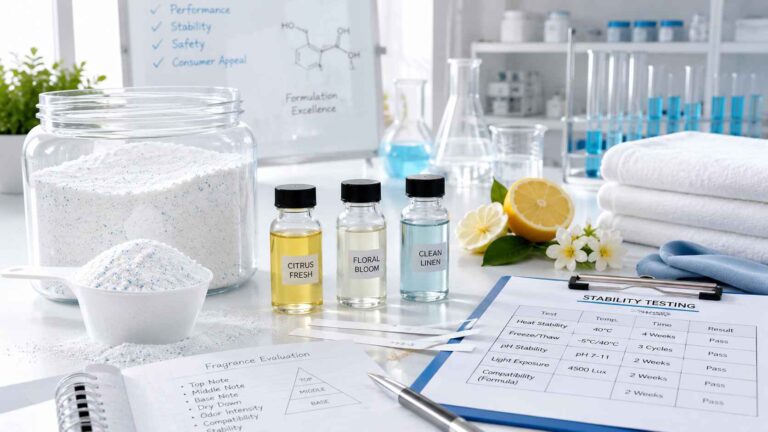
A practical evaluation program can look like this:
Commonly 4 weeks at 40–45°C as a buyer-defined screening protocol
Oxidation, discoloration, packaging interaction
Rancid, paint-like, metallic, or medicinal notes
Cold exposure
Refrigerated storage or buyer-defined freeze-thaw cycles
Precipitation and recovery
Crystals, irreversible haze, phase separation
Packaging trial
Finished bottle, cap, liner, and pump
Leakage, paneling, odor loss, plastic interaction
Swelling, seal damage, fragrance migration
Use test
Diluted in warm and cool wash water
Bloom, grease-odor masking, rinse perception
Scent vanishes instantly or remains excessively on dishes
These are working development checkpoints, not universal legal pass/fail standards. Your acceptance ranges for viscosity, pH, color, and odor must be tied to the finished product specification.
The website’s broader home care fragrance oil range separates detergent and cleaning fragrances from personal care and fine fragrance applications for exactly this reason: application chemistry determines whether a scent is usable.
Oxidation Is the Citrus Problem Buyers Underestimate
Limonene is not automatically the villain. Oxidation is the issue.
Exposure to air can transform fragrance terpenes into oxidation products, including hydroperoxides. Storage temperature, oxygen in the container headspace, repeated opening, light, raw-material age, antioxidants, and packaging all influence that process.
A 2022 retrospective study indexed by PubMed examined 5,773 dermatitis patients tested between 2013 and 2020. Contact allergy prevalence was 5.1% for oxidized limonene and 7.0% for oxidized linalool, with increasing trends reported during the study period. Those figures apply to a dermatitis-patient population, not the general public, but they are strong evidence that oxidation control should not be dismissed as paperwork.
That distinction matters.
A supplier can truthfully say a fresh material met specification when produced. The buyer still needs to know how the fragrance behaves after transport, warehouse storage, filling, retail exposure, and repeated consumer use.
Ask direct questions:
Is the fragrance protected against oxidation?
What storage temperature is recommended?
What is the unopened and opened-container shelf-life guidance?
Is nitrogen blanketing used for sensitive bulk materials?
Are antioxidants used, and do they affect the finished formula?
Is each batch compared against a retained olfactive standard?
Can the supplier provide peroxide-related or oxidation data when commercially relevant?
The custom fragrance oil development process published on this site correctly treats air, light, heat, headspace, and packaging as formulation variables rather than warehouse trivia.
IFRA Category 10A Is Not a Decorative Certificate
Hand dishwashing detergent, including concentrated products, is assigned to IFRA Category 10A, covering household care products with mostly hand contact and treated as rinse-off applications.
The IFRA Guidance for the Use of the IFRA Standards states that the hand-dishwashing exposure model uses 0.2 mg/cm²/day, compared with a HERA value of 0.01 mg/cm²/day. That is a 20-fold higher assumption, selected because some consumers may use hand-dishwashing liquid like liquid hand soap.
This is exactly the sort of detail buyers miss when they ask only, “Is it IFRA compliant?”
Compliant at what dosage?
For which product category?
Under which amendment?
Against which formula version?
An IFRA certificate should identify the fragrance mixture and relevant category limits. It does not replace the finished-product assessment, local chemical classification, allergen calculation, label review, SDS preparation, or stability program.
So I would reject any supplier response that consists of a logo and the words “IFRA safe.”
That is marketing, not documentation.
EU and U.S. Requirements Are Moving Toward More Disclosure
For EU-market planning, citral, linalool, and limonene are not merely scent descriptors. They are named fragrance allergens.
The EU adopted Regulation (EU) 2026/405 on detergents and surfactants on February 11, 2026. Most of the regulation applies from September 23, 2029, while transitional provisions allow qualifying products under the previous framework during defined periods. The regulation requires intentionally added listed fragrance allergens to be labeled when they exceed 0.01% by weight, subject to the stated conditions.
That 2029 application date does not mean buyers should wait until 2029.
A dish soap launched in 2027 may still be on the market, in distributor inventory, or under a long-term private-label agreement when the new system begins to apply. Formulas, labels, digital product data, allergen declarations, and supplier contracts need forward planning.
In the United States, EPA Safer Choice is voluntary, but it is commercially meaningful for brands pursuing safer-chemistry positioning. EPA’s criteria exclude listed carcinogens, mutagens, reproductive toxicants, persistent bioaccumulative toxic chemicals, and known respiratory sensitizers as discrete fragrance chemicals. The current Safer Choice Standard also generally limits each fragrance material classified as a skin sensitizer to 0.01% or 100 ppm in the final product, subject to defined exceptions or testing routes.
The lesson is straightforward: a fragrance oil price quotation without a market-specific documentation package is incomplete.
For a serious B2B order, request:
IFRA documentation for Category 10A
SDS or MSDS for the supplied fragrance
Certificate of Analysis
Fragrance-allergen declaration
Banned- or restricted-substance review where required
Batch number and traceability information
Recommended storage conditions
Recommended use range in the buyer’s application
Confirmation that the approved formula will remain controlled on repeat orders
A capable fragrance oil manufacturer and wholesale supplier should be able to discuss application base, target market, sample testing, IFRA, COA, SDS/MSDS, allergen support, and batch traceability before bulk production begins.
How to Choose the Best Citrus Fragrance Oil for Dish Soap
The strongest citrus sample is rarely the best one.
I would score candidates across six areas:
1. Identity
Can a panel distinguish the fragrance as lemon, orange, lime, or a deliberate citrus blend?
“Fresh citrus” is not specific enough. A sweet orange fragrance and an aldehydic lemon-lime fragrance may target completely different price points and consumers.
2. Base Compatibility
Does it remain clear and homogeneous in the real detergent base?
Never accept “soluble in soap” as sufficient. Ask which surfactants, pH range, salt system, and dosage were tested.
3. Odor Stability
Does the fragrance retain a recognizable citrus opening after accelerated storage?
A fragrance does not need to smell identical at Day 0 and Day 28, but the approved identity must remain intact. A fresh lemon profile that becomes turpentine-like, metallic, or flat has failed.
4. Regulatory Fit
Can the supplier calculate restricted materials and allergen contributions at the intended finished-product dosage?
The fragrance oil concentration and the finished-product concentration are not the same number. Buyers need calculations at the actual use level.
5. Commercial Repeatability
Can the supplier reproduce the approved odor across bulk batches?
Ask how raw-material substitutions are controlled. Ask whether a retained sample is kept. Ask what happens when a citrus fraction changes seasonally or becomes unavailable.
6. Total Cost
What does the fragrance cost per finished bottle at the approved dosage?
A cheaper oil that needs twice the dosage may be more expensive. A powerful oil that destabilizes viscosity may cost far more through reformulation, production delays, rejected packaging, or customer complaints.
The hard truth is that price per kilogram is a weak comparison. Price per compliant, stable, consumer-approved bottle is the number that matters.
FAQs
What is citrus fragrance oil for dish soap?
Citrus fragrance oil for dish soap is a concentrated perfume blend engineered to give hand-dishwashing liquid a lemon, orange, lime, or mixed-citrus identity while remaining compatible with the product’s surfactants, pH, salt-thickening system, color target, packaging, regulatory market, and expected shelf life.
It may combine natural citrus fractions with synthetic aroma materials, green notes, florals, woods, or musk components. Buyers should evaluate it in the finished detergent base, not only from the bottle or on a scent strip.
What is the best citrus fragrance oil for dish soap?
The best citrus fragrance oil for dish soap is the formula that preserves its intended odor, clarity, color, viscosity, foam behavior, and compliance profile at the approved dosage in the buyer’s actual base after accelerated storage, room-temperature aging, and packaging tests—not simply the sample that smells strongest on a blotter.
For transparent dish soap, low color and haze control may be decisive. For an opaque value product, odor impact and cost per bottle may carry more weight.
How do you choose fragrance oil for dishwashing liquid?
To choose fragrance oil for dishwashing liquid, define the scent direction, target market, detergent base, dosage range, color limit, packaging, cost ceiling, and documentation requirements first, then compare multiple candidates in the finished formula under controlled storage rather than judging neat fragrance oil from the bottle.
Request IFRA Category 10A documentation, SDS/MSDS, COA, allergen information, storage guidance, and a controlled bulk-production standard before approving the commercial order.
Are lemon and orange fragrance oils safe in dish soap?
Lemon and orange fragrance oils can be used safely in dish soap when the finished formula meets the applicable IFRA limit, chemical labeling rules, allergen disclosure requirements, supplier specifications, and market-specific safety assessment, with oxidation and packaging stability checked before commercial production.
“Natural,” “food grade,” or “essential oil” does not by itself establish suitability for hand-dishwashing detergent. Safety and compliance depend on the complete composition, dosage, exposure category, finished formula, and destination market.
Build a Citrus Scent That Survives Production
Do not approve your next citrus fragrance oil from a blotter alone.
Send the actual dishwashing base, target scent direction, expected dosage, destination market, packaging type, annual volume, color requirement, and required documents to the formulation team. Request several candidates, test them at low, target, and high dosage, and lock the final formula only after stability and packaging review.
Contact the fragrance development team to request citrus fragrance samples, Category 10A documentation, application guidance, or an OEM/ODM quotation for your dish soap project.
Our team of 20+ senior perfumers leverages a vast library of 40,000+ formulas to deliver expert customization and scent replication with up to 98% accuracy. As premier perfume oil manufacturers, we bring your most complex fragrance concepts to life with precision.
Industry-Leading Speed
We empower your business with industry-leading speed. Samples are ready in just 1-3 days, mass production takes only 3-7 days, and our low 5kg MOQ allows you to test the market quickly and without risk, solidifying our role as agile fragrance oil suppliers.
Certified Quality & System Assurance
Our quality is built on trust and technology. We are fully certified with IFRA, ISO, GMP, and Halal, and our advanced ERP system guarantees complete traceability and batch-to-batch consistency, making us your reliable perfume raw materials supplier.