

Most haircare brands do not have a true hero scent. They have a naming convention. This piece explains how to standardize one olfactive identity across incompatible bases, what real brands get right, and where fragrance strategy usually breaks.

I’ve seen brands blame the formula when the bottle was the real saboteur. Plastic packaging odor, scent contamination from plastic packaging, and weak compatibility testing are still wrecking finished fragrance far too often. Here’s what actually causes the damage, what recent research says, and what to test before you fill one more unit.

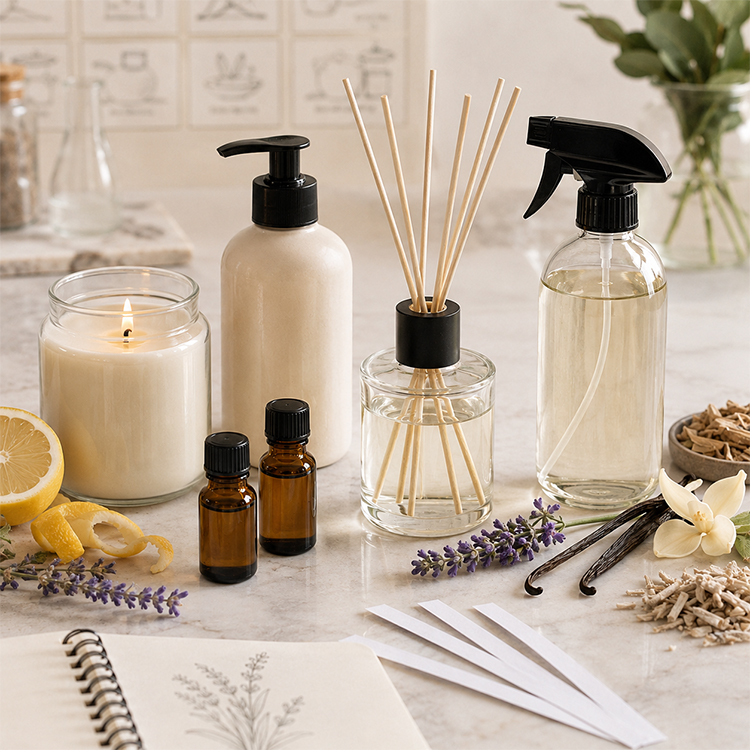
Most room spray failures are not fragrance failures. They are solvent failures, compliance failures, and residue failures. Here is the blunt version of what actually matters.

Most eco cleaning brands do not lose the scent battle because they lack creativity. They lose because they confuse “clean” with “more lemon,” ignore VOC math until late-stage reformulation, and treat compliance like paperwork instead of product design.

Most bespoke toiletries programs fail for a boring reason: the lobby scent and the bottle scent do not survive the same chemistry, packaging, or daily use. This piece argues that brand consistency is not a perfume idea but an operations standard.

Jasmine and neroli do not travel as a single commercial idea. This piece breaks down how white floral preference shifts across GCC, East Asia, the U.S., and Europe—and what smart fragrance briefs do about it.

Most air care copy blurs three different jobs into one promise. This piece separates deodorization, masking, and “freshness” design the way formulators and buyers actually should.