Personal Care Products: Using Fragrance Oils in Shampoos and Conditioners
Fragrance oils can make shampoos and conditioners memorable, but they can also wreck viscosity, trigger allergen-labeling headaches, cloud clear bases, or turn a “clean” haircare launch into a complaint file. Here is the hard-nosed version brands need before scaling.
But in shampoos and conditioners, fragrance oils are not just “nice scent at the end,” and anyone in haircare manufacturing who still treats them that way is gambling with viscosity, scalp tolerance, haze, label compliance, and repeat purchase. Why do so many promising scented hair care products collapse after the first pilot batch?
I’ve watched brands obsess over the opening note — green tea, white musk, citrus peel, baby powder, salon-clean aldehydes — while barely testing the base. That is backward. The fragrance is only successful if it survives surfactants, heat, pH drift, salt curves, cationic emulsions, packaging, warehouse temperature swings, and human noses after rinse-off.
The hard truth: most fragrance oil mistakes are not creative mistakes. They are process mistakes.
For a shampoo brief, I would start with a supplier page like Shampoo-Safe Green Tea Personal Care Fragrance Oil because it speaks the language formulators actually use: SLES, APG, betaine, salt-thickened systems, low color, clear-base compatibility, and 0.2–0.6% w/w starting dosage. For conditioners, the more relevant target is a cationic system, which is why Conditioner-Safe White Musk Personal Care Fragrance Oil is a better internal match than a general perfume oil page.
That distinction matters. Shampoo and conditioner are not the same battlefield.
Table of Contents
The Regulatory Reality: “Fragrance” Is Not a Free Pass
Here is where the industry gets uncomfortable. In the United States, the FDA says fragrance ingredients in cosmetics do not need premarket approval, but companies are still legally responsible for product safety and proper labeling. The FDA also states that fragrance ingredients may often be listed simply as “Fragrance” or “Flavor” because formulas can be treated as trade secrets under U.S. labeling rules: FDA Fragrances in Cosmetics.
That sounds flexible. It is also dangerous if a brand confuses flexibility with immunity.
MoCRA changed the temperature in the room. The FDA describes the Modernization of Cosmetics Regulation Act of 2022 as the most significant expansion of its cosmetics authority since 1938, adding new expectations around serious adverse event reporting, facility registration, product listing, safety substantiation, GMP rulemaking, and fragrance allergen labeling: FDA MoCRA overview.
And the U.S. is not moving in isolation. In Europe, Regulation (EU) 2023/1545 expanded fragrance allergen disclosure expectations. Austrian public health authority AGES notes the long-standing thresholds: 0.01% for rinse-off/wash-off products and 0.001% for leave-on products, with transition dates of 31 July 2026 for new products and 31 July 2028 for products already on the market: AGES fragrance regulation summary.
So, can a brand still hide behind “fragrance” forever? I would not build a 2026 haircare line on that assumption.
Shampoo Fragrance Oil vs. Conditioner Fragrance Oil: Stop Treating Them Like Twins
A shampoo fragrance oil must perform in a cleansing environment. A conditioner fragrance oil must perform in a deposition environment. Those are different jobs, different failure points, and usually different fragrance design choices.
In shampoo, the user wants scent burst. Foam carries expectation. The fragrance needs to survive surfactant odor, stay clear or pearlescent as intended, avoid viscosity collapse, and rinse clean without leaving a greasy note.
In conditioner, the user wants softness, clean dry-down, and hair memory. The fragrance has to sit inside cationic emulsions, fatty alcohols, quats, oils, and silicones without smelling waxy, sour, metallic, or over-musked after drying.
A good personal care fragrance oils portfolio should separate these use cases instead of pretending one “luxury scent” works everywhere. I like seeing categories tied to application because it forces the buyer to ask better questions: Is this for anionic surfactants? Cationic quats? Clear gel? White emulsion? Solid bar? Baby-care positioning? Salon-grade rinse-off?
Tiny detail. Big cost.
A 0.5% fragrance load that behaves beautifully in a sulfate shampoo can still destabilize a conditioner emulsion. A musk that smells clean on a blotter can turn heavy on damp hair. A citrus accord can brighten a shampoo but push allergen labeling pressure through limonene, citral, linalool, or geraniol if the formula is not managed properly.
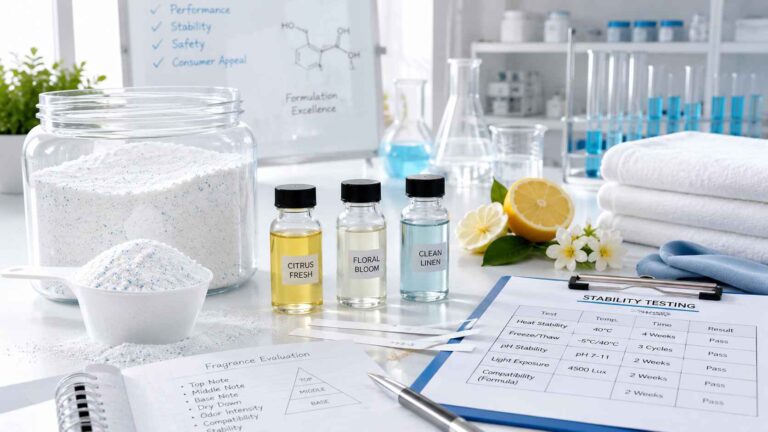
The Formulation Table Brands Should Have Before Buying Bulk
Decision Point
Shampoo Formula Risk
Conditioner Formula Risk
What I Would Demand From the Supplier
Fragrance dosage
Viscosity drop, haze, foam change
Emulsion thinning, waxy odor, heavy deposition
IFRA certificate by product category, suggested starting range, pilot-batch guidance
Compatibility notes for anionic/amphoteric or cationic systems
Visual stability
Clouding in clear shampoo, color shift, sediment
Yellowing in white conditioner, separation, oil bleed
4-week and accelerated stability observations
Scent behavior
Strong wet bloom but weak dry hair retention
Pleasant jar smell but dull or dirty dry-down
Wet evaluation, rinse test, dry hair tress test after 4–6 hours
Compliance
Allergen threshold exposure in rinse-off formula
Higher concern if conditioner is marketed as scalp-soothing or sensitive
Full allergen declaration support, SDS, COA, IFRA, batch traceability
Scale-up
Pilot smells fine, 500 kg batch shifts
Heat phase damages top notes
Manufacturing temperature limits and addition-stage advice
If your supplier cannot answer those points, do not buy the drum. Buy a sample, run a pilot, and make them earn the purchase order.
For deeper formulation context, the site already has a useful supporting article on formulation considerations for fragrance oils in solid shampoo and conditioner bars. That page is worth linking because solid formats are where bad fragrance selection becomes painfully visible: sweating, cracking, drag, scent fade, and IFRA mistakes show up quickly.
The Allergen Problem Nobody Wants in the Marketing Meeting
Let’s say the marketing team wants “fresh botanical citrus.” Fine. That probably means some mix of limonene, citral, linalool, geraniol, citronellol, or related naturals and synthetics. These are not automatically bad. They are common, useful, and often beautiful.
But common does not mean invisible.
A 2024 review in Cosmetics reported that allergies due to hair care products represented 9% of all allergies in North American Contact Dermatitis Group data: Hair Product Allergy review. Another PubMed-indexed study of 5,588 cosmetic products noted that EU rules required labeling of 26 fragrance contact allergens when present at 10 ppm or above in leave-on products and 100 ppm in rinse-off products: Fragrance contact allergens in 5588 cosmetic products.
That is the part buyers often miss. The risk is not “fragrance oil bad.” The risk is uncontrolled fragrance oil in a product category where consumers apply it repeatedly to scalp and hair, sometimes daily, sometimes after chemical treatments, sometimes on compromised skin.
And yes, rinse-off lowers exposure compared with leave-on. But anyone who has handled complaint reports knows rinse-off does not mean risk-free.
The Supplier Test: What I Ask Before I Trust a Fragrance Oil
I do not trust “smells amazing.” That phrase has killed more launches than bad packaging.
Here is what I ask instead:
Does the fragrance oil have an IFRA certificate for the intended haircare category? Can the supplier provide SDS and COA without delay? Was it tested in anionic shampoo systems or only in ethanol? Was it tested in cationic conditioner systems or only on blotters? What is the suggested usage range for shampoo fragrance oil and conditioner fragrance oil? Will it discolor a white base? Will it cloud a transparent base? Does it thin a salt-thickened system? Does the dry hair note still smell premium after 4 hours? What allergens appear at likely use levels? Can the scent be adjusted for a lower allergen burden without losing the brand signature?
That last question separates real fragrance partners from catalog sellers.
For B2B buyers comparing sources, the broad wholesale fragrance oils page is a logical internal link because it positions the company around IFRA compliance, COA/MSDS documentation, 40,000+ formulas, 20+ senior perfumers, low 5 kg MOQ, 1–3 day samples, and 3–7 day mass production. Those claims are exactly the kind of operational details procurement teams look for before they risk a formula change.
The Notes That Work Best in Haircare — And the Ones I Question
I have a strong opinion here: “edible dessert hair” is usually lazy unless the brand is deliberately youth-led, playful, or seasonal. Vanilla cupcake conditioner can sell once. A clean musk-green-tea-floral system can sell for years.
For fragrance oils for shampoo, I like bright and volatile structures: green tea, citrus tea, watery florals, mint leaf, soft herbal, marine mineral, pear skin, clean aldehydes, and transparent woods. Shampoo is theater. You get maybe 45 seconds in the shower to make the consumer feel the product is working.
For fragrance oils for conditioner, I prefer smoother diffusion: white musk, cotton flower, soft jasmine, ambrette nuance, blonde woods, creamy sandalwood, light amber, rice milk, oat, cashmere, or salon-clean powder. Conditioner is residue memory. The user judges it later when hair is dry.
But beware the “best fragrance oils for shampoo” trap. There is no universal best. There is only best for your base, market, claim set, regulatory target, price point, packaging, and consumer expectation.
If your shampoo is a clear micellar cleanser, low-color green tea makes sense. If your conditioner is a white repair mask, a heavy amber gourmand may stain, muddy the base, or fight the care story. If your line sells into the EU, Canada, the U.S., and ASEAN, your allergen strategy has to be built before artwork, not after.
How to Use Fragrance Oils in Shampoo Without Wrecking the Formula
Start lower than your ego wants.
For many rinse-off shampoos, a practical first lab screen is often around 0.2–0.6% w/w, then adjusted based on base odor, scent intensity, IFRA limits, viscosity behavior, and target market. I would rather see three well-documented pilots at 0.25%, 0.40%, and 0.60% than one dramatic 1.0% sample that smells amazing and fails after two weeks at 45°C.
Add the fragrance at the recommended cool-down stage. Watch viscosity after 24 hours, 7 days, and 4 weeks. Test at room temperature, elevated temperature, and freeze-thaw if your distribution chain demands it. Check clarity. Check odor drift. Check package interaction.
Then wash hair. Real hair. Not just a jar sniff.
This is where many brands cheat. They evaluate fragrance oils in the bottle and forget that shampoo is judged in foam, rinse, towel-dry, and next-morning hair. A formula that smells expensive in the lab can smell flat after contact with sebum, hard water, and surfactant residue.
How to Use Fragrance Oils in Conditioner Without Making Hair Smell Heavy
Conditioners punish bad perfumery.
Because conditioner systems are usually cationic and lipid-rich, fragrance materials can cling harder to hair fiber. That sounds good until it becomes too much. Musks can get laundry-thick. Woods can turn dusty. Sweet notes can feel greasy. Florals can go sharp against amines or quats.
For conditioner fragrance oil, I want controlled diffusion, low discoloration, and a dry-down that supports softness rather than screaming over it. The internal page on Conditioner-Safe Usage & White Musk Development fits naturally here because it frames the real questions: scalp safety, BTMS compatibility, and IFRA acceptance.
Do not dose conditioner by matching shampoo intensity in the jar. Dose by matching the finished hair experience.
That means hair tress testing, panel sniffing after drying, and checking whether the scent still feels clean after heat styling. I would also test on bleached hair, oily hair, and textured hair if the product claims broad use. Hair is not one substrate.
Brand Architecture: One Accord, Multiple Personal Care Products
Here is the more sophisticated play: build a core accord, then adapt it across shampoo, conditioner, mask, body wash, lotion, and maybe home care.
Not copy-paste. Adapt.
A green tea accord in shampoo can be brighter, citrus-lifted, and steam-friendly. The conditioner version can soften the same identity with white musk, neroli, watery leaf, and blonde woods. The body wash version can bloom harder. The lotion version needs lower volatility and skin-friendly softness.
This is why the site’s article on a cross-category scent matrix is a smart internal link for brand owners. It supports the argument that fragrance should not be random SKU decoration. It should be a system.
And systems are easier to defend in retail.
FAQs
What are fragrance oils in shampoos and conditioners?
Fragrance oils in shampoos and conditioners are concentrated aromatic blends made from natural and synthetic scent materials, designed to give haircare products a controlled smell during use, after rinsing, and sometimes after drying, while still meeting safety, stability, and regulatory requirements for cosmetic formulas. They are not the same as dumping perfume into a base.
A proper hair care fragrance oil is built around surfactants, emulsifiers, pH, viscosity, packaging, color, IFRA category limits, allergen disclosure, and consumer expectations. That is why a shampoo fragrance oil and a conditioner fragrance oil should be screened separately.
How much fragrance oil should I use in shampoo?
A sensible starting range for fragrance oil in shampoo is often about 0.2–0.6% w/w, but the correct dosage depends on the base odor, surfactant system, desired scent strength, IFRA certificate, allergen profile, viscosity response, clarity target, and the market’s tolerance for scented hair care products. Never scale from smell alone.
Run multiple pilot batches. Track viscosity, color, haze, foam feel, scent bloom, and odor after 4 weeks. Then confirm the final dosage against the supplier’s IFRA documentation before commercial production.
Can I use the same fragrance oil in shampoo and conditioner?
You can sometimes use the same fragrance oil in shampoo and conditioner, but it should never be assumed because shampoos rely on anionic or amphoteric surfactant systems while conditioners often use cationic emulsions, quats, fatty alcohols, oils, and deposition behavior that can radically change scent performance. The base changes the fragrance.
If you want one brand scent across both products, ask the supplier to adapt the accord. Keep the signature recognizable, but tune the shampoo for wet bloom and the conditioner for dry hair softness.
Are fragrance oils safe for scalp use?
Fragrance oils can be safe for scalp-adjacent rinse-off use when they are properly selected, dosed, documented, and tested within the finished shampoo or conditioner formula, but safety depends on the exact fragrance composition, IFRA limits, allergen content, exposure pattern, consumer sensitivity, and product claims. “Natural” does not automatically mean safer.
A brand should request IFRA, SDS, COA, allergen documentation, and formula-specific usage guidance. It should also avoid therapeutic claims unless the product is being regulated as more than a cosmetic.
What are the best fragrance oils for shampoo?
The best fragrance oils for shampoo are usually low-color, surfactant-compatible, stable, IFRA-documented blends that create a strong wet bloom without clouding clear bases, thinning salt-thickened systems, irritating the scalp, or leaving an unpleasant note after rinse-off. Good examples include green tea, citrus musk, watery floral, herbal clean, and soft salon accords.
The best choice depends on base chemistry. A pearlized anti-frizz shampoo, a clear micellar shampoo, and a sulfate-free baby shampoo should not all use the same fragrance strategy.
Do fragrance oils need allergen labeling?
Fragrance oils may require allergen labeling depending on the market, formula concentration, ingredient profile, and product type, with the EU already using thresholds such as 0.01% for rinse-off products and 0.001% for leave-on products, while U.S. fragrance allergen labeling is being shaped under MoCRA. Brands should prepare now.
The safest commercial approach is to request allergen breakdowns early, before packaging artwork. Late allergen discovery is expensive, slow, and embarrassing.
Your Next Steps: Test the Fragrance Like It Can Break the Launch
Do not pick fragrance oils for shampoos and conditioners from a blotter alone.
Ask for IFRA, SDS, COA, allergen data, suggested dosage, base compatibility notes, and production guidance. Build three pilot batches. Run stability. Wash hair. Dry hair. Smell it again tomorrow. Then decide.
If you are building a haircare line and need application-specific support, start with the site’s Personal Care fragrance oils category, compare the shampoo-safe and conditioner-safe options, and request a sample brief based on your exact formula base, target market, and launch timeline.
Our team of 20+ senior perfumers leverages a vast library of 40,000+ formulas to deliver expert customization and scent replication with up to 98% accuracy. As premier perfume oil manufacturers, we bring your most complex fragrance concepts to life with precision.
Industry-Leading Speed
We empower your business with industry-leading speed. Samples are ready in just 1-3 days, mass production takes only 3-7 days, and our low 5kg MOQ allows you to test the market quickly and without risk, solidifying our role as agile fragrance oil suppliers.
Certified Quality & System Assurance
Our quality is built on trust and technology. We are fully certified with IFRA, ISO, GMP, and Halal, and our advanced ERP system guarantees complete traceability and batch-to-batch consistency, making us your reliable perfume raw materials supplier.