Fragrance Oil Dilution and Concentration: Tips for Lasting Scent
A practical, skeptical guide to fragrance oil dilution and concentration for brands, formulators, and buyers who need lasting scent without overdosing, failed labels, unstable bases, or weak supplier paperwork.
I know that sounds too blunt, but after watching brands obsess over “luxury notes” while ignoring the fragrance oil dilution ratio, the carrier system, the base formula, and the legal use limit, I’m convinced most weak scents are not creative failures—they are math failures wearing nice packaging. Why does nobody want to admit that?
Here is the hard truth: a fragrance oil does not become longer-lasting just because you pour more into the bottle. It becomes longer-lasting when the fragrance oil concentration fits the application, the evaporation profile, the carrier oil, the IFRA category, the packaging, and the actual product base. That is where the serious money is made.
And lost.
For B2B buyers, the starting point should be a documented, application-tested supply chain, not a Pinterest dilution chart. I would point buyers first to a technical category page like wholesale fragrance oils and perfume raw materials because the real question is not “Does it smell strong?” The question is: can the supplier prove it behaves in cosmetics, candles, shampoo, detergent, diffuser systems, and alcohol-free perfume oil builds?
The Hard Truth About Fragrance Oil Dilution
Fragrance Oil Dilution is the controlled reduction of a concentrated aromatic compound with a compatible carrier, solvent, base, or finished formula so the scent reaches the right strength, safety profile, stability, and user experience for a specific application.
That sounds clinical. Good.
The fragrance business needs more clinical thinking and less romantic fog. A 20% oil load in a roll-on perfume can be elegant. The same percentage in a lotion may be reckless. A 6% candle load may throw beautifully in soy wax. That same 6% in a shampoo could flatten foam, cloud the base, irritate the scalp, or push allergen labeling into a new headache.
We overpraise intensity. I think that is one of the industry’s most expensive bad habits.
A better question is: what is the lowest concentration that delivers the desired scent curve after stability, safety, and real-use testing?
That question makes weak suppliers nervous.
Table of Contents
Fragrance Oil Concentration Is Not the Same as Performance
Fragrance oil concentration means the percentage of fragrance compound in the final product by weight, not by hope, not by “drops,” and not by whatever the last successful TikTok formula used.
So, if you add 15 g of fragrance oil into a 100 g perfume oil product, your fragrance oil concentration is 15%. If you add 0.8 g into a 100 g shampoo, it is 0.8%. If you add 6 g into a 100 g candle wax batch, it is 6%.
Simple math. Ugly consequences.
Because scent longevity depends on more than dosage. It depends on volatility, molecular weight, polarity, vapor pressure, skin interaction, and the balance between top notes, heart notes, and base notes. Limonene, C10H16, can flash fast. Linalool, C10H18O, can oxidize. Vanillin, C8H8O3, can anchor sweetness but also discolor some systems. Benzyl salicylate, C14H12O3, can help floral diffusion and substantivity, but it also sits inside a compliance conversation.
The IFRA Standards are not decorative paperwork; IFRA describes them as a globally recognized risk-management system that limits, restricts, or bans certain fragrance materials where safe use is a concern, while leaving final market responsibility with the company selling the finished product.
A Practical Dilution Table for Brands That Need Fewer Surprises
Use this as a starting range, not permission. The best dilution for long lasting fragrance oil is always application-specific, supplier-specific, and regulation-specific.
Notice the pattern: the “right” fragrance oil dilution ratio is not one number. It is a controlled negotiation between scent, safety, solubility, and commercial tolerance.
For cosmetics, I would pair this article internally with how to select and integrate fragrance oils in cosmetics because dosage without cosmetic-base testing is just gambling with better stationery. The FDA is clear that fragrance ingredients in cosmetics do not need premarket FDA approval, but companies are legally responsible for making sure products are safe and properly labeled.
Carrier Oil for Fragrance Oil: The Quiet Variable Nobody Respects
Carrier oil for fragrance oil is the non-aromatic medium that dilutes, solubilizes, or delivers the fragrance compound in a finished product, affecting skin feel, evaporation rate, clarity, oxidation risk, scent throw, and long-term stability.
That definition matters because “carrier oil” gets used too loosely. Jojoba oil is not the same as fractionated coconut oil. DPG is not the same as ethanol. Triethyl citrate is not the same as a silicone-compatible base. And “natural oil” does not automatically mean better performance.
I’ll say the unfashionable thing: many “natural-first” dilution choices are performance liabilities unless the brand has stability data.
Jojoba can feel premium and oxidizes more slowly than many triglyceride oils. Fractionated coconut oil can feel light and clean. DPG is common in diffuser and fragrance systems because it helps dissolve aromatic materials and slow evaporation. Ethanol gives lift, diffusion, and fast opening, but it can make a formula feel thinner, brighter, and less intimate. Each choice changes the scent curve.
That is why serious buyers should ask suppliers for base-specific testing, not just a nice-smelling blotter. The site’s own common QA tests for fragrance oils before shipment page is the kind of internal resource that belongs beside any dilution article because GC–MS, refractive index, density, visual checks, and retained standards catch problems that “smells fine to me” will miss.
The Longevity Myth: More Oil Does Not Always Mean More Scent
Higher fragrance oil concentration can improve scent intensity and wear time, but only until the formula hits its failure point.
After that, more oil can do the opposite. It can mute diffusion, overwhelm the nose, destabilize the base, increase staining, raise allergen exposure, or create a sticky skin feel that consumers interpret as cheap. Strong is not always premium. Sometimes strong is just lazy.
Here is the model I use:
Top Notes
Citrus, green, aldehydic, ozonic, fruity, and some herbal notes lift quickly. They sell the first sniff. They also disappear first.
Heart Notes
Florals, spices, tea notes, soft fruits, and aromatic materials give the formula shape. They decide whether the scent feels coherent after 30 minutes.
Base Notes
Musk, amber, woods, resins, lactones, vanilla, sandalwood-style molecules, and certain fixative materials drive memory and dry-down. They are why someone smells a sleeve six hours later and remembers the product.
If a formula lacks a base structure, no dilution chart will save it. Pouring more of a top-heavy fragrance into a carrier is like turning up a bad speaker. Louder, yes. Better, no.
For formula architecture, a natural internal link is fragrance oil formula methods for balancing notes. A buyer trying to solve “lasting scent” needs note-balance logic before they argue about 8% versus 10%.
Compliance Is Where Amateur Dilution Advice Breaks
Compliance is not the boring part. It is the part that keeps your product on shelves.
The FDA allows fragrance and flavor ingredients in many cosmetic ingredient declarations to appear simply as “Fragrance” or “Flavor,” partly because fragrance formulas are often complex mixtures and may be treated as trade-secret material. But that does not erase safety responsibility, consumer sensitivity, or retailer demands. (U.S. Food and Drug Administration)
The EU is tougher on fragrance allergen transparency. Regulation (EU) 2023/1545 amended the Cosmetic Products Regulation for fragrance allergen labeling, and European Commission guidance says it adds provisions and transition periods for 56 additional fragrance allergens. The transition is 3 years for placing products on the market and up to 5 years for withdrawing non-compliant products that were already placed on the market before the new rules apply.
So when someone asks, “How much fragrance oil should I use?” the honest answer is:
Enough to perform. Less than the safety limit. Verified in the intended product.
Anything else is influencer chemistry.
Indoor Air, VOCs, and Why Scent Strength Is Getting Political
A lasting scent is not just a sensory win. It can become an emissions discussion.
The EPA says volatile organic compounds, or VOCs, are emitted as gases from certain solids or liquids, and concentrations of many VOCs are consistently higher indoors—up to ten times higher—than outdoors. Household sources include air fresheners, cleansers, disinfectants, aerosol sprays, cosmetics, and stored chemical products. (US EPA)
NOAA’s 2021 New York City research went further: air samples from a 2018 mobile-lab field mission showed fragrant personal care products generated about half of the human-linked VOCs not produced by vehicle exhaust, and a related study estimated volatile consumer products made up 78% of Manhattan’s VOC budget versus 22% from transportation. (csl.noaa.gov)
That is not an argument against fragrance. I am not anti-scent. I am anti-sloppy dosing.
The brands that win the next decade will not simply sell “stronger fragrance.” They will sell controlled performance: enough diffusion, longer dry-down, cleaner documentation, lower complaint rates, and smarter application limits.
How to Dilute Fragrance Oil Without Lying to Yourself
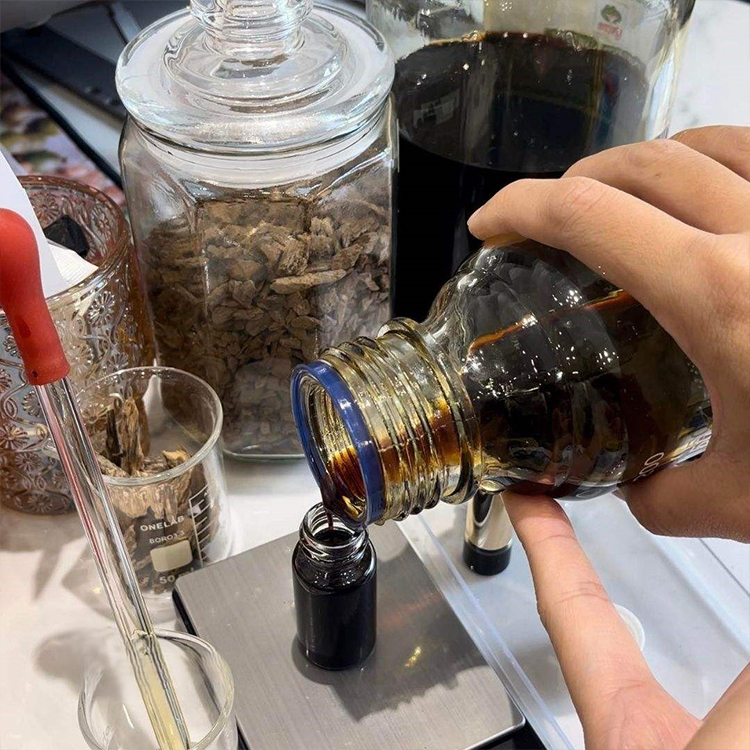
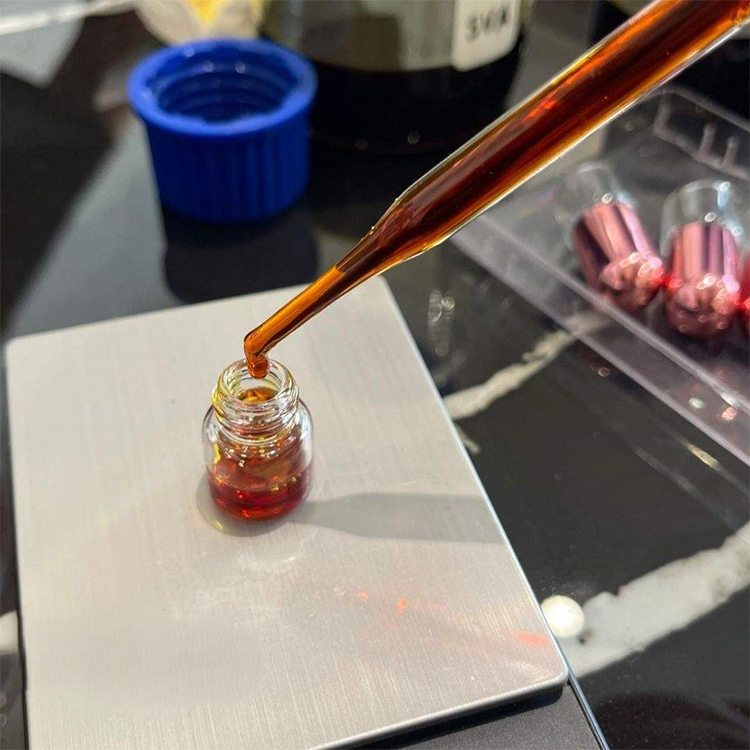
Start with weight. Not drops.
A drop can vary by viscosity, dropper diameter, temperature, operator, and material density. In professional formulation, grams beat drops every time.
Step 1: Define the Finished Product
Is it a roll-on perfume oil, shampoo, lotion, candle, diffuser, room spray, fabric softener, detergent, or cold-process soap? This decides the likely concentration range and the compliance category.
Step 2: Ask for the IFRA Certificate Before You Fall in Love
The IFRA Certificate of Conformity is supplier-issued and confirms alignment with IFRA Standards for intended use, but IFRA also states it does not replace a full safety assessment or remove the need to comply with local law. (IFRA)
Step 3: Make Three Lab Batches
I like 0.5×, 1×, and 1.5× around the target. For example, if you think a shampoo needs 0.7%, test 0.35%, 0.7%, and 1.05%. Then evaluate odor, clarity, viscosity, foam, pH drift, color, and consumer perception.
Step 4: Run Stability Before Production
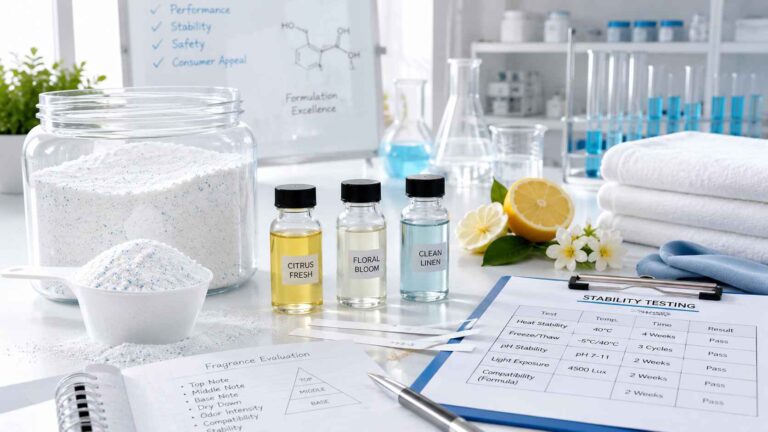
Heat aging at 40°C, freeze-thaw cycling, light exposure, and packaging contact tests will tell you more than a beautiful launch sample. Fragrance is chemistry under stress.
Step 5: Smell the Dry-Down, Not the Bottle
Bottle smell is a sales trick. Dry-down is the product.
Test after 15 minutes, 1 hour, 4 hours, 8 hours, and 24 hours where relevant. For candles, test cold throw, hot throw, wick behavior, wax sweating, and soot. For haircare, test wet application and dried hair. For lotion, test skin after rub-out and after 2–4 hours.
For packaging risk, the internal guide on fragrance oil packaging selection and seal requirements fits naturally here because certain fragrance materials can attack liners, soften plastics, stain caps, or creep through weak closures.
The Dilution Ratio I Actually Trust
I trust a dilution ratio only after it survives the base.
That’s it.
A perfume oil at 20% in jojoba may wear beautifully because the carrier hugs the skin and slows release. A room spray at 3% may feel aggressive because ethanol pushes volatility. A candle at 8% may underperform if the wax blend traps the aroma. A lotion at 0.8% may smell clean on day one and sour after 12 weeks at 40°C.
So no, there is no universal best dilution for long lasting fragrance oil.
There are only controlled starting points, documentation, testing, and discipline.
If you are developing a private-label product or custom scent, the better route is supplier collaboration through a structured brief. The site’s OEM/ODM customized perfume oil manufacturer page is a useful internal target because dilution decisions should be locked into the development brief, not patched after the fragrance is approved.
FAQs
What is fragrance oil dilution?
Fragrance oil dilution is the process of reducing a concentrated aromatic compound with a compatible carrier, solvent, wax, surfactant base, cosmetic base, or finished product system so the scent reaches a safe, stable, usable concentration for its intended application. It controls strength, skin exposure, scent diffusion, and long-term formula behavior.
In plain English: dilution turns a powerful concentrate into something your product can actually use. For a roll-on perfume, that might mean jojoba oil or fractionated coconut oil. For a diffuser, it may mean DPG or another diffuser base. For shampoo, the “diluent” is often the surfactant formula itself.
What is the best dilution for long lasting fragrance oil?
The best dilution for long lasting fragrance oil is the lowest tested concentration that delivers the desired scent intensity and dry-down while staying inside IFRA limits, remaining stable in the base, preserving product texture, and avoiding excessive allergen, VOC, discoloration, or irritation risk. It is determined by application testing, not guesswork.
For perfume oils, that may be 10–25%. For lotions, often 0.2–1.0%. For candles, commonly 6–10%. For shampoo, often 0.3–1.0%. But those are starting ranges, not promises.
How much fragrance oil should I use?
How much fragrance oil you should use depends on the finished product type, IFRA category, supplier certificate, target scent strength, carrier compatibility, stability data, and whether the product is leave-on, rinse-off, burned, diffused, sprayed, or washed away. The correct amount is measured by weight and verified through lab testing.
A useful first calculation is: fragrance oil weight ÷ finished product weight × 100. Then compare that number with the IFRA maximum, your supplier’s recommendation, and your own stability results.
What is fragrance oil concentration?
Fragrance oil concentration is the percentage of aromatic fragrance compound present in the finished formula, calculated by dividing the fragrance oil weight by the total finished product weight and multiplying by 100. It affects scent strength, longevity, diffusion, regulatory exposure, product stability, and user perception.
A 100 g batch with 5 g fragrance oil has a 5% fragrance oil concentration. That number is easy. The harder part is proving that 5% survives heat, time, packaging, and real consumer use.
What carrier oil for fragrance oil works best?
The best carrier oil for fragrance oil is the carrier that dissolves the fragrance fully, feels appropriate on skin or in the application, slows evaporation where needed, resists oxidation, maintains clarity, and does not interfere with compliance or packaging. Jojoba, fractionated coconut oil, MCT, DPG, ethanol, and esters all behave differently.
For skin oils, jojoba and fractionated coconut oil are common choices. For diffusers, DPG-type systems are common. For alcohol sprays, ethanol is standard. The carrier should be chosen after solubility and stability testing, not by trend.
Is higher fragrance oil concentration always better?
Higher fragrance oil concentration is not always better because excess fragrance can destabilize formulas, increase irritation risk, trigger stronger allergen-labeling duties, distort the scent profile, cause candle sweating, cloud surfactant systems, stain packaging, or make the finished product feel cheap. Longevity comes from structure, compatibility, and controlled release.
A well-built 8% perfume oil can smell more expensive than a clumsy 25% one. Concentration is a tool. It is not a personality.
Final Thoughts: Build the Scent Like a Product, Not a Mood
Fragrance oil dilution is where the fantasy meets the factory.
So here is my blunt advice: stop asking for the strongest oil and start asking for the most defensible system. Ask for the IFRA Certificate. Ask for SDS, COA, allergen data, density, refractive index, base testing, packaging compatibility, and retained batch standards. Test at three concentrations. Smell the dry-down. Abuse the sample with heat. Then decide.
For brand owners, procurement teams, and formulators building a product that must survive launch, scale, and repeat orders, start with a documented supplier conversation through I’SCENT’s custom fragrance oil contact page. Bring your application, target market, carrier, concentration range, packaging, and compliance region. Make the scent last because the system is engineered—not because the formula was overdosed.
Our team of 20+ senior perfumers leverages a vast library of 40,000+ formulas to deliver expert customization and scent replication with up to 98% accuracy. As premier perfume oil manufacturers, we bring your most complex fragrance concepts to life with precision.
Industry-Leading Speed
We empower your business with industry-leading speed. Samples are ready in just 1-3 days, mass production takes only 3-7 days, and our low 5kg MOQ allows you to test the market quickly and without risk, solidifying our role as agile fragrance oil suppliers.
Certified Quality & System Assurance
Our quality is built on trust and technology. We are fully certified with IFRA, ISO, GMP, and Halal, and our advanced ERP system guarantees complete traceability and batch-to-batch consistency, making us your reliable perfume raw materials supplier.