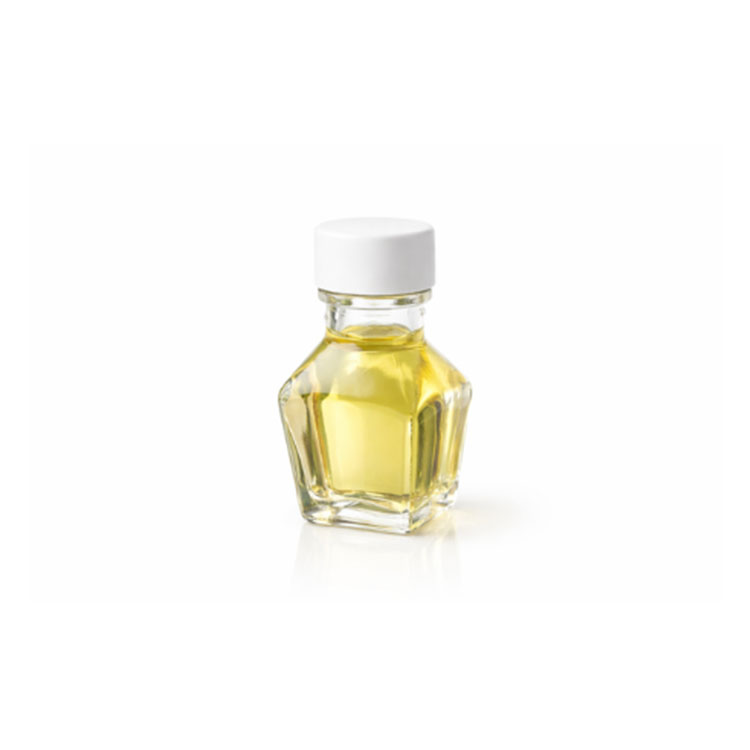
Hotel/salon bespoke toiletries scents: space memory and brand consistency
Most bespoke toiletries programs fail for a boring reason: the lobby scent and the bottle scent do not survive the same chemistry, packaging, or daily use. This piece argues that brand consistency is not a perfume idea but an operations standard.
I’ve watched too many hotel and salon teams obsess over marble counters, bottle color, and embossed caps, only to approve a body wash that smells like generic “spa fresh” while the lobby diffuser pushes a completely different story, which means the brand is not being reinforced at all; it is being split in half, invisibly, every single day. And then they call it luxury. Why?
The hard truth is that custom hotel toiletries are not branding because they are expensive; they are branding because they repeat the same sensory code, with discipline, across shampoo, conditioner, hand wash, body lotion, room diffusion, and retail take-home. Westin is the obvious public example: Marriott sells the Westin White Tea signature not only as home fragrance, but across body wash, lotion, shampoo, and conditioner, which is exactly what a real scent system looks like when a brand decides memory matters more than decoration.
If you want the site’s most relevant internal proof point, building a brand signature scent across a full portfolio says the quiet part out loud: recognition plus repeatability, or the whole thing drifts. Pair that with I’SCENT’s custom hotel lobby fragrance page and you can see the intended architecture clearly—one scent identity, multiple delivery systems, same emotional fingerprint.
Table of Contents
Scent memory does the heavy lifting
Smell sticks.
That is not poetic fluff; it is the operational advantage. A 2023 UC Irvine study reported a 226% increase in cognitive performance in older adults exposed to rotating scents during sleep, and a 2024 University of Pittsburgh report on work published in JAMA Network Open found that familiar scent cues may help people recall specific autobiographical memories, which is another way of saying olfaction is not just ambient decoration, it is a retrieval trigger.
So when I hear “space memory,” I do not hear marketing jargon. I hear repeated cue exposure. The bergamot-white-tea accord in a hotel lift. The creamy musk in a salon towel steam. The same soft cedar-vanilla echo in the lotion by the sink. Guests do not need to name the accord. They only need to feel, later, that they have smelled you before. Isn’t that the whole point of brand consistency?
The real fight is formula translation
Here is where it breaks.
A scent that feels elegant through an HVAC diffuser can go thin inside shampoo, waxy inside lotion, sharp in hand soap, or oddly metallic once it sits next to surfactants, preservatives, UV exposure, and cheap pumps for ninety days in storage. I hate when agencies pretend this is still a mood-board discussion. It is chemistry now. The site’s cosmetic fragrance for skincare and beauty page and its article on skin-friendly personal care fragrance oils both circle the same reality: emulsions, gels, and balms need low-noise tops, stable hearts, and soft bases that will not separate, discolor, sting, or fight the formula. Tea notes, white musk, ambrette, muguet, peony, pear, and cashmeran are not lifestyle words here; they are structure choices.
And air care is its own headache. I’SCENT’s page on fragrance oils for nebulizers and HVAC scenting systems makes the engineering point many buyers miss: viscosity, diffusion curve, strength retention, and irritation risk all matter before anyone starts talking about “luxury atmosphere.” Too thick, you clog the system. Too thin, the halo dies fast. Too loud, people say it smells chemical. Too soft, your brand vanishes.
Brand consistency is mostly boring systems
That is the insider truth.
People love to talk about notes—neroli, white tea, sandalwood, linalool, limonene, citral, hexyl cinnamal—but the brands that actually keep a signature scent coherent across hotel amenities or salon retail do something less glamorous: they write a real brief, define a signature accord, test it in each base, lock acceptance criteria, and keep traceability tight enough that Batch B does not smell “almost right.” “Almost right” is where brand trust goes to die. Building a brand signature scent across a full portfolio is useful here because it frames the scent as a scalable system, not a one-off perfume.
On the site, the numbers are blunt: 20+ senior perfumers, 40,000+ formulas, up to 98% scent-matching accuracy, samples in 1–3 days, production in 3–7 days, and MOQ starting as low as 5 kg for some projects. That does not prove genius. It proves process capacity, which matters more when you are trying to keep bespoke hotel toiletries and custom salon toiletries aligned across bottle, towel room, reception, and retail shelf. Add the site’s customized fragrance packaging for bulk orders page and the message becomes even clearer: the scent brief and the pack brief should be approved together, not in separate universes.
Loud scent is not premium scent
I will say it plainly.
The industry still confuses overdosage with sophistication, and that is a rookie mistake, especially in hospitality and salon environments where people do not consent to sit inside your fragrance strategy for forty minutes. A 2024 pilot study published on PMC looked at hotel rooms in four U.S. cities, targeted 139 VOCs, and detected 57 of them in indoor air. That does not mean fragrance itself is the villain, but it does mean the brief has to include indoor-air discipline, complaint risk, and user sensitivity—not just “make it stronger.”
This is why I prefer “controlled diffusion” over “signature intensity.” The best branded guest amenities do not shout. They repeat. A polished hotel or salon should smell present at 0.5 meters, coherent at 2 meters, and forgettable in the worst way at 10 meters—that is, it should never become the story for the wrong reason. The site’s HVAC guidance explicitly warns about irritation, allergy triggers, and poor air-quality outcomes if the wrong oils are used, which is exactly the warning more fragrance vendors should put on slide one.
What winning brands actually standardize
Touchpoint
What the scent must do
Common failure mode
What the brand should lock first
Lobby / reception diffusion
Create first-impression recall in under 3 seconds
Too sharp, too thin, or too generic
Signature accord, diffusion curve, acceptable intensity range
Shampoo / body wash
Survive wet dilution and rinsing without turning flat
Home version smells richer or louder than in-space version
Home-use variant, halo match, dosage guardrails
Packaging
Signal the same scent family before opening
Visual identity says luxury, formula says commodity
Packaging brief, scent brief, batch approval tied together
FAQs
What are custom hotel toiletries?
Custom hotel toiletries are branded rinse-off or leave-on amenity products—usually shampoo, conditioner, body wash, lotion, and hand wash—built around a controlled fragrance brief, formula-performance targets, packaging standards, and compliance documents so the guest smells the same brand identity in every touchpoint. That is why generic stock fragrance plus a private-label bottle usually feels fake within one stay.
How does scent create space memory in hotels and salons?
Scent creates space memory by repeatedly pairing one recognizable olfactory cue with a physical environment, emotional state, and routine sequence—arrival, washing, towel use, checkout, or salon finishing—so the brain later retrieves the place faster from smell than from most visual details. In practice, this means the aroma has to recur with discipline, not randomness.
Can one signature scent work in lobby diffusion, shampoo, and lotion?
One signature scent can work across diffusion, shampoo, and lotion only when the brand builds a signature accord first and then rebalances that accord for each base, dosage window, and compliance category instead of forcing one unchanged formula into every application. Same identity, different engineering. That is the distinction cheap brands miss.
What should a hotel or salon demand from an OEM fragrance supplier?
A hotel or salon should demand a written fragrance brief, IFRA-ready documentation, SDS and COA support, batch traceability, base-specific testing, packaging compatibility checks, approval standards for wet and dry smell, and a clear plan for matching the lobby scent to branded guest amenities and retail products. If the supplier cannot talk through those items, walk away.
What is the best bespoke toiletries scent for hotels?
The best bespoke toiletries scent for hotels is not one fixed note family but a low-fatigue, high-repeatability profile—often white tea, bergamot, soft woods, neroli, cotton musk, or light green florals—that survives rinse-off use, reads clean in shared spaces, and can extend into home fragrance without turning loud or cheap. “Best” means scalable, not merely beautiful.
Our team of 20+ senior perfumers leverages a vast library of 40,000+ formulas to deliver expert customization and scent replication with up to 98% accuracy. As premier perfume oil manufacturers, we bring your most complex fragrance concepts to life with precision.
Industry-Leading Speed
We empower your business with industry-leading speed. Samples are ready in just 1-3 days, mass production takes only 3-7 days, and our low 5kg MOQ allows you to test the market quickly and without risk, solidifying our role as agile fragrance oil suppliers.
Certified Quality & System Assurance
Our quality is built on trust and technology. We are fully certified with IFRA, ISO, GMP, and Halal, and our advanced ERP system guarantees complete traceability and batch-to-batch consistency, making us your reliable perfume raw materials supplier.