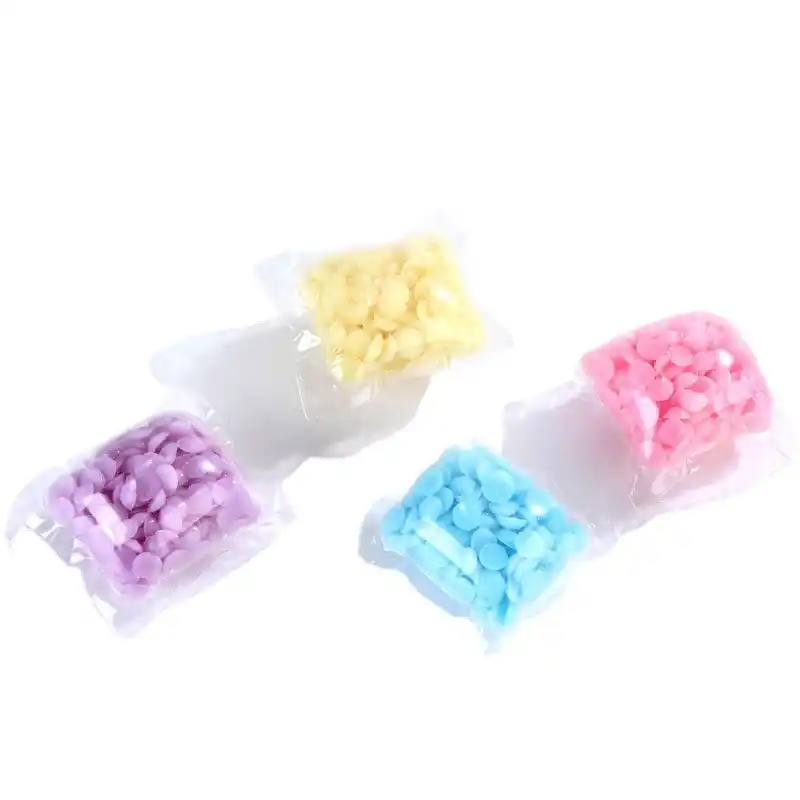
If you’ve ever launched a sachet or a fragrance card, you already know the pain: it smells too loud on Day 1, then goes flat right when customers start to like it. That “wow… then nothing” pattern isn’t bad luck. It’s usually a substrate problem (your carrier material) plus a release-curve problem (how the oil leaves that carrier over time).
And yeah—people love to blame the fragrance oil first. Sometimes that’s fair. But most of the time, the carrier is the real boss in the room.
So let’s talk about substrate selection and slow-release curves in a way you can actually use on a product line. I’ll keep it practical, and I’ll drop the industry talk you’ll hear in real labs: burst, tail, bleed, migration, headspace, pack-out, shelf drift.
Substrate selection
Substrate is just your “oil holder.” Paper card, nonwoven, porous polymer, a micro-perf film, a laminated pouch, whatever. The catch is simple:
Your substrate decides how fast the oil can move. Your fragrance oil decides how it smells while it moves.
Porosity and permeability
Porosity is your “storage.” Permeability is your “exit door.”
More open structure (loose paper / airy nonwoven) → fast diffusion, big first hit (big burst), shorter life.
Tighter structure (dense paper / coated board / less air flow) → slower diffusion, smaller burst, longer tail.
Barrier layers (film/laminate) → you can “throttle” the release and avoid the Day-1 punch.
If your brand promise is “long-lasting,” don’t start with a super open carrier and hope fixatives will save you. That’s like pouring water into a basket. It don’t end well.
Fiber, coating, and neutrality
A sachet/card substrate also needs to be neutral. If the material has its own smell (paper odor, plastic note, ink bite), your fragrance will fight it.
Two common traps:
Recycled paper smell creeping into clean musks and airy florals.
Coated surfaces that look premium but trap oil on the surface, so you get rub-off and greasy prints.
You want a carrier that:
holds oil inside, not on top,
stays stable in humidity,
doesn’t “ghost” with its own odor.
Plastic films, perforations, and barriers
Films aren’t just for fancy packaging. A thin film (or laminate) can be a release governor.
No vent / low vent → very slow diffusion, safer shipping, smaller burst.
Micro-perf / designed vents → you tune the curve without changing the oil itself.
Multi-layer stacks (absorbent core + semi-permeable skin) → the classic way to flatten a curve.
This is also how you reduce “hot truck kills my top notes” scenarios during pack-out and distribution.
Substrate selection table
Below is a simple decision table teams use when they’re tired of arguing in circles.
Substrate / carrier
Typical release profile
Common pain point
Best fit scenarios
Fix knob (fast)
Porous paper card
High burst, short tail
Fades too soon
Short campaigns, unboxing inserts
Add barrier sleeve / reduce vent
Dense paperboard
Medium burst, medium tail
“Weak throw” complaint
Retail hang cards, closet cards
Increase vent area slightly
Nonwoven (open)
Very high burst, uneven tail
Oil bleed / staining
Soft sachets, drawer sachets
Add inner liner or lower oil load
Nonwoven (tight)
Medium burst, long tail
Slow start
Premium sachets
Add top-note booster in oil
Film + micro-perf
Low burst, long tail
Too slow in cold climates
Long-life cards, car care
Increase perforation density
Laminated pouch + vent window
Very controlled, stable tail
Design complexity
Hotel amenities, room scent
Dial vent size; add absorbent core
Quick translation: If customers complain “it was strong then dead,” you’re dealing with burst dominance. If they complain “I can’t smell it unless I’m kissing it,” you’re dealing with permeability too low.
Slow-release curves
A “slow-release curve” is just the shape of scent output over time. Most fragrance cards follow the same sad story:
Burst release (first 24–72 hours): big, punchy, sometimes harsh.
Tail (days/weeks): softer, then faint, then gone.
Your job is to reduce the burst and extend the tail without killing the scent character.
Burst release
Burst happens when oil sits near the surface and evaporates fast. You’ll see it when:
the substrate is too open,
the oil load is too high,
there’s no barrier or sleeve,
the card gets warm during shipping.
In real business terms, burst causes:
customer “too strong” complaints,
returns from sensitive users,
bad reviews like “chemical smell,” even if your oil is fine.
Tail and longevity
Tail is where repeat buyers are born. It’s also where most products fail quietly.
To lengthen tail, you need one (or more) of these:
slower diffusion path (denser substrate or barrier layer),
oil system designed for diffusion (balanced volatility, stable base notes),
encapsulation / coating (when you need extra control),
packaging control (don’t let it evaporate before it’s sold).
Multi-layer structures
If you want a smoother curve without changing the oil too much, multi-layer builds are your friend:
absorbent core stores the oil,
semi-permeable layer controls speed,
outer layer protects from touch and dust.
This is how you avoid “greasy card” problems while still getting a clean, steady release.
Coatings and microencapsulation
Microcapsules aren’t magic, but they’re useful when you need:
better stability in heat,
longer shelf life before opening,
less staining on packaging.
Trade-off: capsules can dull top notes if you overdo it. So you tune it, you don’t “dump it.”
Slow-release curve tuning table
Tuning lever
What it fixes
What it can break
When to use it
Reduce vent area
Burst too strong
Slow start
Car cards, shipping-heavy channels
Add barrier sleeve
Pre-evap during storage
More packaging steps
Retail and long distribution
Switch to denser substrate
Short lifespan
Lower throw
Closet sachets, premium cards
Use absorbent core + film
Oil bleed
Design complexity
High load oils, luxury packaging
Add fixatives / stabilizers
Top-note flash-off
Can feel “heavy”
Warm climates, long tail goals
Microencapsulation
Shelf stability, longevity
Muted opening
Long shelf SKUs, hotel amenities
Testing: headspace, gravimetric weight loss, and pack-out
You don’t need a fancy lab to catch most release-curve issues. You need a plan and a few repeatable checks.
Gravimetric weight loss
This is the simplest: weigh the product over time and track loss. It won’t tell you the exact smell, but it will show you the curve shape: steep drop (burst) vs slow decline (tail).
Headspace
Headspace testing (even basic) helps you track what’s actually in the air, not just what’s missing from the card. This is how you find “the card still has oil, but it doesn’t project.”
Temperature, airflow, humidity
Real-world air care lives inside chaos: hot warehouse, cold freight, bathroom steam, retail lighting.
If you want stability thinking that matches real life, use a stress plan like the one in I’SCENT’s stability guide: heat, cold, light, freeze–thaw, and centrifuge screening. It’s not “extra,” it’s how you stop returns. Here’s the page if you want the checklist style: Fragrance stability testing guide: heat, cold, light, freeze-thaw, centrifuge.
Quick test plan table
Test keyword
Why you run it
What you watch
What it tells you
Heat soak
Simulates hot storage
Top-note loss, odor drift
Burst risk + profile drift
Cold hold
Simulates winter shipping
Slow start, haze, weak throw
“No smell” complaints early
Light exposure
Simulates shelf reality
Discoloration, off-odor
Packaging + formula risk
Pack-out hold
Tests real packaging
Pre-evap, leakage
Whether your SKU dies before sale
Air Care fragrance oils
A lot of sachet/fragrance-card projects sit under air care. That includes closet products, car cards, room sachets, and even hotel scent touchpoints.
If your use case is “ambient scent,” start where the category language is already aligned: Air Care Fragrance Oils Manufacturer. And if your card is meant to behave more like a diffuser experience (steady, room-filling, not spiky), you’ll want oils designed for diffusion: Diffuser Fragrance Oil Manufacturer.
Also, candles are basically “slow-release systems” too—just with heat as the trigger. If you’re building cross-category scent families (card + candle + diffuser), it helps to line them up from day one: Candle Fragrance Manufacturer | OEM & Custom Oils.
OEM/ODM fragrance oils
Here’s the business truth: most brands don’t fail because they can’t make a nice smell. They fail because they can’t make a repeatable smell at scale, across batches, across lanes, across seasons.
That’s why OEM/ODM matters in this category. You’re not just buying oil. You’re buying:
Let’s keep it real. Substrate selection and slow-release curves are engineering problems, but they’re also speed problems. Markets move fast. If your sampling loop takes forever, your competitor ships first.
I’SCENT (I’Scent) is built for that loop:
20+ senior perfumers and a 40,000+ formula library,
fragrance replication up to 98% similarity,
samples in 1–3 days, production in 3–7 days,
low MOQ options for existing formulas, and a higher MOQ for fully custom builds,
IFRA, ISO, GMP, Halal certifications,
ERP traceability so batch drift doesn’t become a mystery story.
If you want to browse the broader oil lineup (fine fragrance, personal care, home care, air care), this is the clean entry point: Wholesale Fragrance Oils. And if your sachet/card concept needs a “perfume-like” signature (luxury, long-lasting, brand identity), look at: Wholesale Fine Fragrance | OEM/ODM manufacturer.
Our team of 20+ senior perfumers leverages a vast library of 40,000+ formulas to deliver expert customization and scent replication with up to 98% accuracy. As premier perfume oil manufacturers, we bring your most complex fragrance concepts to life with precision.
Industry-Leading Speed
We empower your business with industry-leading speed. Samples are ready in just 1-3 days, mass production takes only 3-7 days, and our low 5kg MOQ allows you to test the market quickly and without risk, solidifying our role as agile fragrance oil suppliers.
Certified Quality & System Assurance
Our quality is built on trust and technology. We are fully certified with IFRA, ISO, GMP, and Halal, and our advanced ERP system guarantees complete traceability and batch-to-batch consistency, making us your reliable perfume raw materials supplier.