Microbial risk in personal care fragrances? storage and contamination prevention
I’ve seen too many brands blame the fragrance when the real failure sat in a warm warehouse, a wet filling line, or a jar package that invited fingers and air. Here’s the hard truth on cosmetic microbiological safety, cosmetic shelf life and contamination, and how serious operators prevent spoilage before it becomes a recall.
The dirty secret: the fragrance usually gets blamed last for the thing it started first
Most brands guess.
I’ve watched teams blame the fragrance concentrate for a contamination event that was actually born in process water, multiplied in a transfer hose, and then got a free ride through weak preservation into a “premium” personal care SKU that looked perfect on launch day and smelled faintly wrong by week twelve. Sound familiar?
According to FDA’s 2024 microbiological safety page for cosmetics, harmful microorganisms can enter through contaminated raw materials, water, poor manufacturing conditions, ineffective preservation, packaging that fails to protect the product, poor shipping or storage, and even normal consumer use. The hard truth is simple: microbial contamination in cosmetics is a systems failure, not a fragrance note problem.
And here is the part too many marketers do not want to say out loud: FDA still does not pre-approve most cosmetic products before sale, even though those products must not be packed or stored in ways that make them harmful. The regulatory pressure is real, but the day-to-day burden still sits on the brand, the contract manufacturer, and the supplier network. GAO’s December 2023 review of MoCRA implementation also showed the government itself saying FDA still needed stronger planning and tracking for the law’s rollout. That is not a calm backdrop. It is a warning light.
Why I do not panic over every fragrance oil
Low risk is not no risk.
A genuinely low-water, microbiologically hostile format can be lower risk than a wet, consumer-abused formula, and ISO 29621:2017 exists because some cosmetic products can, after a risk assessment, qualify as low-risk for microbial contamination. But once that fragrance is poured into a shampoo, lotion, hand wash, wipe liquid, or body mist with real water exposure, bathroom use, and repeat air exchange, the conversation changes fast. Why do so many teams still pretend those are the same risk profile?
That is why I would rather start with personal care fragrance oils that are skin-friendly and pH-stable than with a seductive smelling strip and a promise. The site’s own technical content correctly leans on skin pH, storage stability, and formula behavior rather than romantic scent language, which is exactly the right instinct for microbial contamination in personal care products.
Where microbial contamination in personal care products actually starts
It starts upstream.
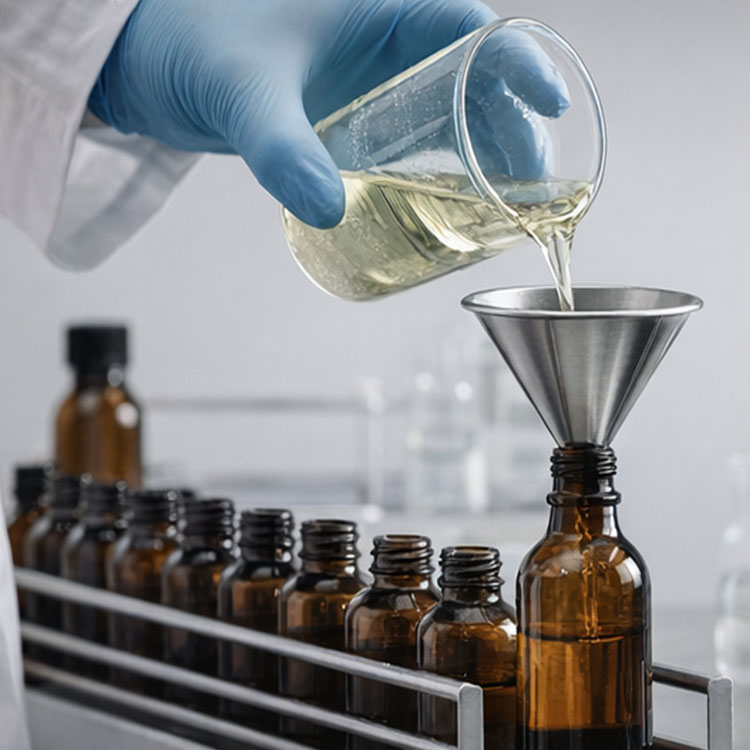
The contamination chain usually looks boring: incoming water, dirty hold tanks, weak cleaning validation, filling nozzles, caps, dip tubes, shared lab samples, hot storage, and a preservative system that only worked in a neat lab sample but not in the real packaging. I say this bluntly because brands love dramatic villains, while microbes prefer routine negligence. Who gets fired over “routine negligence”? Almost nobody.
And this was not a one-season fluke. In the European Commission’s 2024 Safety Gate reporting, there were 4,137 alerts overall and cosmetics accounted for 36% of the most frequently reported product category; in the 2023 report, cosmetics were also the top category. I do not read that as “panic.” I read it as surveillance getting sharper while a chunk of the market still acts like quality is a design aesthetic. The 2024 Safety Gate annual report and the Commission’s 2023 summary both point the same way.
The contamination myth I would retire tomorrow
Pure fragrance concentrate is not automatically the microbial villain.
In my view, the bigger microbial risk sits where fragrance meets water, handling, packaging, and time. That is why a brand converting botanical or essential-oil ideas into real wash-off or leave-on SKUs should think like a process engineer, not like a copywriter, and turn essential oil concepts into personal care fragrance SKUs only when foam stability, color stability, storage stability, and allergen documentation are already part of the brief.
Storage is not a warehouse issue. It is a formula issue.
Three words. Test reality.
When people talk about fragrance storage contamination prevention, they often reduce it to “keep it cool and dry,” which is fine as a poster, but useless as an operating system. Storage is a live stress test on preservative performance, closure integrity, headspace, oxygen exposure, phase behavior, and user contamination risk. A product that survives 25°C in a carton and fails after hot-last-mile delivery plus repeated bathroom opening was never stable. It was lucky.
Here is the framework I actually trust for cosmetic shelf life and contamination:
Product format
Typical microbial risk
Why risk changes
What I would demand before launch
Anhydrous perfume oil
Lower
Limited free water, but filling and reuse still matter
That table is not legal text. It is operator logic, built on FDA’s contamination routes, ISO’s low-risk framework, and years of watching brands confuse “low-risk” with “we skipped the hard work.”
Packaging matters more than people admit. FDA explicitly points to packaging that does not adequately protect the product, poor storage, and consumer use as contamination routes, which is why I distrust wide-mouth jars for vulnerable formulas and why I ask rude questions about pumps, dip tubes, valve quality, and whether anyone has actually simulated bathroom abuse rather than just warehouse calm.
The QA stack that separates adults from amateurs
This is where the pretenders leave.
A preservative efficacy test for cosmetics is not glamorous, and that is exactly why it matters. ISO 11930:2019 defines preservation efficacy testing as the reference method for evaluating the preservative system of a cosmetic formulation, while FDA says cosmetics do not need to be sterile but must not contain harmful microorganisms. In plain English: if your formula is wet, mild, consumer-handled, or storage-sensitive, you do not “hope” it survives. You inoculate, challenge, measure, and decide with data.
And no, that does not end with one pretty challenge-test pass. I want release specs, retained samples, closure verification, packaging compatibility, temperature cycling, and traceability that still makes sense six months later when someone says, “the scent changed,” and the room goes quiet. That is why the site’s own article on common QA tests for fragrance oils before shipment is one of the few pieces I would actually send to a procurement team: it talks about specific gravity, refractive index, GC fingerprinting, visual clarity, and safety-linked testing instead of perfume poetry.
The five checks I would not waive for any wet personal care launch
Preservative challenge data in final packaging. Not just in a lab beaker, and not just in a pilot pack that uses a better closure than the commercial one.
Release testing tied to the real spec. The internal QA piece on Custom Fragrance Oil is right to emphasize SG, RI, color, and GC fingerprints, because identity drift often shows up before full-blown complaint clusters do.
Process-level traceability. If scale matters, I want OEM/ODM fragrance oil manufacturing with batch traceability and a system that can tell me what changed, when, and where. “We think the batch was fine” is not a system. It is a prayer.
Use-case realism. Haircare, baby care, hand wash, and leave-on skin products do not deserve the same microbial assumptions, the same packaging habits, or the same storage windows. The site’s conversion guide gets that part right when it separates shampoo, conditioner, hand wash, lotion, and body mist into actual product behaviors instead of one big fragrance bucket.
FAQs
Can perfume get contaminated?
Yes—perfume and fragranced personal care products can become contaminated when bacteria, yeast, or mold enter during manufacturing, filling, storage, shipping, or repeated consumer use, although the risk is generally lower in genuinely low-water or microbiologically hostile formats than in water-based systems like lotions, shampoos, mists, and washes.
I would still treat testers, reused bulk, and poorly sealed closures as weak points. “Lower risk” is not the same as “ignore it.”
How do you prevent microbial contamination in cosmetics?
Preventing microbial contamination in cosmetics means controlling the whole chain: raw materials and water quality, equipment hygiene, validated preservation, packaging that limits back-contamination, realistic storage testing, disciplined batch release, and in-use assumptions that reflect how consumers actually handle the product after purchase.
My rule is simple: design for the bathroom, not the bench. Products fail in human hands, humid air, warm trucks, and rushed filling rooms.
What is a preservative efficacy test for cosmetics?
A preservative efficacy test for cosmetics, often called PET or a challenge test, is a laboratory procedure that deliberately introduces defined microorganisms into a formula to verify whether the preservative system and formula environment can suppress microbial growth over shelf life and reasonably expected consumer use.
If a brand sells a wet personal care formula without this discipline, I assume it is borrowing confidence from luck.
What are the best storage practices for personal care products?
The best storage practices for personal care products are stable temperature, sealed packaging, low-light handling, FIFO inventory, minimal reopening of bulk or retained containers, and transit conditions that do not quietly push the formula beyond the preservative and packaging window it was actually designed to tolerate.
And yes, warehousing matters. But so do closure torque, headspace, fill hygiene, and whether the product was ever built to survive real distribution.
Is the fragrance oil itself usually the main microbial problem?
No—the fragrance oil itself is not usually the main microbial problem, because the higher-risk points are typically the finished water-containing formula, the manufacturing environment, the packaging system, and the way the product is stored and used after filling rather than the sensory blend in isolation.
That distinction saves money. It also saves brands from chasing the wrong root cause for weeks.
My position is not subtle: if your contamination prevention plan fits on a poster, it is probably too weak for market reality. Build for abuse, test for drift, store like loss is expensive, and treat microbial contamination in cosmetics as an operations problem before it becomes a brand problem.
Our team of 20+ senior perfumers leverages a vast library of 40,000+ formulas to deliver expert customization and scent replication with up to 98% accuracy. As premier perfume oil manufacturers, we bring your most complex fragrance concepts to life with precision.
Industry-Leading Speed
We empower your business with industry-leading speed. Samples are ready in just 1-3 days, mass production takes only 3-7 days, and our low 5kg MOQ allows you to test the market quickly and without risk, solidifying our role as agile fragrance oil suppliers.
Certified Quality & System Assurance
Our quality is built on trust and technology. We are fully certified with IFRA, ISO, GMP, and Halal, and our advanced ERP system guarantees complete traceability and batch-to-batch consistency, making us your reliable perfume raw materials supplier.