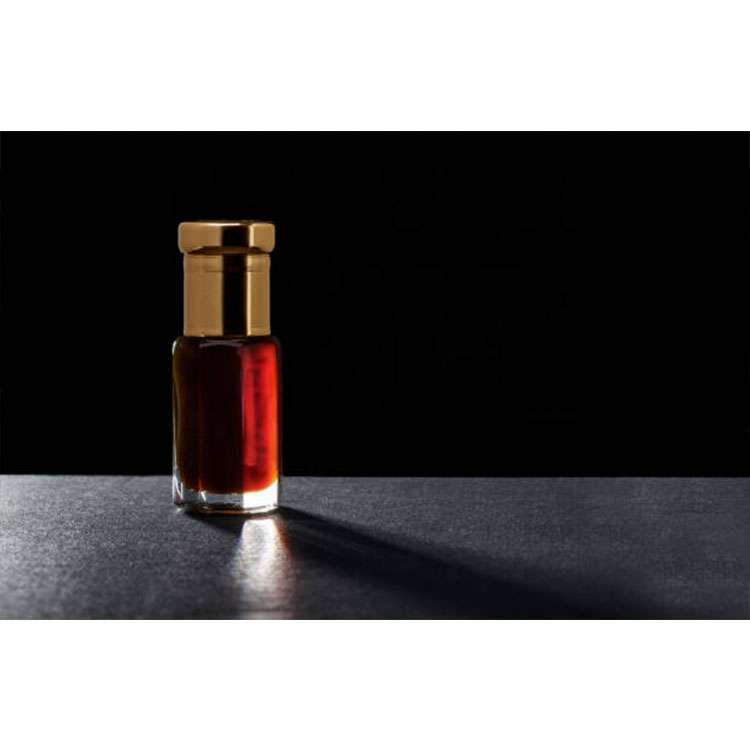
If you’ve ever smelled your blend on Day 1 and thought, “Uh… this is kinda sharp,” you’re not alone. A lot of fragrance work feels like cooking soup: it tastes rough when everything just hit the pot. Give it time, and the edges soften.
That “give it time” step is what most people call perfume maceration (some folks also call it maturation). And yes, it matters—especially when you’re building fragrance oils for real formats like shampoo, detergent, candles, diffusers, or fine fragrance.
My take (and I’ll argue it): maceration isn’t a vibe. It’s a controlled process. You’ll get better scent smoothness, more stable performance, and fewer “why did this batch smell different?” moments—if you treat maceration like a mini SOP, not a waiting game.
What is perfume maceration
In perfumery, maceration usually means resting the finished blend (fragrance concentrate, EDP/EDT blend, or fragrance oil) so the materials settle into a more stable smell profile. People often report that the scent becomes smoother and more “connected” after rest, especially on the drydown.
Heads-up: “maceration” can also mean soaking raw botanicals in ethanol to make tinctures. In that world, you’re literally extracting aromatics over weeks to months in high-proof alcohol. Different meaning, same lesson: time changes what you get.
Maceration effects you can actually smell
Top notes stop yelling
Fresh blends can feel “spiky,” especially when you have bright citrus, aldehydes, or sharp aromachemicals. After rest, that first blast often calms down. It doesn’t always get weaker. It just gets less rude.
The accord feels more “one piece”
When a perfume is new, you might smell parts instead of the whole: “lemon… then something woody… then musk.” With time, the blend tends to read as one idea.
Take a warm woody build like a fine-fragrance base (think amber + woods + musks). On Day 1 it can feel dry or scratchy. After a few weeks, it usually smells rounder on blotter and skin. (That’s one reason fine fragrance makers often sit in the 4–6 week range, and sometimes longer for complex builds.)
Clarity, haze, and “junk in the bottle” show up (or disappear)
Maceration also exposes boring but critical stuff: haze, sediment, off-notes from packaging, or solubility problems. If you skip the wait, you might ship a sample that looks fine today and turns cloudy next week.
The maceration extraction curve: why longer isn’t always better
Here’s the trap: people hear “more time = better” and they push maceration forever. Sometimes that helps. Sometimes it just… changes things in a direction you didn’t want.
In extraction science, there’s a common idea: you hit a point of diminishing returns where extra time doesn’t increase much anymore. One tincture-focused explanation puts that equilibrium point around 4–6 weeks for many cut-and-sifted herbs.
And even when “more” increases one metric, it can reduce another. A peer-reviewed wine maceration study shows that increasing maceration from 5 to 15 days increased ABTS antioxidant values and total phenolics, while total anthocyanin decreased. That’s a clean example of trade-offs over time.
Table 1 — Example of maceration trade-offs (wine study, 5 vs 10 vs 15 days)
Maceration time
ABTS (mg Trolox/L)
DPPH (mg Trolox/L)
Total phenolics (mg GAE/L)
Total anthocyanin (mg Malv/L)
5 days
59.59 ± 2.68
152.90 ± 0.82
3131.67 ± 53.33
347.13 ± 3.25
10 days
68.72 ± 2.44
153.83 ± 0.24
2955.42 ± 32.03
272.41 ± 17.88
15 days
72.86 ± 2.49
135.92 ± 0.72
3866.04 ± 77.19
242.53 ± 1.63
Why this matters for perfume: rest time can smooth harshness, but it can also dull sparkle if you let it run too long or store it wrong. Your job is not “wait forever.” Your job is pick the right timeline and hit checkpoints.
Recommended maceration timelines by format
You’ll see a lot of ranges online. The ones that show up again and again for perfume maceration land around 4–6 weeks for professional-style results, with complex blends stretching longer. For tinctures and raw-material soaks, it can run weeks to months in high-proof ethanol.
Here’s a practical cheat sheet you can hand to your R&D or QA team.
Table 2 — Recommended maceration timeline (fragrance and fragrance oils)
Format / use case
Typical maceration time
Checkpoints you should log
What usually changes
Fine fragrance (EDP/EDT)
4–6 weeks (up to ~12 for complex)
48–72h, 2w, 4w, 6w
Top harshness drops, drydown blends better
Fragrance oil concentrate (before adding to base)
1–2 weeks (often enough for evaluation)
72h, 7d, 14d
Accord reads cleaner, mods become clearer
Surfactant systems (shampoo, body wash, dish soap, detergent)
3–7 days for stability read, 2–4 weeks for “true smell”
24h, 72h, 7d, 14d
Solubility issues appear; “clean” note may shift
Candles (wax cure, not ethanol maceration)
1–2 weeks cure (varies by wax)
48h, 7d, 14d
Throw improves; harsh notes settle
Diffusers / air care
1–2 weeks
72h, 7d, 14d
Blend smooths; diffusion character stabilizes
No, these aren’t laws of physics. They’re working ranges that keep you from doing the classic mistake: judging a scent too early, then chasing it with endless “mods.”
A simple maceration SOP that avoids drama
1) Control your storage (or the data lies)
Store samples in consistent conditions: cool-ish, dark-ish, stable temperature. Label everything. Sounds basic, but I’ve seen teams lose weeks because two bottles aged in two different corners of the lab.
2) Don’t shake it like a cocktail forever
Mix well at the start. After that, let it sit. Constant agitation can keep micro-bubbles and haze suspended, which makes you think the blend is unstable when it’s just… not settled yet.
3) Use the same evaluation method every time
Pick your routine: blotter at 0h/2h/8h, plus a skin check if it’s fine fragrance. For functional fragrance oils, smell it in the base, not only neat. Your customer buys performance in the product, not the concentrate.
4) Lock “no-mod” windows
Here’s some industry slang that saves your sanity: don’t over-mod. Set windows like “no formula changes until the 7-day read,” then again at 14 days. Otherwise you’ll end up fixing problems that time would’ve solved.
Real-world pain points and what maceration fixes
“It smells great in the bottle but weak in shampoo”
That’s usually a matrix problem. Surfactants can mute certain notes, and some materials bloom later. Let it sit, then evaluate at 72 hours and 7 days in the actual base. If it still falls flat, you adjust the structure (often more substantive backbone, not more top sparkle).
“My clear detergent turned hazy”
Classic solubility window issue. The blend may look fine right away, then haze out as it equilibrates. A short maceration period helps you catch it before you ship a sample and get that awkward email.
“Batch A and batch B don’t match”
Sometimes it’s raw material variation. Sometimes it’s rushed blending + no rest. Either way, the fix is boring: QC sniff panels + traceability + a consistent maceration hold. (Yes, boring works.)
Where I’Scent fits in (and how it helps you move faster)
If you’re building for personal care, cosmetics, home care, fine fragrance, candles, or air care, you don’t want to wait forever—but you also can’t skip stabilization.
That’s where a supplier with real systems helps. On I’Scent’s side, the pitch is straightforward:
20+ senior perfumers, 40,000+ formulas, and replication accuracy up to 98% for custom creation and scent matching.
Samples in 1–3 days, mass production 3–7 days, and a 5 kg MOQ (custom scent usually 25 kg).
IFRA / ISO / GMP / Halal systems plus ERP traceability for batch-to-batch consistency.
So the idea isn’t “rush everything.” It’s: get fast sampling, then run maceration checkpoints like a pro so you don’t burn weeks in back-and-forth.
If you want to see where this plugs into your product type, these pages map cleanly to real formats:
Our team of 20+ senior perfumers leverages a vast library of 40,000+ formulas to deliver expert customization and scent replication with up to 98% accuracy. As premier perfume oil manufacturers, we bring your most complex fragrance concepts to life with precision.
Industry-Leading Speed
We empower your business with industry-leading speed. Samples are ready in just 1-3 days, mass production takes only 3-7 days, and our low 5kg MOQ allows you to test the market quickly and without risk, solidifying our role as agile fragrance oil suppliers.
Certified Quality & System Assurance
Our quality is built on trust and technology. We are fully certified with IFRA, ISO, GMP, and Halal, and our advanced ERP system guarantees complete traceability and batch-to-batch consistency, making us your reliable perfume raw materials supplier.