Luxury woody-amber isn’t just “more amber, more wood, done.” If you build it like that, you usually get a loud drydown that smacks the nose, blocks the top notes, and turns every launch into the same beige blob.
The better take is simple: luxury woody-amber today is controlled power. It’s warm, resinous, and long-wearing, yes. But it also stays smooth in real bases (soap, shampoo, candles, diffusers), passes compliance, and scales without batch drift.
And that’s the whole argument of this piece: material choices matter more than the vibe words. If you pick the right building blocks—and you pick them for the right job—you get a woody-amber that feels expensive and performs like a pro.
You can feel the shift in briefs. People still like “clean,” but they want it with a spine. The woody-amber lane is where brands get that spine: dry woods + plush amber + soft musk edges. It reads premium, it reads long-lasting, and it holds up when you move the scent across a portfolio.
One practical clue: brands don’t want to rebuild from scratch every time they make an EDP, a perfume oil, and then a lotion. They want an accord that travels. That’s why “EDP base” style concentrates are getting more attention—less chaos, faster mod cycles, fewer surprises.
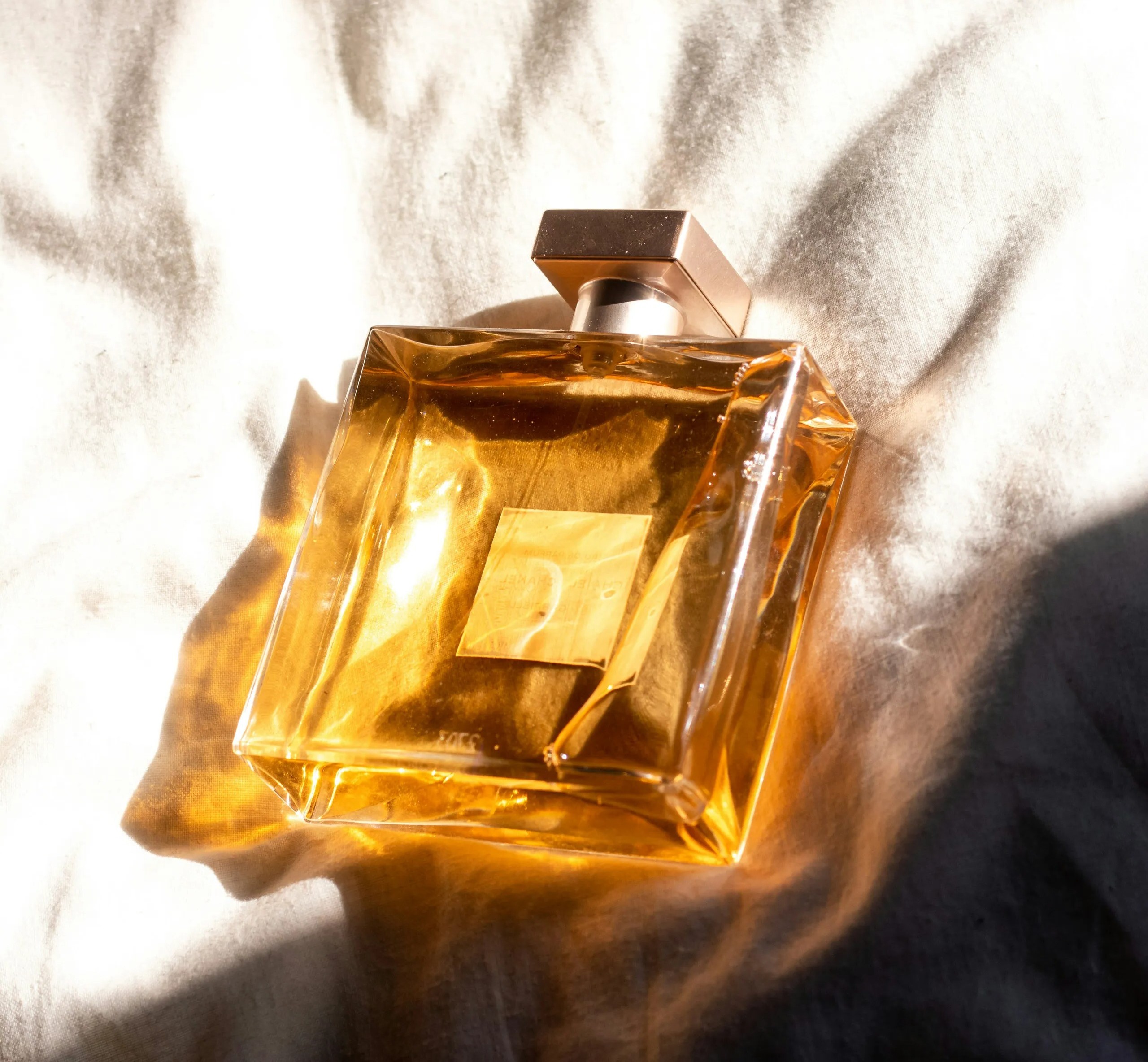
A real example from our catalog is Amber Wood EDP Base. The suggested pyramid is straight in the pocket for modern luxury:
Top: bergamot, pink pepper
Heart: cashmeran, cedarwood, cardamom
Base: amber accord, sandalwood, benzoin, musks
That structure gives you lift, texture, and a strong base without the muddy aftertaste. It’s not magic. It’s just smart architecture.
Wild resins and gourmand depth
Here’s a thing buyers don’t always say out loud: resins are doing “edible warmth” now, not only “church incense” or “nature walk.”
Benzoin, labdanum-style amber effects, balsamic touches—when you dose them right, they feel like polished lacquer, warm skin, soft leather, even cocoa-like shadows. That’s why woody-amber keeps winning in colder seasons and in luxury personal care. It gives comfort without smelling childish-sweet.
The material move is basically:
Keep the resin round (benzoin-type comfort)
Keep the wood dry (so it doesn’t turn syrupy)
Add a soft texture molecule (so it doesn’t scratch)
If you skip that last part, your resin + wood stack can go harsh fast. Which brings us to the molecules.
High-impact woody-amber molecules
Let’s be honest: modern woody-amber often leans on high-impact ambery woods to get diffusion and tenacity. In perfumer talk, these are your “backbone molecules.” They keep the scent present from mid to deep drydown, especially in fine fragrance and oil-based products.
Why they’re popular in real production
They solve three boring problems that kill launches:
Longevity: the drydown doesn’t collapse in week 6 of shelf life
Projection control: you get bloom without dumping load
Batch-to-batch stability: your re-order smells like the last one
That last point is huge. If your brand scales and your scent drifts, customers notice. They don’t send an email. They just don’t repurchase.
When woody-amber gets too loud: “nose tingle” risk
If you overpush high-impact ambery woods, some people get a sharp tingly sensation. Not everybody. But enough to matter in mass-market exposure. Also, overuse makes the market smell same-same.
So the move isn’t “avoid them.” The move is: use them with buffers (soft woods, musks, balsams) and let your top/heart breathe.
Amber accord ingredients
Quick reset: amber isn’t a single ingredient. In formulation, amber is an accord—a constructed base built from balsamic sweetness, resin warmth, and a wood support.
A typical amber accord toolkit (in plain words) looks like:
Balsamic resin warmth (benzoin-type comfort)
Sweet depth (vanilla/tonka style direction, depending on rules + market)
Patchouli-like shadow (for body and “adult” depth)
Woody frame (to stop it from turning into dessert)
What matters for “luxury” is not how many ingredients you use. It’s whether the accord feels smooth, layered, and clean on the edges. Luxury is often “no rough corners,” that’s it.
Cashmeran and soft woods
Cashmeran is one of those materials that reads like texture, not a “note.” It’s a big reason woody-amber can feel like cashmere instead of pencil shavings.
In Amber Wood EDP Base, cashmeran sits in the heart with cedarwood and cardamom. That combo works because:
cedar = structure
cardamom = airy spice lift
cashmeran = soft warm fabric feel
This is also how you fix a common problem: woody-amber that feels too dry in the mid. A tiny shift in “soft wood” materials can turn “dry” into “luxury dry.”
Fine fragrance EDP and perfume oil formats
If you’re building for fine fragrance, you’re usually choosing between EDP-style alcohol systems and oil-based formats (or doing both). The performance targets are different:
EDP needs a clean opening and controlled sillage (so it sells on strip and on skin)
Perfume oil needs cling, smoothness, and a stable drydown (no weird oxidation smell)
This is why it helps to start from a category hub and build from there. If you’re exploring options, browse the Fragrance Oils range, then narrow into Fine Fragrance. You’ll see bases and finished concepts that already think in “top–heart–base,” not just “smells nice.”
Personal care and home fragrance scenarios
Woody-amber doesn’t live only in perfume. It’s everywhere now because it behaves well when you do the boring technical work.
Surfactant systems: SLES / APG / betaine
In shampoo or body wash, you’re fighting surfactants, salt-thickened systems, and sometimes high water content. A woody-amber base can either:
stay elegant and smooth, or
turn flat and “detergent-y” (yeah, that’s a real smell)
That’s why personal care briefs often ask for “clean + cozy + long-lasting” but still rinse-safe. If you’re building for those bases, start in Personal Care.
Diffusers and ambient scent: consistent diffusion
Diffusers need steady release. Too heavy and it chokes the diffusion. Too light and it dies in a week. Woody-amber can work beautifully here, but you must tune it for evaporation curve and carrier compatibility. That’s the point of a specialized lane like Diffuser Fragrance Oil Manufacturer.
Candles: hot throw vs. “burnt sugar” problems
Candles are brutal. Woody-amber can read premium in wax, but if the resin side is too sweet, you risk a cooked, burnt edge on hot throw. So you tune the resin and keep the wood dry and clean. If candles are your main format, this is the right doorway: Candle Fragrance Manufacturer.
Hotels and air care: signature atmosphere
Hotels love woody-amber because it signals “expensive lobby” fast. But they also need it to be non-offensive at scale. That means smooth diffusion, low harshness, and consistent supply. The broader category view is here: Air Care.
Material choices table: what to use, what it solves, what can go wrong
Keyword area
Material direction (plain)
What it fixes (client pain)
Typical risk
Practical fix
Ambery woods
Ambery-woody backbone molecules + dry woods
Tenacity, diffusion, “premium base” feel
Too sharp, too samey
Buffer with soft woods, musks, balsams; don’t choke the top
Wild resins
Benzoin/balsamic warmth + controlled sweetness
Comfort, depth, luxury warmth
Syrupy, cooked in candles
Keep woods dry; reduce heavy sweetness; test hot throw early
Amber accord ingredients
Resin + sweet depth + wood frame
A real “amber” that isn’t flat
Muddy drydown
Clean edges with musks; keep patchouli-style shadow under control
Use pre-balanced bases, run stability and sniff panels across bases
I’Scent capability table: speed, control, and documentation
This is the part buyers care about after the smell: can you ship, can you prove compliance, can you keep it consistent.
Capability keyword
What you get with I’Scent
Senior perfumers
20+ experienced perfumers
Formula library
40,000+ formulas
Scent replication
Up to 98% match accuracy (internal standard)
Sampling speed
1–3 days for samples
Production speed
3–7 days for mass production after brief lock
MOQ
5 kg starting MOQ; custom projects usually start higher
Compliance
IFRA, ISO, GMP, Halal systems
Traceability
ERP traceability + batch-to-batch consistency
If you want the full company overview, it’s here: About Us.
IFRA compliance, documentation, and traceability
Luxury brands don’t just buy smell. They buy risk control.
So when you’re selecting woody-amber materials, you also think:
IFRA max levels by category (fine fragrance vs soap vs candle, all different)
allergen disclosure and paperwork pack (SDS/COA/IFRA docs)
lot traceability (so re-orders match, audits don’t become a nightmare)
At I’Scent, this is baked into the workflow. We run IFRA/ISO/GMP/Halal systems, and we keep ERP traceability so you can track “ingredient in, batch out” without drama. It’s not sexy, but it saves your launch.
Where this direction makes business sense
If you’re a brand owner or a product manager, woody-amber is a safe bet only if you execute it clean:
You can build an “anchor accord” for a whole line (perfume, lotion, wash, candle). Less creative thrash.
You can sell “luxury warmth” in almost every region, with small tuning (more spice here, more soft wood there).
You can reduce returns caused by stability issues—haze, discoloration, off-notes in storage. Those returns are silent killers.
And yes, it also photographs well for marketing. People buy the mood.
How to brief a luxury woody-amber (so you don’t waste 6 rounds)
Here’s a quick brief template you can actually use. Keep it short:
Target: “amber woody, plush but clean edges”
Power: “noticeable in first hour, smooth drydown, no harsh bite”
Texture: “cashmere warmth, not smoky BBQ”
Do-not: “no burnt sugar candle vibe, no bathroom cleaner twist”
do high-accuracy duplication if you’re matching a reference
That’s basically how I’Scent works: fast sampling, fast scale, and a big formula library so you’re not paying for “reinventing warm amber wood” every time.
Our team of 20+ senior perfumers leverages a vast library of 40,000+ formulas to deliver expert customization and scent replication with up to 98% accuracy. As premier perfume oil manufacturers, we bring your most complex fragrance concepts to life with precision.
Industry-Leading Speed
We empower your business with industry-leading speed. Samples are ready in just 1-3 days, mass production takes only 3-7 days, and our low 5kg MOQ allows you to test the market quickly and without risk, solidifying our role as agile fragrance oil suppliers.
Certified Quality & System Assurance
Our quality is built on trust and technology. We are fully certified with IFRA, ISO, GMP, and Halal, and our advanced ERP system guarantees complete traceability and batch-to-batch consistency, making us your reliable perfume raw materials supplier.