You finally get a nice clear sulfate-free shampoo base. Viscosity on point, foam looks pretty, everything behaves. Then you add the fragrance oil and… boom. Haze. The whole batch looks like weak milk tea.
Happens all the time in hair labs.
Let’s talk about how to pick non-clouding fragrance oils for sulfate-free shampoos, how to test them, and where a supplier like I’Scent fits into this picture. No magic, just practical stuff you can use in the next pilot batch.
Understanding Non-Clouding Fragrance Oils in Sulfate-Free Shampoos
Fragrance oil composition and color in clear hair care products
Before you worry about solubilisers or cloud point, look at the perfume oil itself.
A few simple checks already tell you if that scent is likely to play nice in a clear shampoo:
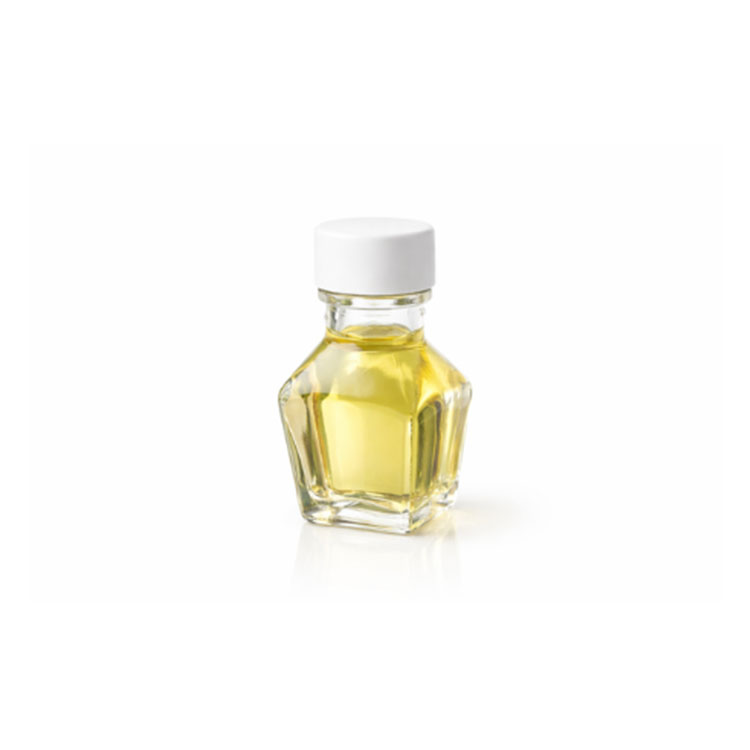
Color Water-white or very pale juice is your friend. The darker the concentrate, the harder it is to keep the bottle crystal clear. Deep amber, heavy brown, dark yellow… these push your sulfate-free base toward “iced tea” fast.
Heavy carriers Some fragrance oils sit in fixed oils, heavy esters, resins or a lot of balsamic notes. They smell rich, but they behave “fat” in water. Those oils need more solubiliser and still love to throw a little fog.
Citrus and terpene-rich notes Fresh grapefruit, sweet orange, lemon peel… great in marketing copy, not so great for clarity. Terpenes have poor solubility in mild surfactant systems. They often fight the micelles and create a snow-globe effect unless you give them extra support.
When a brand asks I’Scent to develop hair care fragrance oils for shampoo, the team doesn’t just sniff and say “nice juice.” Our perfumers and application chemists check color, volatility, carrier and raw materials against typical sulfate-free bases we already run. That’s why our hair care fragrance oils for shampoo category tends to behave better in clear systems: most of those accords already survived this kind of screening.
Solubility and Fragrance Oil Selection for Clear Shampoo Formulas
Solubiliser ratios for fragrance oils in surfactant systems
Most clear shampoos don’t rely on perfume alone. They use a fragrance + solubiliser package.
In real lab work, you’ll often see:
Fragrance oil : solubiliser around 1 : 3 to 1 : 6 by weight for “easy” scents
Higher ratios for tricky profiles like citrus, gourmand or heavy resin types
Pre-mixes that have to look clear (or very close) before you pour them into the base
A simple way to think about it: if your fragrance/solubiliser pre-mix already looks like a mini emulsion, your shampoo will probably look worse.
Here’s a quick ratio table that matches what a lot of formulators see in sulfate-free projects.
Table 1 – Typical fragrance oil : solubiliser ranges and visual result
Lab scenario
Oil : solubiliser ratio
Pre-mix look
What it usually means for a sulfate-free shampoo
Light, clean accord (floral, marine, soft musk)
1 : 3 – 1 : 4
Clear or slightly opalescent
Good candidate for clear shampoo, often behaves even at higher perfume load
Standard everyday scent
1 : 4 – 1 : 5
Clear after a bit of mixing
Safe starting point for most personal-care washes
Citrus-loaded or high-terpene fragrance
1 : 5 – 1 : 8
Needs higher solubiliser to clear; sometimes a faint haze stays
Acceptable if you tolerate a little veil, otherwise rework the note or lower perfume level
Very dark or resin-heavy perfume
1 : 6 – 1 : 10
Often only stable haze, rarely glass-clear
Decide early: live with the haze or redesign the scent, dont wait until final stability
These are only guide rails, but they save you from playing blind.
Perfume solubiliser choice for sulfate-free hair care
For hair cleansers, chemists use a few classic solubiliser types:
PEG-40 hydrogenated castor oil
Polysorbates
Newer “mild” or naturally-derived solubilisers for clean-label claims
Key is not just “does it clear the perfume in water”, but also:
Does it kill foam in your surfactant system?
Does it mess with the salt curve and crash viscosity?
Does it leave the hair waxy or sticky after rinse?
Sulfate-free bases are touchy. They’re often built on SCI, isethionates, glucosides and betaines, so the wrong solubiliser package can wreck the whole sensory profile.
This is one reason many brands lean on a specialist supplier. At I’Scent, our fragrance oils are tested in typical personal care fragrance scenarios – shower gels, clear shampoos, even mild baby washes. You can see that focus in our personal care fragrance range and our guide on custom fragrance oils for personal care products.
Sulfate-Free Shampoo Base Compatibility and Clouding Control
Common clouding triggers in sulfate-free shampoo formulas
Even the smartest perfume will cloud a base that’s already living on the edge. Some usual “lab swear words” show up again and again:
Salt curve problems Salt is a classic thickener, but in sulfate-free blends it can easily overshoot. Too much salt drops the cloud point of non-ionics and you get haze at room temp, even before fragrance. Add perfume and the batch goes full fog.
Polymer and perfume fighting Certain cationic polymers, natural gums or modified celluloses interact with perfume oils and solubilisers. Suddenly you see both loss of viscosity and loss of clarity. People call this “batch crash” on the floor.
Too many hydrophobes in the wrong place Oils, butters, esters, conditioning agents… every little % adds to the hydrophobe load that your micelles must hide. At some point they just can’t, and the system flips from clear to milky.
pH drift and hard water A small pH drift, or very hard process water, can mess with surfactant packing and make clouding worse. Not always the main reason, but often the last straw.
Table 2 – Clouding issue vs likely cause vs quick fix
What you see in QC
Likely reason
First things to try
Shampoo was clear, turns hazy right after fragrance dose
Solubiliser level too low, or perfume profile too heavy
Increase solubiliser, test a “light” version of the scent, or drop perfume load slightly
Product clear at room temp, cloudy at high temp, clear again when cooled
Cloud point too low because of salt / non-ionic mix
Cut salt, adjust surfactant ratios, or use a rheology modifier that doesn’t rely only on salt
Gradual clouding over one to two weeks
Slow incompatibility between perfume package and polymer or conditioning agent
Run a base-only stability, then add perfume stepwise to see when haze starts
Big viscosity drop plus instant haze
Perfume and solubiliser disturbing micelle structure
Change solubiliser type, change perfume carrier system, or redesign the accord
When we work with a brand on sulfate-free hair care at I’Scent, we normally ask for at least base INCI, surfactant stack, and rough salt level. With that, our team can pull suitable options from our fragrance oils collection that already have a good track record in similar systems, instead of starting from zero.
Practical Testing Protocol for Non-Clouding Shampoo Fragrances
Step-by-step screening for non-clouding shampoo fragrances
You don’t need a huge R&D center to test fragrance clarity. But you do need a small, boring routine.
1. Build a small ratio ladder
For each candidate fragrance oil, prep several mini pre-mixes:
1 : 3, 1 : 4, 1 : 5 (oil : solubiliser) as a basic ladder
If the scent is very citrus or heavy, also 1 : 6 or higher
Label everything carefully. Yes, this sounds obvious, but we’ve all had a “mystery beaker” day.
2. Evaluate the pre-mix
Look at each pre-mix under good light:
Clear = good sign
Slight opalescence = maybe ok, test in base
Milky or streaky = trouble, unless you’re fine with a cloudy shampoo
If the pre-mix can’t clear after proper mixing and a bit of rest, don’t expect miracles in the final formula.
3. Dose into the real sulfate-free base
Take your working shampoo base and add the perfume pre-mix at your target dosage. Many clear shampoos live somewhere around 0.2–1% perfume, depending on strength and price point.
Stir slowly, avoid whipping air in, and note how viscosity behaves. If the batch thins out hard, parked clouding is not far behind.
4. Do a quick-and-dirty stability check
For each option:
Look right away: clarity, color, foam feel
Check again after 24 hours and after one week at room temp
If you can, keep small bottles at low temp and high temp for a few days to see cloud point behavior
You don’t need full ICH conditions for a first screen. You just want to know which scents are worth pushing into full stability.
5. Don’t skip the “nose” evaluation
Cloud-free is nice. But nobody remembers a shampoo that smells of nothing.
Check:
Bloom in shower
Wet hair impression
Dry-down on tress after a few hours and after one day
Sometimes you’ll trade a tiny bit of veil for a huge upgrade in sensory. Sometimes you refuse any haze at all because the pack is crystal-clear PET and the brand lives on that look. The protocol helps you decide with data, not just gut feeling.
If you want to shortcut a lot of these steps, I’Scent also offers pre-validated fragrance packages and technical support for hair care. Our fragrance oil purchasing guide walks through selection basics, and our fragrance oils & perfume oil OEM/ODM solutions explain how we plug into your lab work and production plan.
Commercial and Technical Support for Sulfate-Free Shampoo Fragrance Development
I’Scent OEM/ODM fragrance oil support for hair care brands
Behind the scenes, a lot of brands don’t want to reinvent this wheel every time. That’s where a dedicated perfume oil partner makes life simpler.
A quick snapshot of I’Scent:
Since 2005 focused on fragrance oils & perfume raw materials manufacture for global markets
More than 40,000 fragrance formulas in our library, covering personal care, fine fragrance, home care, food-related and more
Over 20 senior perfumers who speak both creative language and lab slang
Fragrance matching accuracy up to 98%, so if you bring us a benchmark and say “make this work in my sulfate-free base without clouding”, we actually can
Fast sample lead time (about a few days), quick scale-up, and low starting volume from 5 kg for many standard items, with custom concepts usually from 25 kg
Full IFRA, ISO, GMP and Halal certifications, plus ERP traceability and high batch-to-batch consistency
Because we handle both fine fragrance accords and functional fragrances, you can drive one olfactive idea across your entire brand: shampoo, conditioner, body mist, even room scent. Our fine fragrance collection and wider OEM/ODM fragrance oil service help keep that DNA consistent.
Most important, we don’t just sell a drum. We help you debug:
Clouding in sulfate-free systems
Salt curve issues
Foam vs fragrance trade-off
Regulatory limits for global regions your shampoo will sell in
That way, your team spends less time firefighting in the pilot plant and more time launching SKUs.
Our team of 20+ senior perfumers leverages a vast library of 40,000+ formulas to deliver expert customization and scent replication with up to 98% accuracy. As premier perfume oil manufacturers, we bring your most complex fragrance concepts to life with precision.
Industry-Leading Speed
We empower your business with industry-leading speed. Samples are ready in just 1-3 days, mass production takes only 3-7 days, and our low 5kg MOQ allows you to test the market quickly and without risk, solidifying our role as agile fragrance oil suppliers.
Certified Quality & System Assurance
Our quality is built on trust and technology. We are fully certified with IFRA, ISO, GMP, and Halal, and our advanced ERP system guarantees complete traceability and batch-to-batch consistency, making us your reliable perfume raw materials supplier.