If you’ve ever priced a fragrance project and remember thinking, “Why did this quote change again?”, welcome. You’re not alone.
Most teams blame the fragrance oil price and stop there. But that’s like blaming the weather when your whole trip went sideways. The real cost story has four moving parts: raw material swings, processing, dosage, and TCO. When you line them up, the surprises stop. You start controlling the project instead of letting it control you.
And yes, this matters whether you’re doing shampoo, body wash, perfume, candles, hotel amenities, laundry, dish soap, air care, or even food-and-bev flavor-adjacent scent systems. Different scene, same math.
Raw materials don’t behave like stable commodities. Fragrance materials are a mixed bag: naturals, aroma chemicals, specialty intermediates, and compliance-restricted stuff that can turn “available” into “not this quarter” real fast.
Supply volatility and price pressure
Here’s the annoying truth: your “same fragrance” is rarely a single ingredient. It’s a chain. When one link tightens, you don’t just pay a bit more. You often pay in extra lab work, extra approvals, and lost time.
Common ways this hits you:
A natural material shifts because harvest quality changes. Your top note suddenly feels flatter.
A supplier changes a spec window. Color moves, or the odor profile drifts a little.
A restricted component triggers a reformulation. Now you’re back in stability testing.
If you want fewer shocks, treat your fragrance like a risk-managed formula. Keep alternates ready, and keep your spec range realistic. This is where a big formula library helps. I’Scent runs a large formula bank and a team of senior perfumers, so swaps don’t mean “start over from scratch.” It’s more like: keep the scent DNA, swap the risky bricks.
Buyers say “it must smell identical.” Production says “materials changed.” QA says “show me docs.” Everyone gets grumpy.
This is why you want a golden sample mindset. Not vibes. Not “pretty close.” A real reference sample, a clear acceptance rule, and a controlled spec window.
If you skip that, you’ll see the classic mess:
batch-to-batch arguments
customer feedback like “it’s weaker now”
rework and line holds
chargebacks (yeah, those)
Processing
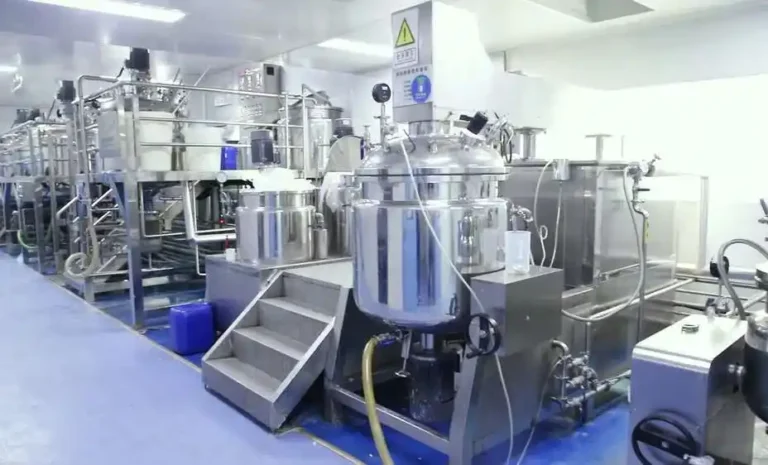
Processing is where fragrance stops being a pretty idea and becomes a repeatable product. This part usually gets under-budgeted because it doesn’t show up in the first fragrance quote. Then it shows up later as “why is production stuck?”
Batch-to-batch consistency and traceability
Processing cost often looks like “small issues,” until you add them up:
haze in a clear base
filtration that takes forever
separation after freeze-thaw
staining or yellowing in white formulas
off-odor from incompatible packaging
This is why traceability and batch control is not just a fancy claim. If you’re selling globally, you need clean documentation and consistent lots. I’Scent runs IFRA, ISO, GMP, and Halal systems, plus ERP-based traceability. That combo helps with repeat orders because you can track lots, control changes, and keep performance steady.
If your team buys fragrance for regulated or audited categories, this is the difference between smooth approvals and endless email threads.
Compatibility testing in real bases
A fragrance that smells amazing in a blotter can behave totally different in a real base.
Here’s what “processing pain” looks like by scene:
Surfactant bases (shampoo, dish soap, cleaners): haze, phase separation, or a weird “chemical edge” after aging.
Wax (candles): weak cold throw, smoky hot throw, or scent burn-off.
Fine fragrance (EDP/EDT): solubility issues, clouding, and stability problems in alcohol-free or low-alcohol systems.
Soap: acceleration, discoloration, scent fade after cure.
You don’t want to discover these on your production line. You want to find them in bench trials.
Dosage feels like the simplest lever. Add more, smell more. Easy, right?
Not really. Dosage is where cost, compliance, and performance collide. And it’s where teams accidentally create a long-term headache.
IFRA maximum dosage and category discipline
In many categories, you can’t just keep pushing dosage up. You’ve got IFRA categories, max usage levels, and internal safety rules. If you blow past those, you’re not “optimizing.” You’re building a future recall risk.
So instead of asking, “Can we make it stronger?”, ask:
What’s the allowed window for this category?
What’s the stable window in this base?
What’s the sensory sweet spot for the target market?
When you do it this way, you stop chasing strength and start controlling performance.
Dosage window by scene and performance targets
Dosage isn’t one number. It’s a window, and it changes by use case. The same scent can feel loud in a candle and invisible in a surfactant system. That’s normal.
Here’s the usual buyer pain:
“It smells great in the sample, but it disappears in the final product.”
“We increased dosage, now the base is hazy.”
“We pushed it stronger, now compliance is complicated.”
This is why perfumers and technical teams should talk early. You want a dosage plan that hits:
impact (first impression)
tenacity (how long it lasts)
stability (no haze, no separation, no ugly color shift)
Dosage reality table (no price math, just what breaks)
Dosage decision
What you think happens
What often happens in production
The smarter move
“Let’s increase dosage”
stronger scent, happier customer
haze, separation, color shift, irritation review
define a safe window, then tune the formula inside it
“Let’s lower dosage”
cost down, same smell
scent fades, weak perception, more complaints
improve accord efficiency, boost lift, fix base compatibility
“Let’s keep it fixed”
stable SKU forever
raw materials drift, smell drifts, re-approval chaos
lock golden sample, manage alternates, control spec range
TCO
TCO is the part everyone ignores until it hurts. Total cost of ownership is not a buzzword. It’s the sum of all the hidden bills you pay after the quote.
Rework, scrap, and line downtime
Unit price doesn’t show:
extra filtration time
QC hold time
reformulation loops
customer rejection
scrap and rework
delayed launch window
If your fragrance causes haze in a clear cleaner, your ops team will pay for it. If your candle fragrance burns weird, your brand will pay for it. If your perfume oil fails stability, your whole launch pays for it.
Lead time, MOQ, and speed-to-shelf
Speed is a cost lever. Not a vibe.
If you can sample fast, you reduce “decision drag.” If you can scale fast, you reduce “inventory gap.” If you can order smaller MOQs, you reduce “warehouse regret.”
I’Scent supports fast sampling and scale-up timelines, and offers flexible MOQs depending on stock vs custom. That matters for brands testing new scents, and for factories trying to keep NPD moving without overbuying.
Custom scent replication and “same smell” at scale
Replication is where TCO can collapse or explode.
If your supplier can copy a scent but can’t hold it stable, you’re stuck in a loop:
“It’s close, but not exact.”
“It matched last time, why not now?”
“Can we tweak again?”
“We need another approval.”
That loop costs time, approvals, and team energy. It’s invisible cost, but it’s real.
I’Scent works as a custom fragrance oil and perfume raw material solution supplier. They’ve got 20+ senior perfumers, a large formula library, and high match accuracy for scent duplication. They also move fast with sampling and production, which cuts the total project drag. That’s basically TCO control, but in fragrance language.
TCO checklist table (what purchasing + QA should ask)
Our team of 20+ senior perfumers leverages a vast library of 40,000+ formulas to deliver expert customization and scent replication with up to 98% accuracy. As premier perfume oil manufacturers, we bring your most complex fragrance concepts to life with precision.
Industry-Leading Speed
We empower your business with industry-leading speed. Samples are ready in just 1-3 days, mass production takes only 3-7 days, and our low 5kg MOQ allows you to test the market quickly and without risk, solidifying our role as agile fragrance oil suppliers.
Certified Quality & System Assurance
Our quality is built on trust and technology. We are fully certified with IFRA, ISO, GMP, and Halal, and our advanced ERP system guarantees complete traceability and batch-to-batch consistency, making us your reliable perfume raw materials supplier.