You can make a fragrance smell “nice” in one try. Making it memorable is harder. Making it repeatable (so customers reorder) is the real grind.
That’s why the top notes / heart notes / base notes setup still matters. Not because it’s old-school “fragrance pyramid” talk. Because it’s a simple way to control two things buyers care about, even if they don’t say it out loud:
First sniff decisions (top notes)
Stick-with-me identity (heart notes)
Drydown + memory (base notes)
Then you back it up with batch-to-batch consistency. If the second shipment smells “almost the same,” people notice. And they don’t reorder.
Top notes, heart notes, base notes: fragrance pyramid that sells
Think of a scent like a playlist:
Top notes are the first 10 seconds. If it’s weird, people skip.
Heart notes are the chorus. This is what they remember as “the scent.”
Base notes are what’s still playing in your hoodie later. That’s where emotional memory sticks.
Simple, right? But the trap is designing these layers in a lab bubble. In real products, your fragrance has to survive foam, surfactants, heat, salts, pH swing, plastics, and time. Different category, different survival game.
If you want the pyramid to drive reorders, you design it for the product base, not for a blotter strip.
Top notes: first sniff, first decision
Top notes are your “front door.” They don’t need to be loud. They need to be clean, readable, and fast.
What top notes must do in Personal Care
In shampoo, body wash, facial cleanser… top notes fight foam and water. If they vanish too quick, your product smells like nothing until the base shows up, and that feels cheap.
So you want top notes that:
Pop through lather
Stay stable with surfactants
Don’t turn “sharp” when pH shifts
Example (no fake stories, just real category reality): If you sell a hand soap line, customers smell it in two moments: first pump and first rinse. Your top notes must win both. That’s why “pretty on paper” citrus can disappoint when it gets muted by the base.
What top notes must do in Home Care
In laundry, air care, cleaning… top notes must survive chemicals and still read as pleasant. Some “fresh” tops can go medicinal in a strong system. Nobody wants that.
Industry talk you’ll hear: “It blooms good, but it dies in base.” That’s a top-note problem.
Heart notes: the brand signature that survives the day
Heart notes do the heavy lifting. This is the layer people describe when they say:
“It smells like that brand.”
If your top is the hook, the heart is the identity.
Heart notes should be built for “mid-use”
A candle’s “mid” is hot throw. A lotion’s “mid” is skin warmth + time. A detergent’s “mid” is wet fabric + drying.
So heart notes should:
Stay present through the main usage window
Blend smoothly so the scent doesn’t “break” as it shifts
Avoid weird clashes with functional ingredients (thickeners, solvents, actives)
Common buyer complaint: “Smells amazing in bottle, but not on use.” Usually the heart collapses in the real base. You fix that by reformulating for the system, not by adding more top.
Base notes: drydown, olfactory memory, and the “I want it again” loop
Here’s the part many brands skip because it’s not instant gratification: drydown.
Base notes are where memorability lives. Not because base notes are always “stronger,” but because they often hang around long enough to pair with a moment:
walking into the bathroom
opening a closet
hugging someone
pulling on a jacket
Smell has a tight link to emotion and memory. So if your base is flat, muddy, or unstable, you lose the “I want that again” feeling.
Base notes shouldn’t be “heavy” by default
A lot of people overdo base thinking it equals longevity. Then the scent gets:
too sweet
too woody
too “old”
or just… thick
Better approach: make base notes structured.
A clean anchor
A soft trail
And no off-note when it sits in packaging for months
Real business effect: Base problems show up late. That’s why they kill reorders. First orders happen with excitement. Reorders happen with memory.
Evidence snapshot: why simple structure tends to win
Below is a quick, non-link “data anchor” table you can cite in sales decks without sending customers down a research rabbit hole.
Evidence (plain language)
What it suggests
What you should do in top/heart/base
A field retail scent test reported in business press: simple ambient scent beat complex scent on spending (18 days, 400+ shoppers, about +20% spend).
People don’t always reward complexity. They reward clarity.
Keep top notes readable. Don’t overload the opening.
Peer-reviewed consumer research (304 participants, structural model): sensory brand experience increases brand loyalty directly and indirectly.
Scent isn’t just “nice.” It supports loyalty.
Build a heart that feels like a signature, not a random blend.
Neuroscience/medical writing widely describes smell’s close connection to emotion and memory systems (amygdala/hippocampus pathways often discussed).
Scent memory forms fast and sticks.
Treat base notes like your memory anchor. Make drydown clean and consistent.
No hype. Just the pattern: clarity + signature + stable drydown tends to drive repeats.
Memorability is nice. Batch-to-batch consistency is what earns reorders.
Here’s the blunt truth: even a perfect pyramid won’t help if your scent drifts between batches.
Reorders have a hidden requirement: the second delivery must match the first. If it’s “close,” buyers still get nervous. They’ll start asking for COA, traceability, and retest. That slows everything down.
What brands actually want (but won’t always say)
“Can you lock the formula so my next PO smells the same?”
“Can you support scale-up without changing the character?”
“Can you pass compliance checks fast so we don’t miss launch?”
“Can you do quick sample turns so we can iterate?”
That’s not poetry. That’s procurement pain.
Batch control is a scent design tool
When you control raw materials, specs, and process, you protect the pyramid:
Top doesn’t get sharper
Heart doesn’t fade
Base doesn’t turn muddy
IFRA, ISO, GMP, Halal: compliance that keeps you in the aisle
If you sell globally, you already know: compliance isn’t optional.
When you design top/heart/base for reorder reality, you also design for:
IFRA alignment
ISO systems
GMP process discipline
Halal needs (when required)
It’s not “paperwork.” It’s how you avoid reformulation hell right before production.
ERP traceability and formula lock: how you stop drift
This is the unsexy part that makes money.
An ERP traceability setup helps you track:
raw material lots
production batches
QC results
customer shipments
So when a customer says, “Batch B smells slightly different,” you don’t guess. You trace it.
Also: formula lock matters. If you tweak a material for availability and don’t control the impact, your base shifts. Customers feel it.
OEM/ODM fragrance oil & perfume raw materials: where I’Scent fits
If you’re building products in Personal Care, Home Care, Fine Fragrance, candles, diffusers, cleaning, even flavor-adjacent scent concepts, you need a supplier who can do two jobs at once:
build the fragrance pyramid for your real product base
deliver it fast, consistent, and compliant
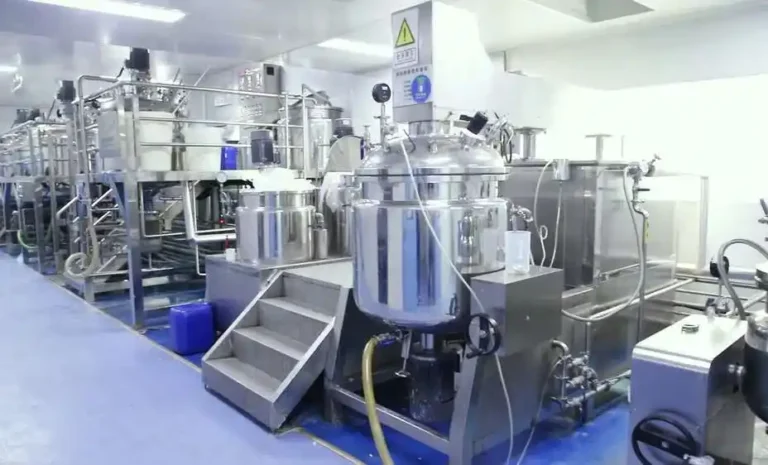
That’s exactly what I’Scent focuses on as an OEM/ODM fragrance oil & perfume raw materials manufacturer.
Our team of 20+ senior perfumers leverages a vast library of 40,000+ formulas to deliver expert customization and scent replication with up to 98% accuracy. As premier perfume oil manufacturers, we bring your most complex fragrance concepts to life with precision.
Industry-Leading Speed
We empower your business with industry-leading speed. Samples are ready in just 1-3 days, mass production takes only 3-7 days, and our low 5kg MOQ allows you to test the market quickly and without risk, solidifying our role as agile fragrance oil suppliers.
Certified Quality & System Assurance
Our quality is built on trust and technology. We are fully certified with IFRA, ISO, GMP, and Halal, and our advanced ERP system guarantees complete traceability and batch-to-batch consistency, making us your reliable perfume raw materials supplier.