Building luxury olfactive DNA: repeatable brand scent standards
signature scent” fails when it can’t survive procurement, reformulation, or scale. This piece lays out the hard standards that make an olfactory identity repeatable.
I’ve watched “luxury” brands spend five figures on a beautiful smelling brief, then lose the plot the moment a raw material spikes, a region bans an allergen disclosure, or a contract manufacturer swaps the base—because nobody wrote standards that survive reality, only vibes that survive a pitch meeting. So what are we actually building here?
Let me be blunt: “olfactive DNA” is not your top/heart/base pyramid. That’s the brochure version. In the real supply chain, olfactive DNA is a spec, a fingerprint, and a set of allowable changes—all documented—so the scent stays “you” even when the formula has to move.
I call it repeatable scent branding: the same emotional hit, the same recognizable trail, the same brand recall—across products, batches, and markets.
Table of Contents
The hard truth about “luxury” scent branding
A luxury smell is not rare ingredients. It’s repeatability under stress.
Short sentence. Standards win.
Luxury scent marketing collapses when the brand can’t answer basic operator questions:
What’s the reference sample (date, batch code, storage conditions)?
What’s the tolerance for drift (organoleptic + analytical)?
What’s the compliance package (IFRA, SDS, COA, allergen declarations) for each application type?
And yes, that’s unsexy. But the moment you scale beyond a boutique run, you’re not just doing signature scent development—you’re managing a regulated, multi-supplier system.
If you sell into the EU, your “olfactory identity” has to live inside the labelling reality. Commission Regulation (EU) 2023/1545 expands individual fragrance allergen labelling: it keeps the existing 24 allergens, adds 56 more, and locks in thresholds at 0.001% for leave-on and 0.01% for rinse-off—plus it notes fragrance allergen contact allergy prevalence estimates of 1–9% in the EU population. That’s not theory; that’s the compliance floor your creative work sits on. Commission Regulation (EU) 2023/1545.
“Olfactory logo” is real, but you need to design it like a system
Here’s my unpopular take: most brands try to build an olfactory logo by picking a note (“oud!” “white musk!”), then act shocked when it smells generic.
An olfactory logo is a repeatable chord—a recognizable combination of materials and ratios that can migrate across formats. Think of it like a sonic logo: you don’t trademark a single piano note; you build a motif.
Concrete example structure (not your exact formula, don’t be cute):
Radiance engine: Hedione (methyl dihydrojasmonate, C₁₃H₂₂O₃) at 5–15% of concentrate
Texture engine: Iso E Super (C₁₆H₂₆O) at 10–25%
Trail anchor: Ambroxide (C₁₆H₂₈O) at 0.5–3% Then you tune the brand’s “accent” (bergamot bite, tea vapor, suede dryness, balsamic warmth) depending on product base and audience.
But you don’t ship “a smell.” You ship a controlled motif.
Rhetorical question time: if your brand scent guidelines don’t specify that motif in measurable terms, are you branding—or just perfuming?
Case study logic: the market is voting with its wallet
Perfume isn’t a side show anymore. It’s a growth engine.
Reuters reporting around Puig’s 2024 IPO filing is a quiet tell: Puig said it controls 11% of the global high-end fragrance market, and reported €4.3B in 2023 product sales, up 19% from 2022—built heavily on prestige fragrance assets like Byredo. That’s not “nice-to-have scent”; that’s board-level strategy. Puig seeks at least $2.7B in local IPO.
Translation: the winners are standardizing, scaling, and defending their olfactory identity like it’s core IP.
The standards stack: what “repeatable” actually means
If you want building luxury olfactive DNA to be more than a headline, you need a standards stack that covers creative, analytical, operational, and legal realities.
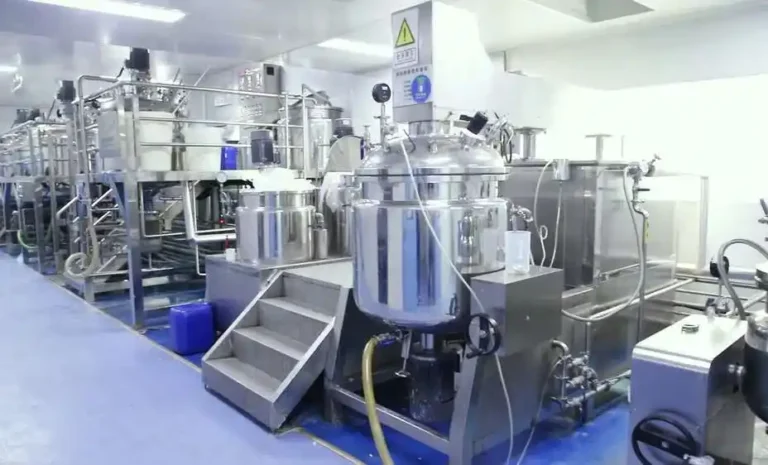
You already see the bones of this approach in manufacturing-facing workflows: batch-to-batch consistency claims, documentation readiness, and fast sampling cycles. For example, the OEM/ODM workflow and QC language on customfragranceoil.com puts “standardized operating procedures,” “advanced equipment,” and “batch-to-batch consistency” at the center, not as an afterthought. Start here: OEM/ODM perfume oil process.
And if you’re trying to build a brand scent across multiple touchpoints, their editorial framing is blunt (in a good way): scent marketing isn’t “make it smell good,” it’s behavior + recall + repetition, which is basically the definition of a usable olfactory branding system. How small brands win with scent.
Now the actual stack.
Standard layer
What you document (minimum viable)
How you measure it
What breaks if you skip it
Olfactive DNA blueprint
3–5 non-negotiable descriptors + “must-not” list + hero chord definition
Panel scoring (0–10) on descriptors; drift thresholds
Want the operator-grade version of this for hospitality? Their procurement-oriented guide is one of the few that talks like grown-ups about specs and sampling flow: hotel scenting RFP essentials.
And if you’re dealing with leadership who only understands spreadsheets, tie it to measurement. Dwell time, conversion, retention—pick the KPI, then test it like a grown-up, not like a moodboard. ROI on fragrance upgrade projects.
Raw data beats vibes: scent changes behavior, but it’s not uniform
Here’s the part marketers love to oversimplify: “scent increases sales.” Sometimes. In specific contexts. With controls.
A 2024 peer-reviewed study in DECISION examined shoppers in Polish and Indian malls (N = 579) and found detected ambient fragrances interacted with companionship and culture—showing more positive effects on time spent, money spent, and impulse purchase outcomes in India than in Poland. That’s not a universal lever; it’s a conditional one. Cross-cultural differences in ambient scent effects (2024).
So when you design luxury scent branding standards, bake in “where and with whom” assumptions. If you don’t, you’ll misread results and blame the fragrance when the experiment was sloppy.
FAQs
What is “olfactive DNA” in luxury scent branding?
Olfactive DNA is a documented, repeatable specification of a brand’s scent identity—covering the signature chord, sensory descriptors, allowable variation, and performance/compliance requirements—so the scent stays recognizably “on brand” across batches, products, suppliers, and markets without relying on subjective approval alone. After that definition, the punchline is simple: if it can’t survive reformulation, it’s not DNA, it’s a one-off. Build it like a spec, not a poem.
What are repeatable brand scent standards?
Repeatable brand scent standards are the operational rules and measurable thresholds that keep a signature scent consistent—panel scoring criteria, GC–MS fingerprint targets, documentation packs (IFRA/SDS/COA), base-stability requirements, and a change-control process that defines what can and can’t change without re-approval. If you want fewer surprises, write the tolerances down. Then enforce them.
How do I create a signature scent for my brand without it turning generic?
Creating a signature scent without going generic means defining a distinctive “olfactory logo” chord (materials + ratios), documenting must-have and must-not attributes, and validating it across real product bases and environments with both sensory panels and analytical fingerprints, instead of selecting trendy notes and hoping memory does the rest. The shortcut is always the same: one hero note, zero standards, and a scent that could belong to anyone.
What compliance issues most often break a luxury scent rollout?
Compliance issues that break luxury scent rollouts most often involve allergen labelling thresholds, regional ingredient restrictions, missing documentation (SDS/COA/IFRA declarations), and untracked formula changes introduced by sourcing substitutions—problems that surface at scale, at customs, or during retailer onboarding, not in the first pretty sample. If you’re in the EU, read the allergen labelling updates carefully, then design your standards around them, not around wishful thinking.
CTA
If you’re serious about scent branding, treat your fragrance like a product platform: spec it, fingerprint it, govern it, and measure it.
Start with a manufacturing-ready baseline—then tighten it into a real olfactory identity system. If you’re sourcing or building at scale, look at fine fragrance manufacturing options and the OEM/ODM perfume oil workflow to map what documentation and consistency controls you’ll need before you fall in love with a “perfect” first mod.
Our team of 20+ senior perfumers leverages a vast library of 40,000+ formulas to deliver expert customization and scent replication with up to 98% accuracy. As premier perfume oil manufacturers, we bring your most complex fragrance concepts to life with precision.
Industry-Leading Speed
We empower your business with industry-leading speed. Samples are ready in just 1-3 days, mass production takes only 3-7 days, and our low 5kg MOQ allows you to test the market quickly and without risk, solidifying our role as agile fragrance oil suppliers.
Certified Quality & System Assurance
Our quality is built on trust and technology. We are fully certified with IFRA, ISO, GMP, and Halal, and our advanced ERP system guarantees complete traceability and batch-to-batch consistency, making us your reliable perfume raw materials supplier.