Alcohol-free and oil-based perfumes: formulation and fragrance selection
Alcohol-free perfume is not a soft-focus wellness trend. It is a technical format with different diffusion, stability, allergen, and market-fit rules. Here is how perfume oil formulation actually works, and why most brands get fragrance selection wrong.
They talk about “cleaner,” “gentler,” or “more luxurious” perfume oil as if switching out ethanol were a moral act instead of a formulation decision, when in reality the base system changes evaporation speed, note lift, allergen visibility, skin feel, and even whether the fragrance still reads as premium after two hours on warm skin. Why does that keep getting ignored?
I’ve watched too many teams blame the fragrance concentrate when the real failure sat in the carrier. Hard truth: alcohol-free perfume usually fails because the base was chosen by marketing, not by someone who understands diffusion.
Table of Contents
The compliance pressure is no longer optional
Here’s the shift.
Europe has been tightening the screws on fragrance disclosure for years, and the polite fiction that you can hide every difficult material behind the single word “parfum” is getting weaker. The European Commission’s fragrance allergen labelling page says 26 fragrance allergens are already subject to individual labelling, while EU Regulation 2023/1545 amended the cosmetics rules on allergen labelling and formalized the direction of travel: more disclosure, less ambiguity, less room for lazy briefs.
And the exposure data is not abstract.
A 2023 Danish study indexed by PubMed looked at 1,179 cosmetic products marketed for children and found that 53.8% were fragranced, 25.3% contained Fragrance Mix I or II allergens, and limonene plus linalool were the most frequently labelled fragrance allergens. Then a 2024 systematic review found sensitization prevalence among European dermatitis patients at 6.81% for Fragrance Mix I and 3.64% for Fragrance Mix II. I do not buy the lazy claim that oil-based automatically means low-risk; if anything, leave-on oil formats demand tighter raw-material discipline because they sit on skin longer and get reapplied with less caution.
The market still pays.
Reuters reported in August 2024 that Symrise posted a 6.3% rise in first-half sales to €2.57 billion, driven mainly by scent and care, which tells me the money is still flowing to fragrance businesses that can marry performance with compliance rather than pretending one cancels out the other. That is the commercial backdrop for every serious non-alcoholic perfume launch in 2026.
Perfume oil formulation starts with the base, not the fantasy
The best carrier oils for perfume oil depend on scale
Three words: context decides everything.
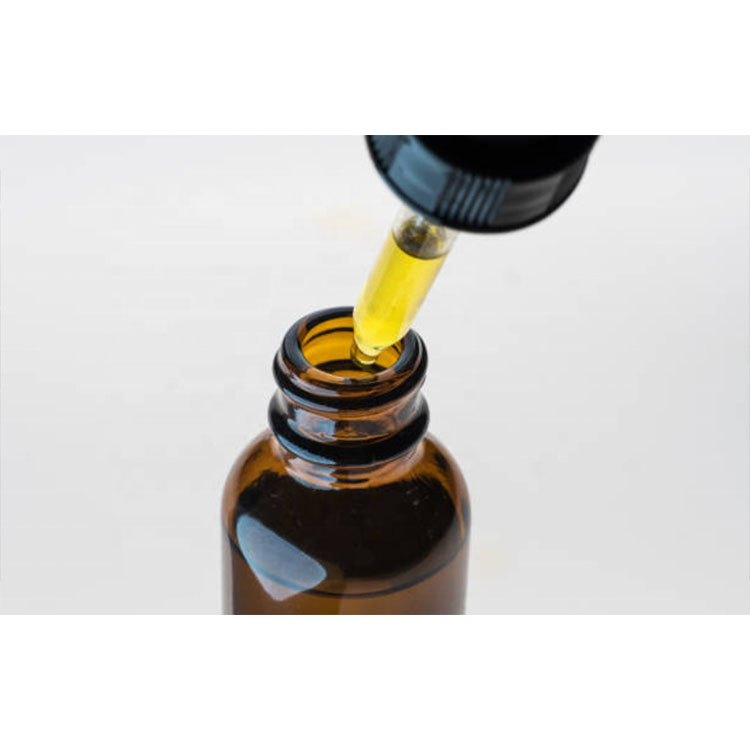
If you are making artisan roll-ons in tiny batches, low-odor options such as jojoba or fractionated coconut oil can work because they are familiar, easy to explain, and reasonably skin friendly. But once you move toward repeatable B2B manufacturing, I usually stop romanticizing “natural carrier oil” language and start asking uglier questions: Does it oxidize? Does it tint the juice? Does it mute the top? Does it leave a greasy ring on fabric? Does it survive a hot container? That is where support materials like DPG (dipropylene glycol), IPM (isopropyl myristate), and TEC (triethyl citrate) stop being nerd trivia and start being the difference between a viable concentrated perfume oil and a sticky mess. The site’s own designer perfume oil formulation guide gets this right by calling out DPG, IPM, and TEC as practical tools for blending, flow, clarity, and volatility control.
How to formulate alcohol-free perfume without killing the scent
Start with the wear brief.
I’d rather see a team define “close halo, six-hour skin presence, no waxy residue, acceptable in Gulf retail, stable at 35 °C” than waste a week debating whether the opening should feel “premium.” That’s fluff. What matters is whether the perfume oil formulation can carry a volatile citrus top without the whole thing flashing off or collapsing into resin and musk by mid-morning. The site’s how to design a bespoke perfume oil article is useful here because it frames the process the right way: consultation, note balancing, carrier selection, iterative testing, and safety compliance, in that order.
And no, I would not begin with maximum concentration.
A concentrated perfume oil sounds seductive, but overloading aromatic materials into a slow-moving base can flatten lift, amplify harsh allergens, and turn a beautiful drydown into a heavy, syrupy blur. In commercial work, I’d rather see three controlled pilots than one macho concentrate. More perfume is not always more perfume.
Fragrance selection is where most oil-based perfume projects go sideways
Top notes behave differently in oil
This part annoys people.
In alcohol, you get blast, sparkle, immediate diffusion. In oil, you get restraint. That means bergamot, aldehydic freshness, watery florals, and airy aromatics often need rebuilding rather than mere transplantation. If you port a spray formula into an oil base and expect identical lift, you are not being ambitious; you are being naive.
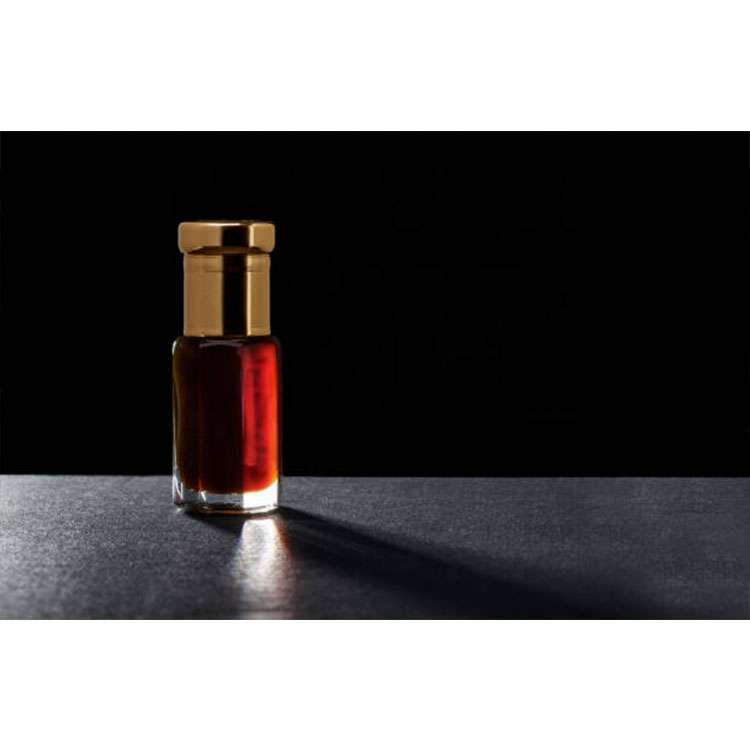
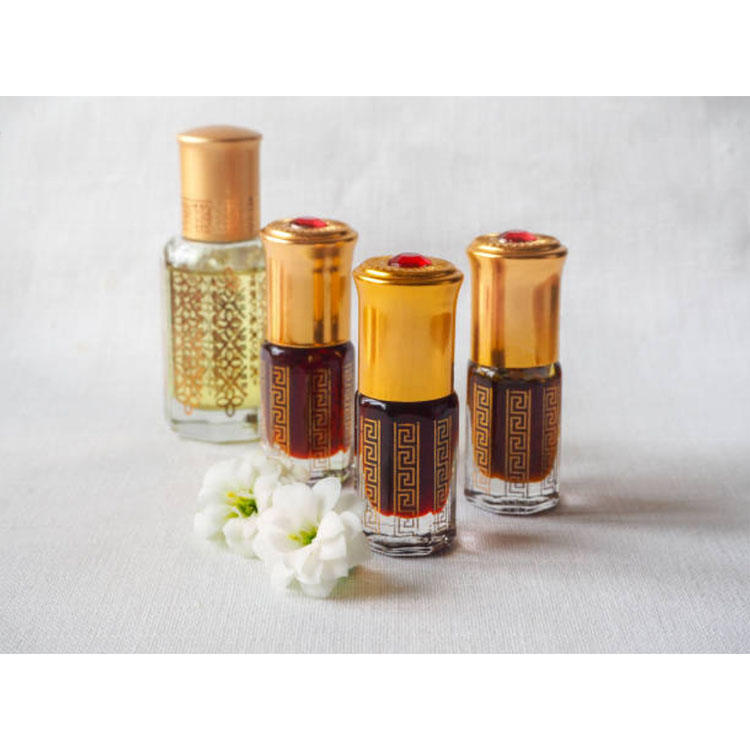
What tends to survive? Rose, musk, amber, soft woods, balsams, tea, saffron, cardamom, tonka, vanilla, and leather-oud structures built with discipline. That is why category pages like Fine Fragrance perfume oils and the more specific Arabian attar and oud bases formulation guide make sense as internal references here: they align with the scent families that actually hold shape in alcohol-free systems instead of relying on a spray’s volatile theatrics.
Alcohol-free perfume rewards structure, not noise
I’ve seen this repeatedly.
The best oil-based perfume builds usually have a calmer opening and a stronger chassis, which means the skeleton matters more than the opening trick. If your heart and base are weak, the oil format exposes that weakness fast. If your base is elegant, the same format can make the fragrance feel smoother, warmer, and more expensive.
Formulation factor
Oil-based perfume
Alcohol-based perfume
Main carrier system
Oils, esters, or glycols with slower release
Ethanol-led system with fast lift
Opening impression
Softer, quieter, less explosive
Faster, louder, more immediate
Drydown behavior
Dense, intimate, skin-close
More diffusive, more aerial
Common risk
Flat top notes, residue, haze, over-weighted base
Flash-off, sharper irritation, thinner wear in heat
Best use case
Attar, roll-on, close wear, layering, alcohol-free positioning
The point is simple: perfume oil vs alcohol-based perfume is not a morality play. It is a performance trade. The wrong teams keep asking which one is “better.” The better teams ask which one matches the use case.
Oil-based perfume vs alcohol-based perfume: the trade-off nobody should sugarcoat
Heat changes everything.
The site’s piece on fragrance oils vs eau de parfum in hot and humid markets makes a point I agree with: alcohol flashes faster in tropical conditions, while oil-based perfume usually stays closer and steadier on warm skin. That is not just a climate note; it changes fragrance selection, because loud sugary openings that seem fun on a lab blotter can become unbearable in humidity, whereas woods, musks, tea notes, and cleaner florals often behave with more dignity.
But let’s not oversell oils either.
Oil formats can be harder to demo in retail, subtler on blotter, slower to communicate, and unforgiving when the customer over-applies. A beautiful attar can feel luxurious to one buyer and “too quiet” to another who expects instant projection. That’s why I like layered systems more than ideological purity: an oil primer for depth, a spray for lift, and a brand story that does not lie about what each format does.
And for brands selling into Muslim-majority or attar-aware markets, cultural fit matters as much as chemistry.
The Arabian attar and oud bases guide is a useful internal bridge because it places alcohol-free perfume inside a real perfumery tradition rather than treating it as a passing Western “sensitive skin” trend. That distinction matters. Attar is not simply perfume minus ethanol; it is a different wearing ritual, different emotional register, different expectation of intimacy.
What a serious fragrance selector should do next
Build around the base-family fit
I use a blunt rule.
If the brand wants softness, ritual, layering, modest projection, or Halal-friendly positioning, I move toward musks, rose, oud-style woods, amber, tea, spice, and creamy floral structures. If the brand wants shock value at first sniff, broad room-filling projection, or department-store spray behavior, I stop pretending oil alone will do that job.
Treat internal links like a buyer journey, not decoration
An alcohol-free perfume is a fragrance format in which aromatic materials are carried in oils, esters, glycols, or similar non-ethanol media, so evaporation slows, projection usually sits closer to skin, and the product often fits sensitive-skin, attar, or Halal-oriented positioning more naturally than a classic spray. In practice, that means the scent profile, application ritual, and testing method all change with the base.
What is perfume oil formulation?
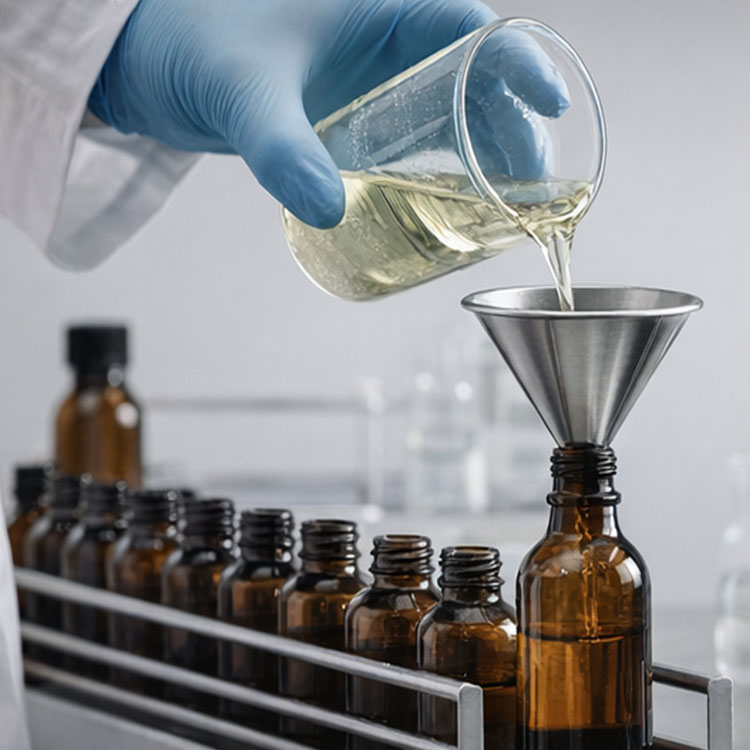
Perfume oil formulation is the technical process of balancing aromatic concentrate, carrier system, viscosity, diffusion, clarity, oxidation control, allergen disclosure, and wear profile so the final scent performs consistently on skin, fabric, and packaging instead of smelling great only in the beaker. Serious formulation work also includes stability trials, carrier selection, and repeated wear evaluation under real-use conditions.
What are the best carrier oils for perfume oil?
The best carrier oils for perfume oil are the ones that stay low-odor, oxidation-resistant, skin-compatible, and commercially stable under your target use conditions, which means jojoba or fractionated coconut may suit artisan roll-ons, while DPG, IPM, or TEC often make more sense in controlled B2B manufacturing systems. The right answer depends on batch size, price target, climate exposure, and the behavior of the fragrance concentrate itself.
Is perfume oil better than alcohol-based perfume?
Perfume oil is not universally better than alcohol-based perfume; it is better when the brief demands close wear, lower alcohol exposure, slower evaporation, and cultural fit, while alcohol-based perfume is better when the brief demands instant lift, bigger sillage, and easier retail demo on blotters. The smarter commercial move is often to develop both formats from one scent DNA and let each do the job it was built for.
Your next step
Stop guessing.
If you are building an alcohol-free perfume line, audit one formula this week and force it through a grown-up checklist: carrier choice, top-note survival, allergen exposure, climate stability, skin feel, and cultural fit. Then map the reader journey properly with internal anchors to Fine Fragrance, How Do You Design a Bespoke Perfume Oil?, Designer Perfume Oils: Formulation Guide, Arabian Attar & Oud Bases, and the Fragrance Oil FAQ. That is not busywork. That is how you turn perfume oil content into qualified intent instead of decorative traffic.
Our team of 20+ senior perfumers leverages a vast library of 40,000+ formulas to deliver expert customization and scent replication with up to 98% accuracy. As premier perfume oil manufacturers, we bring your most complex fragrance concepts to life with precision.
Industry-Leading Speed
We empower your business with industry-leading speed. Samples are ready in just 1-3 days, mass production takes only 3-7 days, and our low 5kg MOQ allows you to test the market quickly and without risk, solidifying our role as agile fragrance oil suppliers.
Certified Quality & System Assurance
Our quality is built on trust and technology. We are fully certified with IFRA, ISO, GMP, and Halal, and our advanced ERP system guarantees complete traceability and batch-to-batch consistency, making us your reliable perfume raw materials supplier.